







Recently viewed products
Faulds & Tassets
Faulds and tassets are the plate armor pieces that protect the waist, hips, and upper thigh: the junction between torso and leg that a breastplate above and cuisses below both leave partially exposed. They are not the most immediately obvious addition to a plate armor kit, but they are often the one that makes everything else read as complete. Without them, even a well-assembled harness has a visible gap at its center. With them, the line from chest to leg is closed, the silhouette reads as a full harness, and the most prominent weak point in the mid-body is covered.
What Are Faulds and Tassets?
The two terms describe related but distinct pieces, and understanding the difference matters when building a harness.
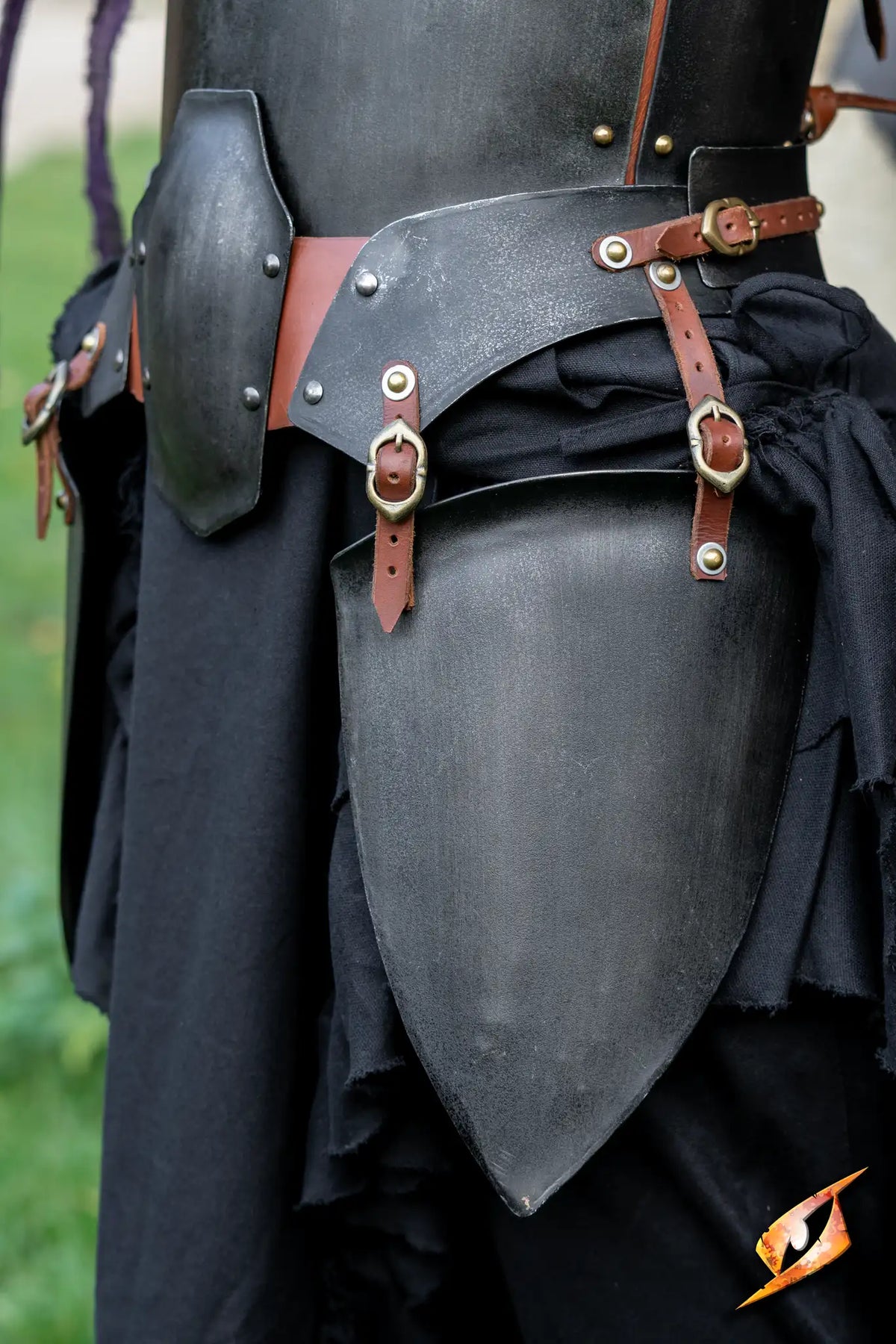
A fauld is a series of overlapping horizontal steel plates attached to the lower edge of a breastplate, forming an articulated steel skirt around the waist and hips. The overlapping plate construction allows the torso to bend, twist, and rotate without the armor binding or gapping, which is the engineering challenge faulds were developed to solve. Early faulds appeared in the 14th century as armorers began replacing mail with plate, initially as simple bands of steel below the breastplate. By the 15th century the Gothic plate tradition had developed elaborate segmented faulds with decorative fluting, and by the 16th century the form had evolved further still, with tassets extending almost to the knee as armor adapted to the demands of pike warfare and early firearms.
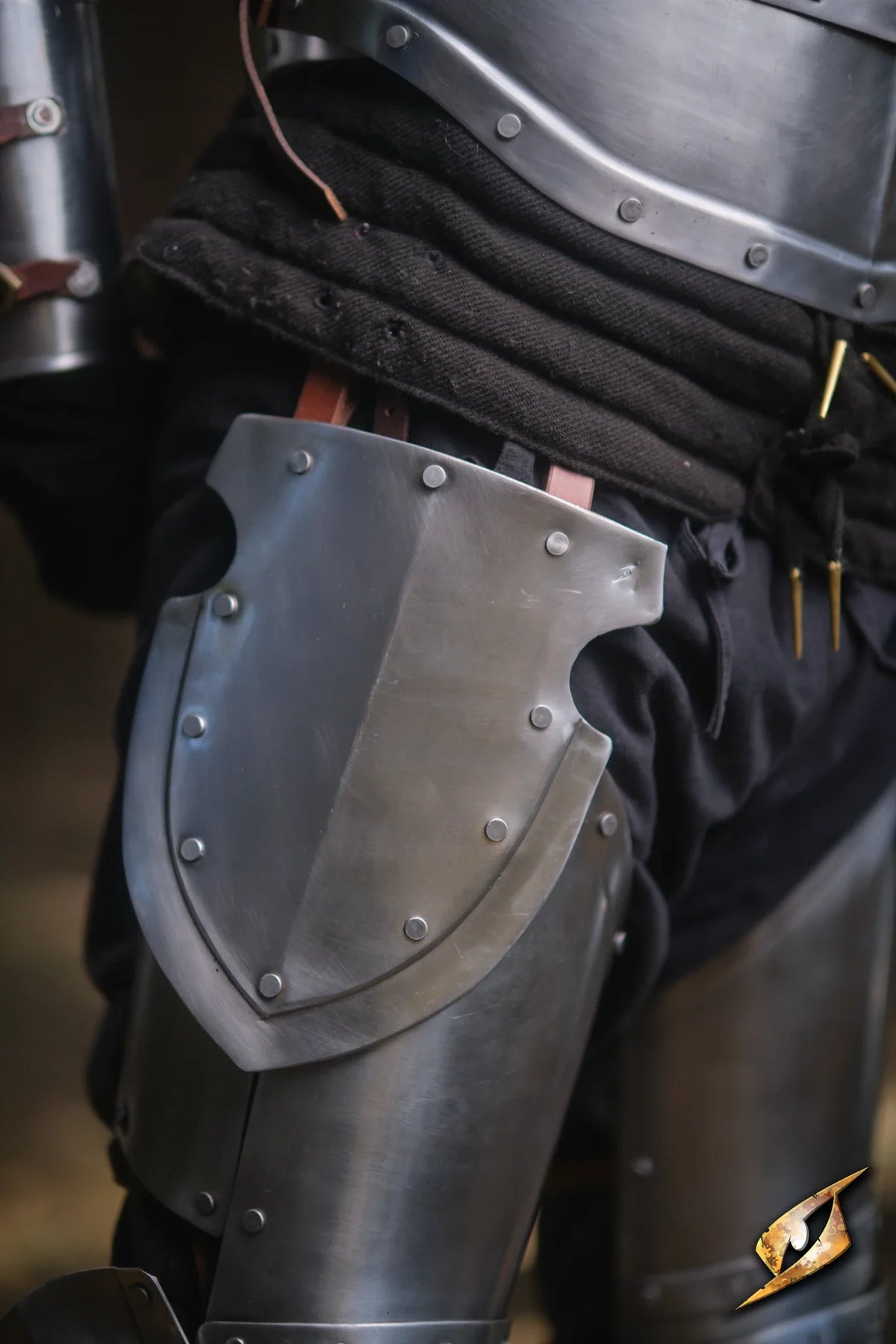
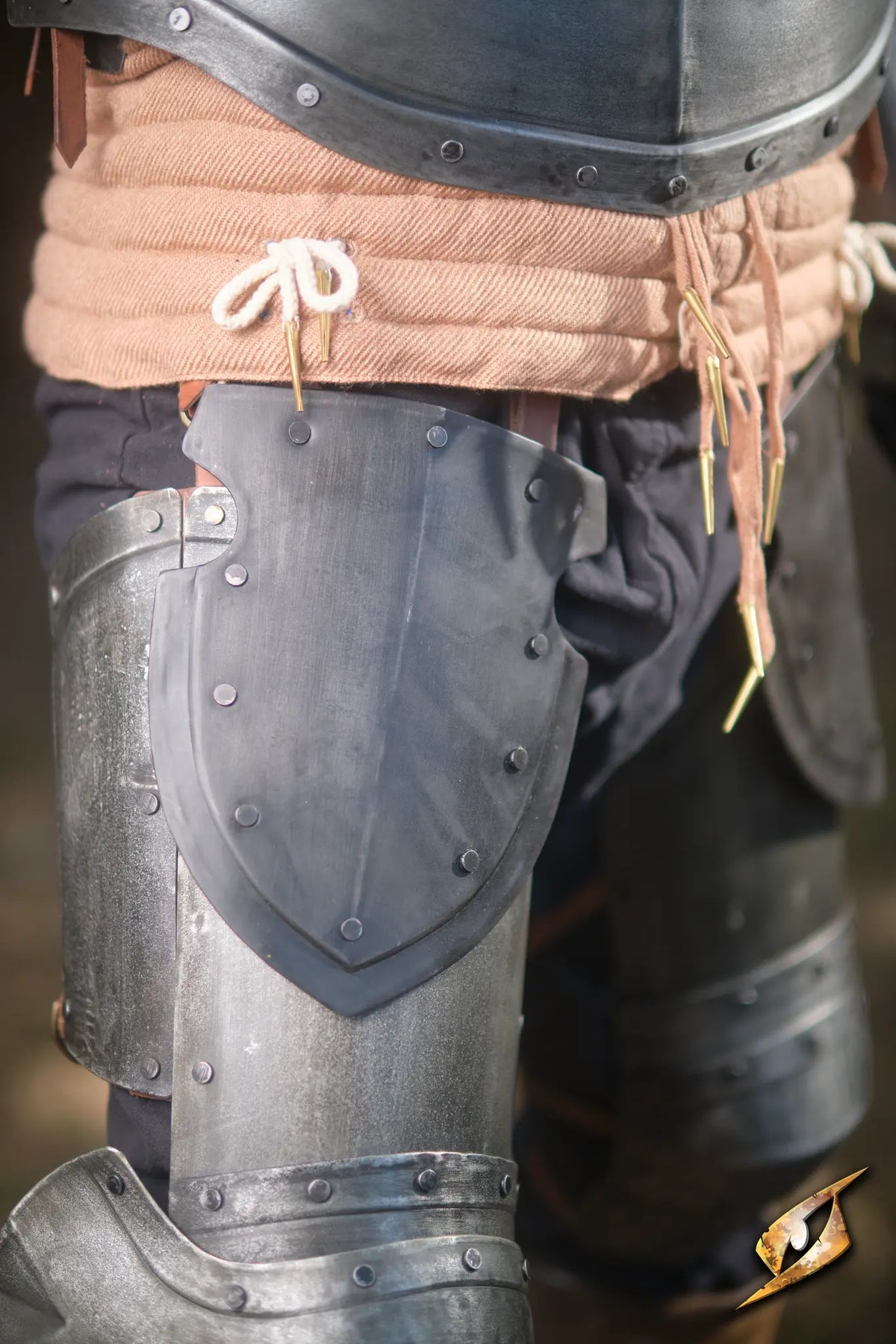
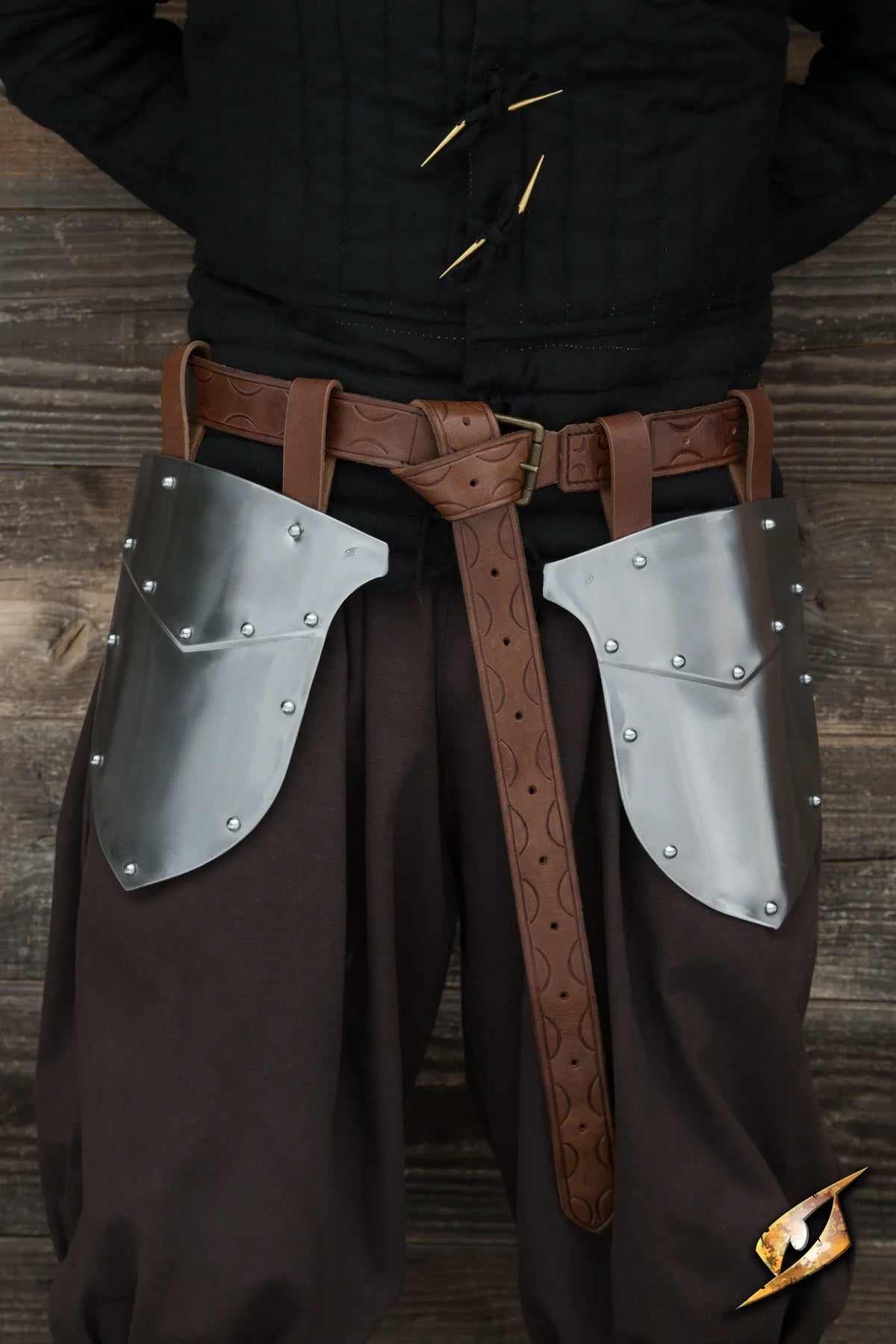
Tassets hang from the lower edge of the fauld or from a separate belt, covering the upper thigh in the area between the fauld above and the cuisse below. Where a fauld wraps around the waist and hips, tassets are the pieces that extend that coverage downward onto the leg. Worn together they form a continuous defense from the lower edge of the breastplate to the top of the thigh, closing the gap that neither torso nor leg armor fully addresses on its own.
Why Faulds and Tassets Matter
The waist and hip are among the most commonly targeted areas in sword combat, both historically and in LARP systems. A breastplate with tassets offered some downward coverage, but a thrust or cut delivered at an angle could pass beneath or around it. Faulds and tassets address that vulnerability directly, wrapping around the hip and hanging over the thigh to cover angles that a static plate cannot reach.
Mobility is the other consideration, and one the historical design solves well. Because faulds use articulated overlapping plates rather than a solid shell, they move with the body rather than against it. Tassets hang freely from the fauld or belt, swinging with the stride rather than binding against the leg. The result is meaningful hip and thigh coverage that does not significantly restrict crouching, lunging, or running, which is what makes faulds and tassets practical for active LARP combat rather than purely display or reenactment use.
Construction and What to Look For
Most faulds and tassets in this range are built from mild steel, the same material used throughout the plate armor range. The key construction details to look for are the number and overlap of the plates, the quality of the riveting that holds them together, and the attachment system that connects them to a breastplate or belt.
Plate count and articulation. More plates generally means more articulation and a better range of motion. A fauld with three or four lames will move more freely than one with two. Check the individual product pages for plate counts if articulation is a priority.
Attachment method. Faulds attach to the lower edge of a breastplate via straps or riveted fittings. Before ordering, confirm that the attachment method is compatible with the chest piece you are wearing. Tassets that hang from a belt rather than a fauld are a more flexible option if you are building incrementally or wearing a chest piece without a fauld attachment point.
Finish. Polished Steel and Epic Dark are the two primary finishes across the range. Polished Steel gives a bright, maintained appearance. Epic Dark is an antiqued darker finish that reads as more worn. Both are available across most designs in the range.
Frequently Asked Questions
Do faulds and tassets restrict movement? Much less than their coverage might suggest. The articulated plate construction allows the torso to bend and twist freely, and tassets swing with the stride rather than binding against the leg. They are considerably less restrictive than cuisses or greaves.
Can I wear tassets without a breastplate? Yes. Tassets mounted on a belt worn over a gambeson or padded base layer is a historically grounded approach and a practical option for builds that do not include a full plate chest piece.
Do I need both faulds and tassets? Not necessarily. Faulds alone address the waist and hip. Tassets alone add upper thigh coverage from a belt. Both together give the most complete coverage of the mid-body junction and the most finished silhouette.
Where do faulds and tassets sit in a full harness? Between the breastplate above and the cuisses below. In a complete leg and torso harness the sequence runs breastplate, faulds, tassets, cuisses, poleyns, and greaves from chest to ankle, with faulds and tassets closing the most prominent gap in that chain.