



Recently viewed products
Greaves, Cuisses & Leg Armor
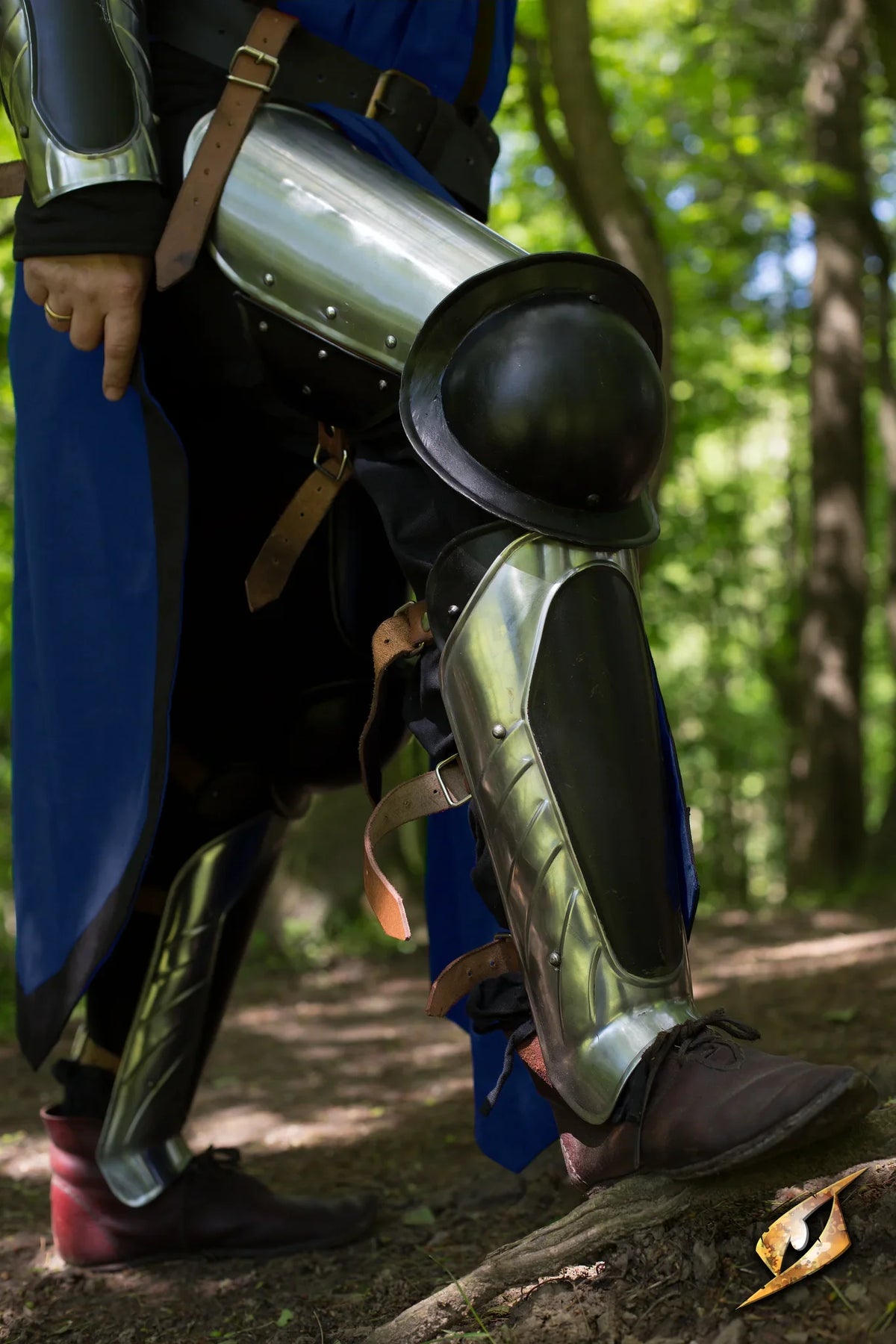
Greaves, cuisses, and leg armor are the pieces that ground a kit, literally and figuratively. The upper body may draw the eye first, but a complete plate harness runs from shoulder to foot, and bare legs beneath a well-armored torso undermine the whole impression immediately. Leg armor is what separates a costume from a harness, and a fighter from a fully equipped warrior.
This page covers the full length of the leg in plate armor: cuisses protecting the thigh, poleyns at the knee, and greaves enclosing the lower leg. Each piece addresses a distinct part of the leg, and together they form one of the most complete and visually convincing additions you can make to a plate armor kit.
Cuisses: Thigh Armor
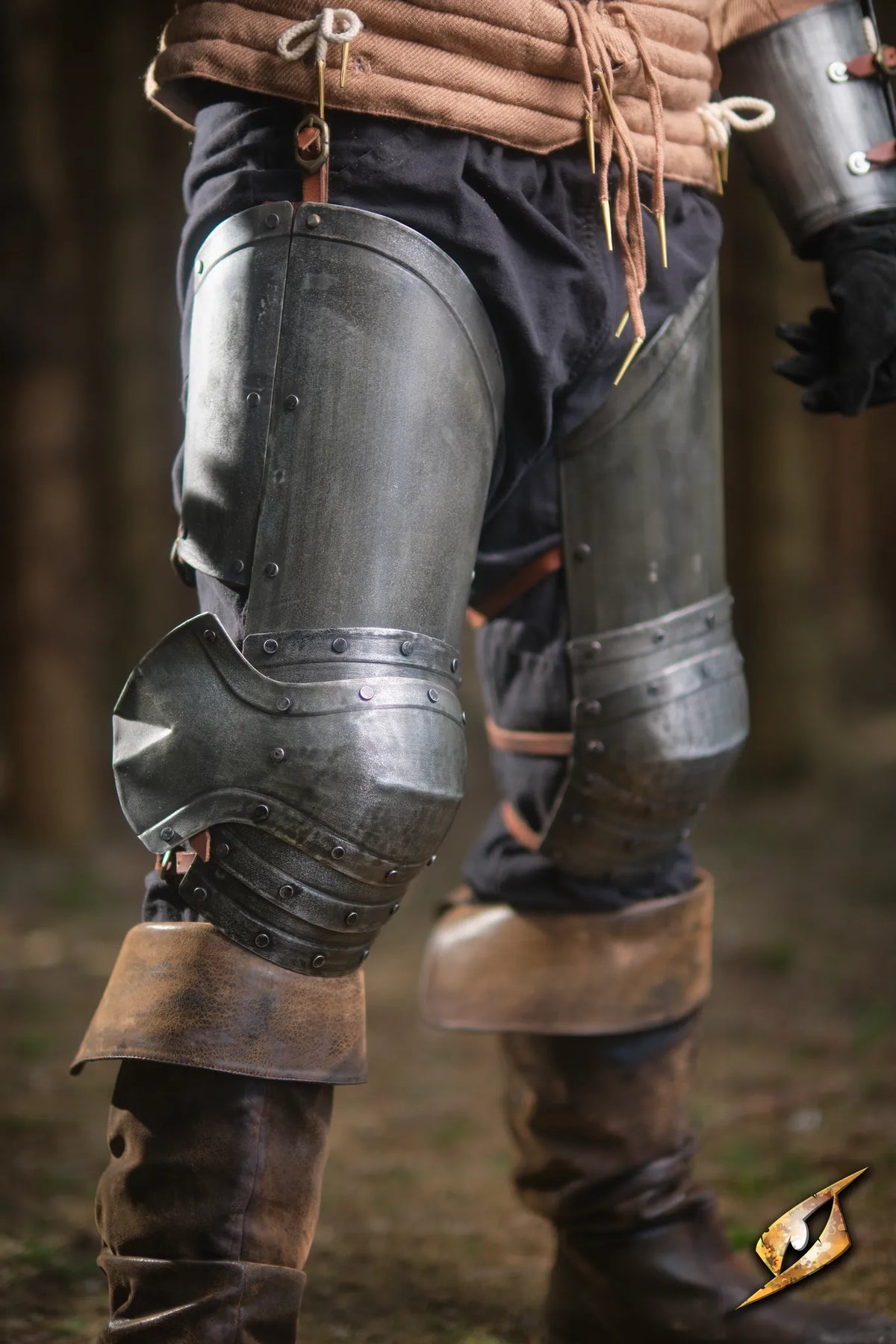
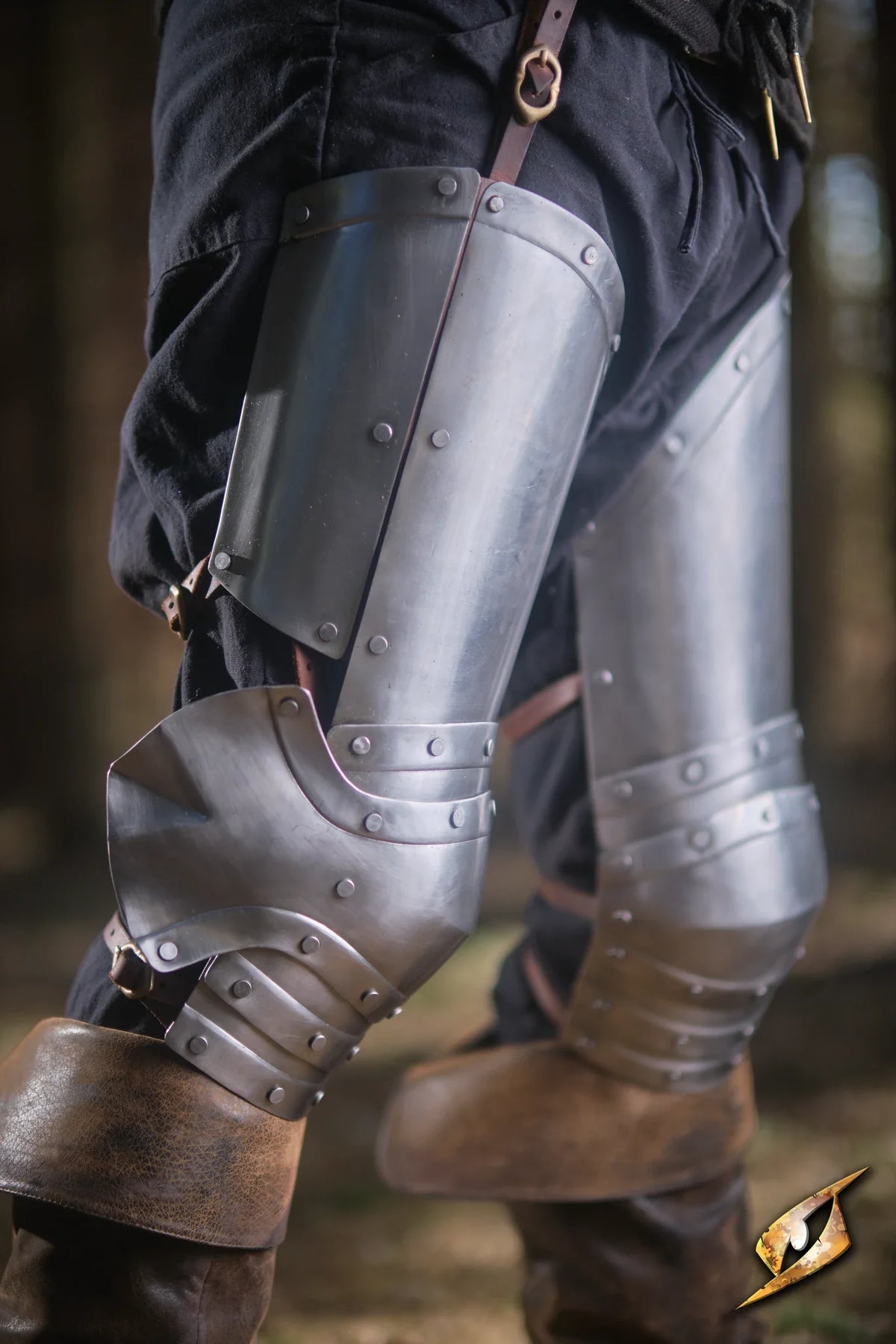
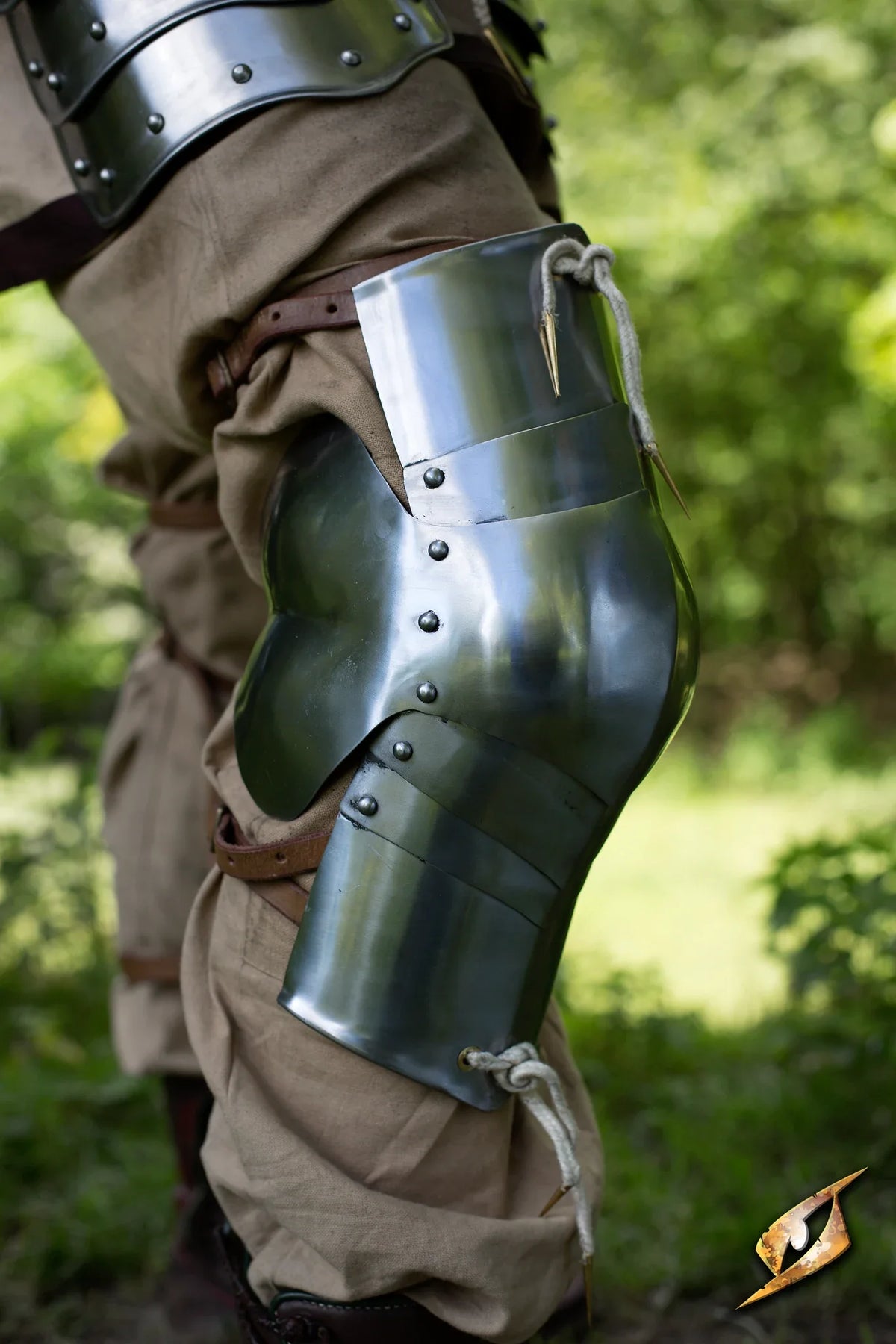
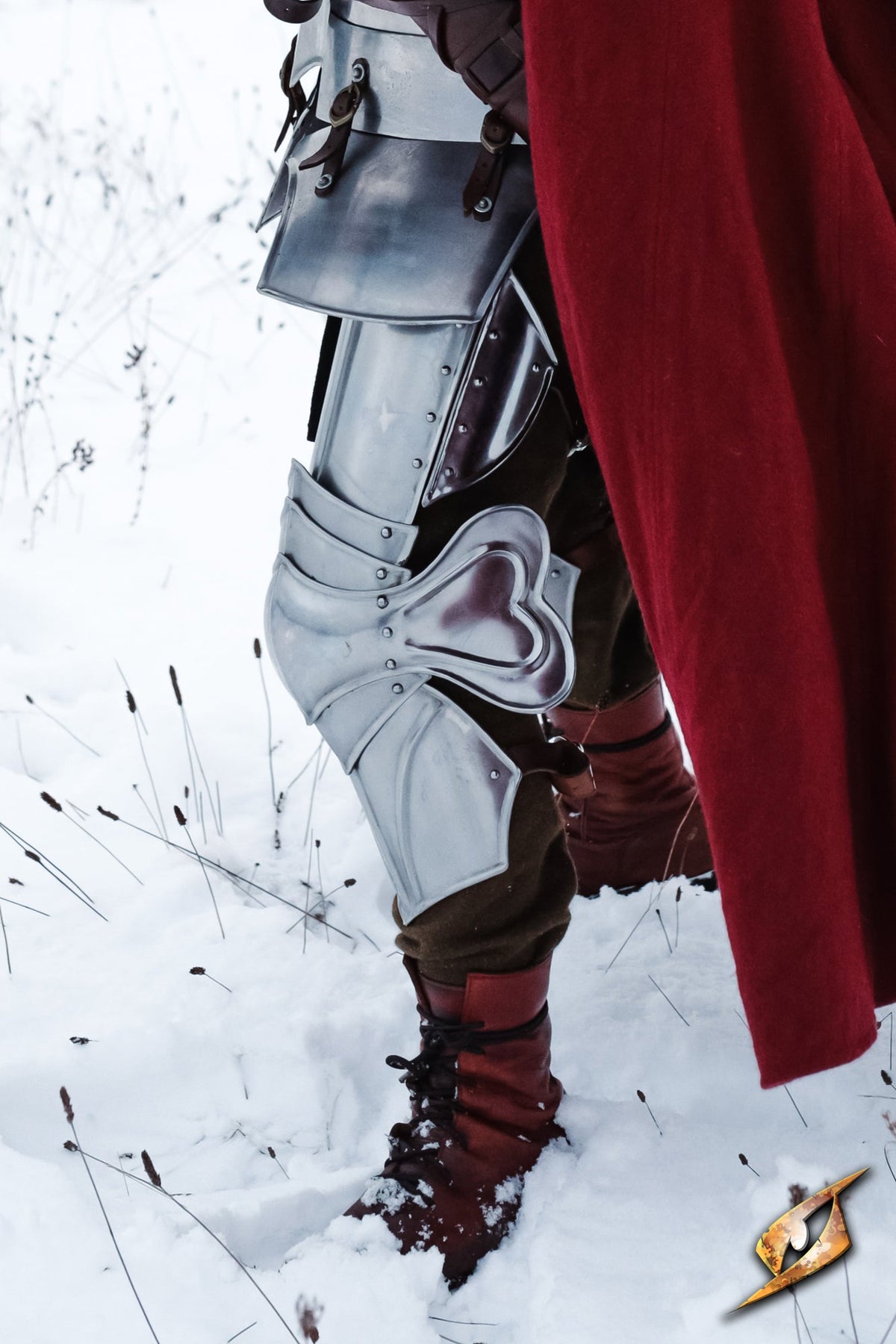
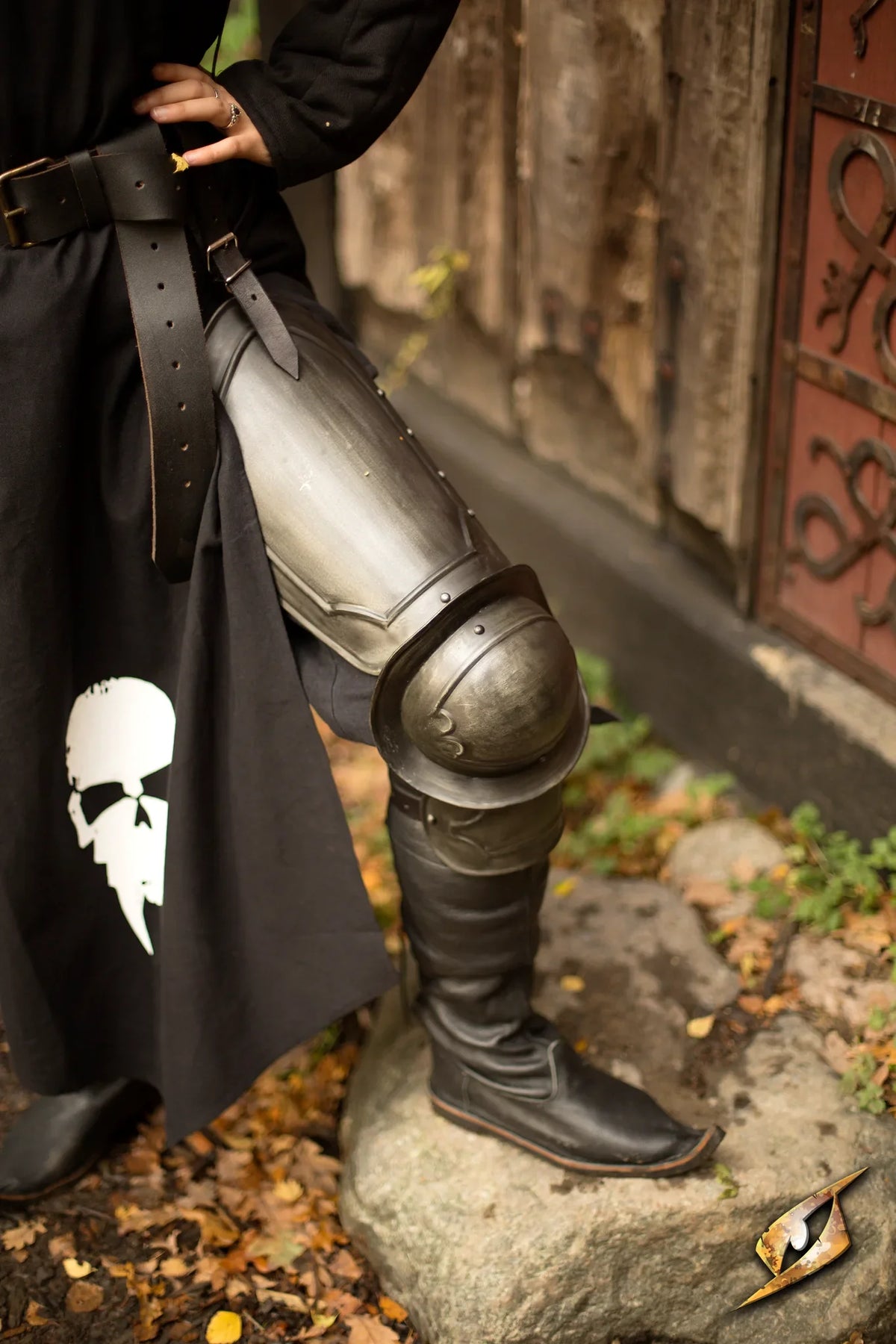
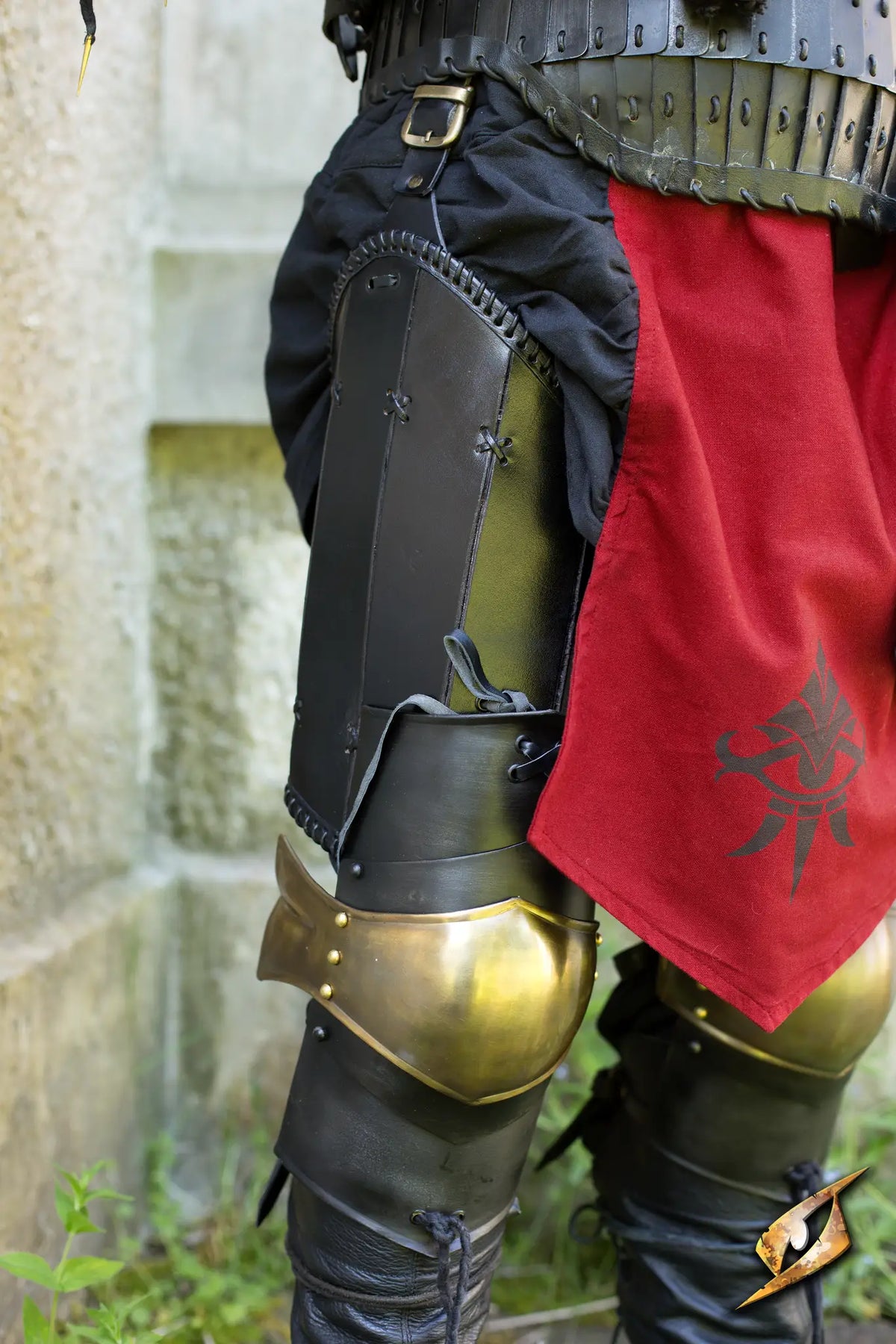
Cuisses are plate armor thigh guards, taking their name from the French word for thigh. Their purpose is straightforward: the upper leg is one of the largest and most exposed targets on the body, and while a cuirass with tassets offers some protection from above, a strike from below passes underneath that coverage entirely. Cuisses close that gap, wrapping around the thigh to protect against exactly the kind of low attack that upper body armor cannot reach.
Padded cuisses were worn by knights as early as the 12th century, typically over mail chausses. By the mid 14th century steel plate had become the standard material, and from around 1370 onward cuisses were typically formed from a single shaped plate of iron or steel. English cuisses of the period tended to fully encircle the thigh, protecting the back of the leg as well as the front, reflecting the English preference for foot combat over the mounted cavalry charges more common on the continent.
In a modern LARP or reenactment context, cuisses are most commonly associated with knightly and military builds, though they appear across a wide range of fantasy aesthetics. A pair of cuisses over a padded base layer adds immediate visual weight to the lower body and signals a level of kit commitment that few other pieces match.
Poleyns: Knee Plates
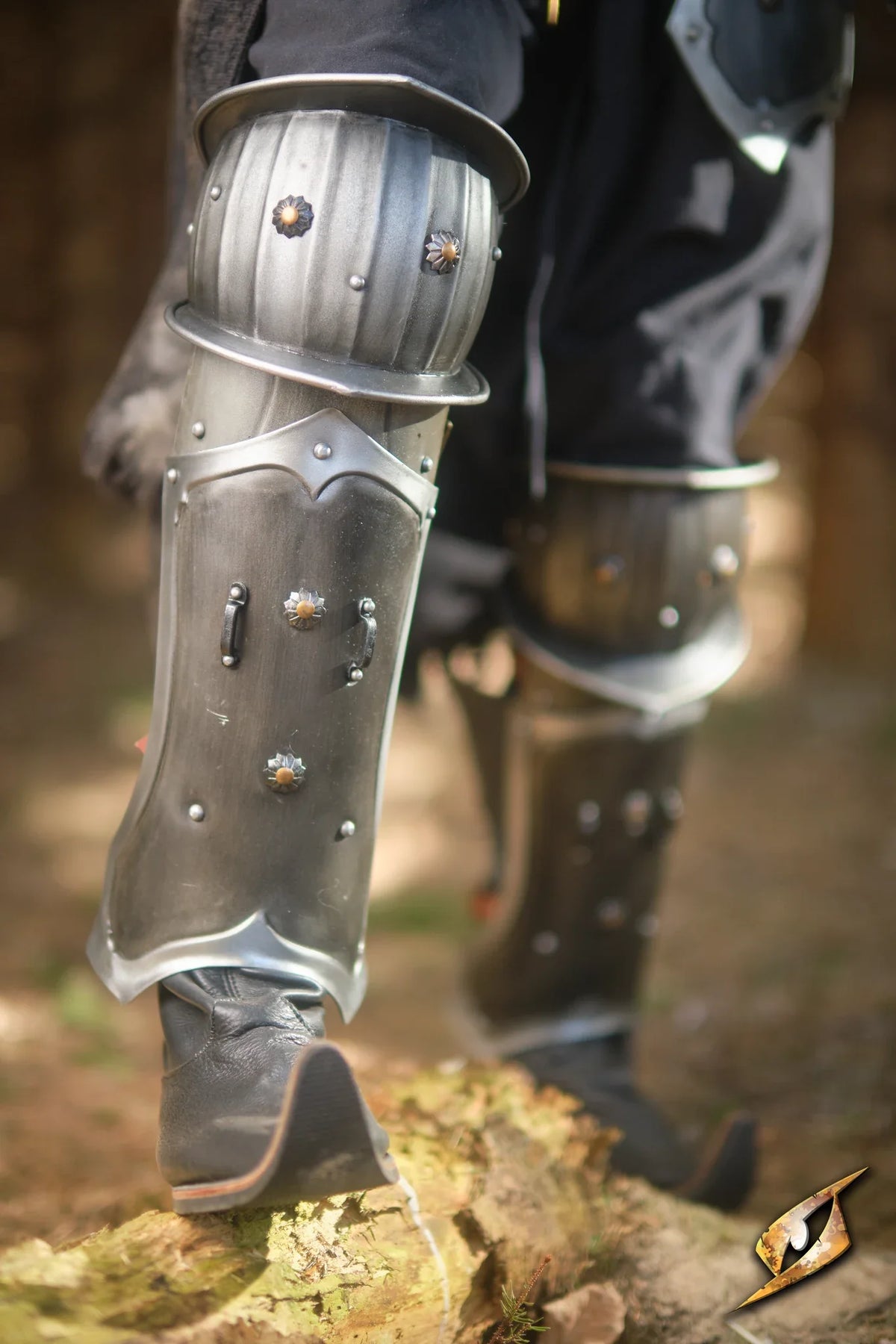
The poleyn is the knee plate: the piece that sits at the hinge between cuisses above and greaves below, protecting the joint and connecting the upper and lower leg into a coherent defense. It is the pivot point of any leg harness, both mechanically and visually.
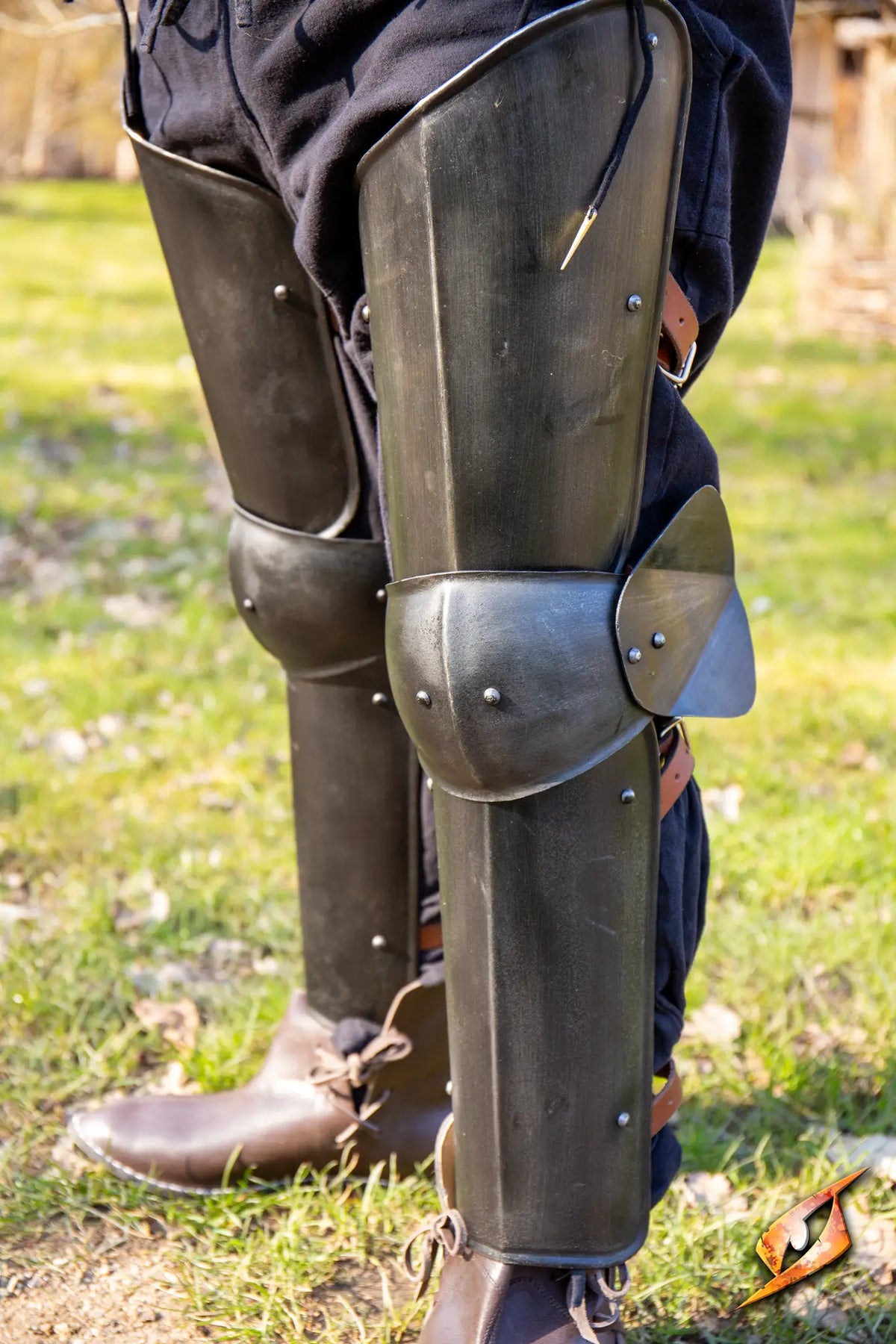
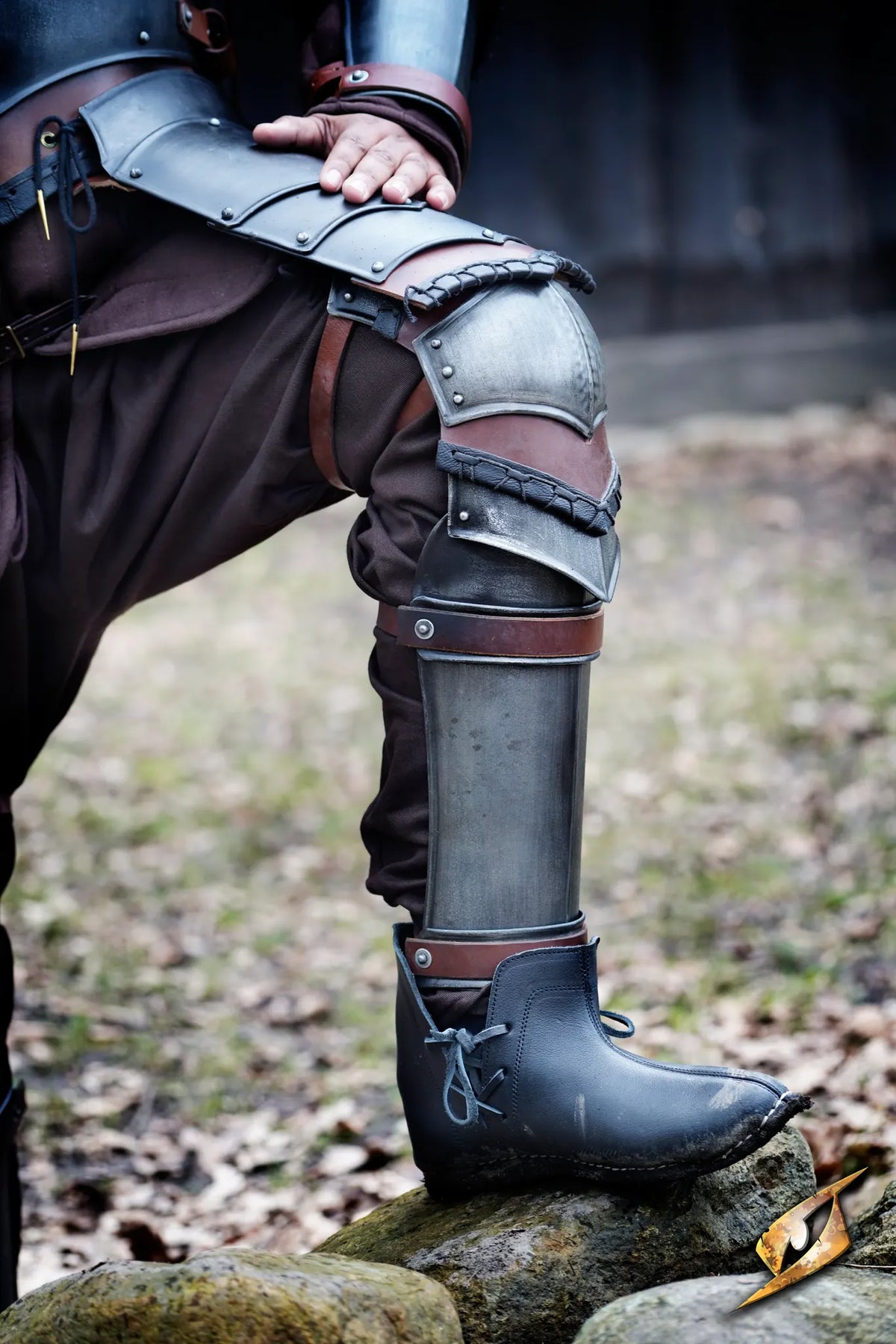
A well-designed poleyn has a pronounced central dome that deflects blows away from the joint, with articulated wings called genouillères extending to either side to cover the gaps where upper and lower leg armor meet. The articulation is what matters most: a poleyn that prevents the knee from bending freely is worse than no poleyn at all. Historically, poleyns were often integrated directly into the cuisse as a single assembly, and some designs in this range follow the same logic.
In a LARP context, poleyns are often the intermediate addition that makes a partially assembled leg kit suddenly read as intentional: cuisses above, greaves below, and the knee plate closing the most obvious remaining gap between them.
Greaves: Lower Leg Armor
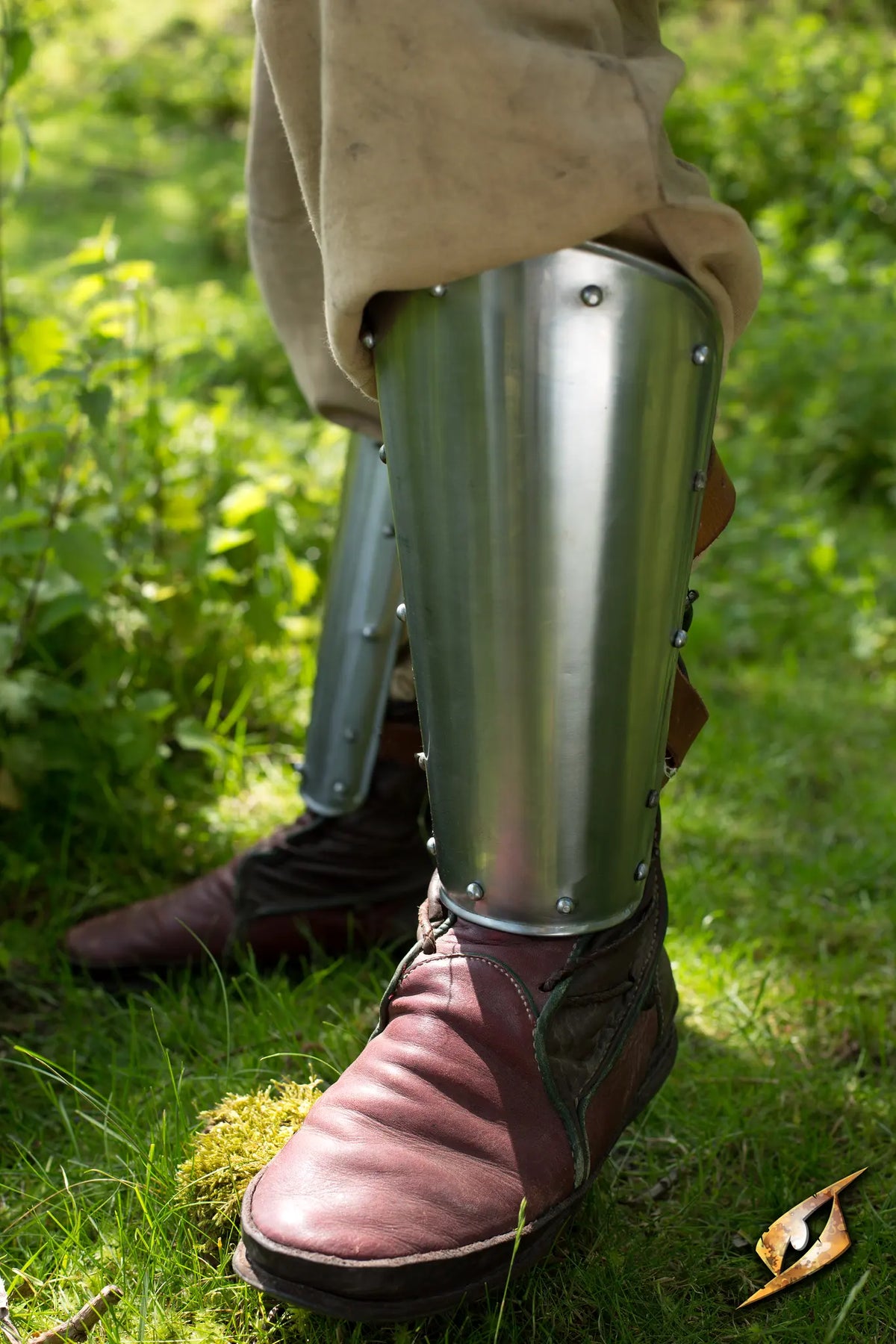
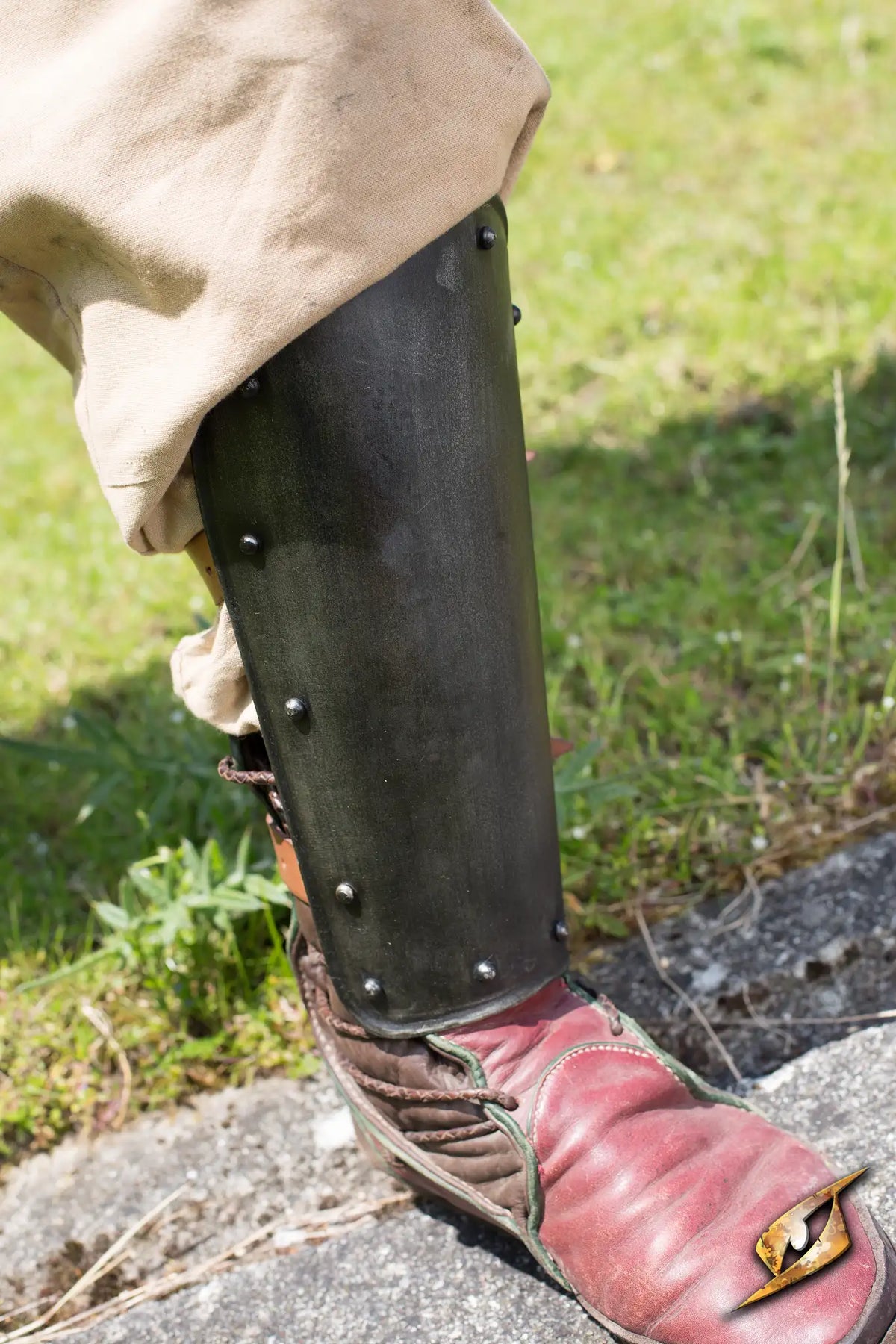
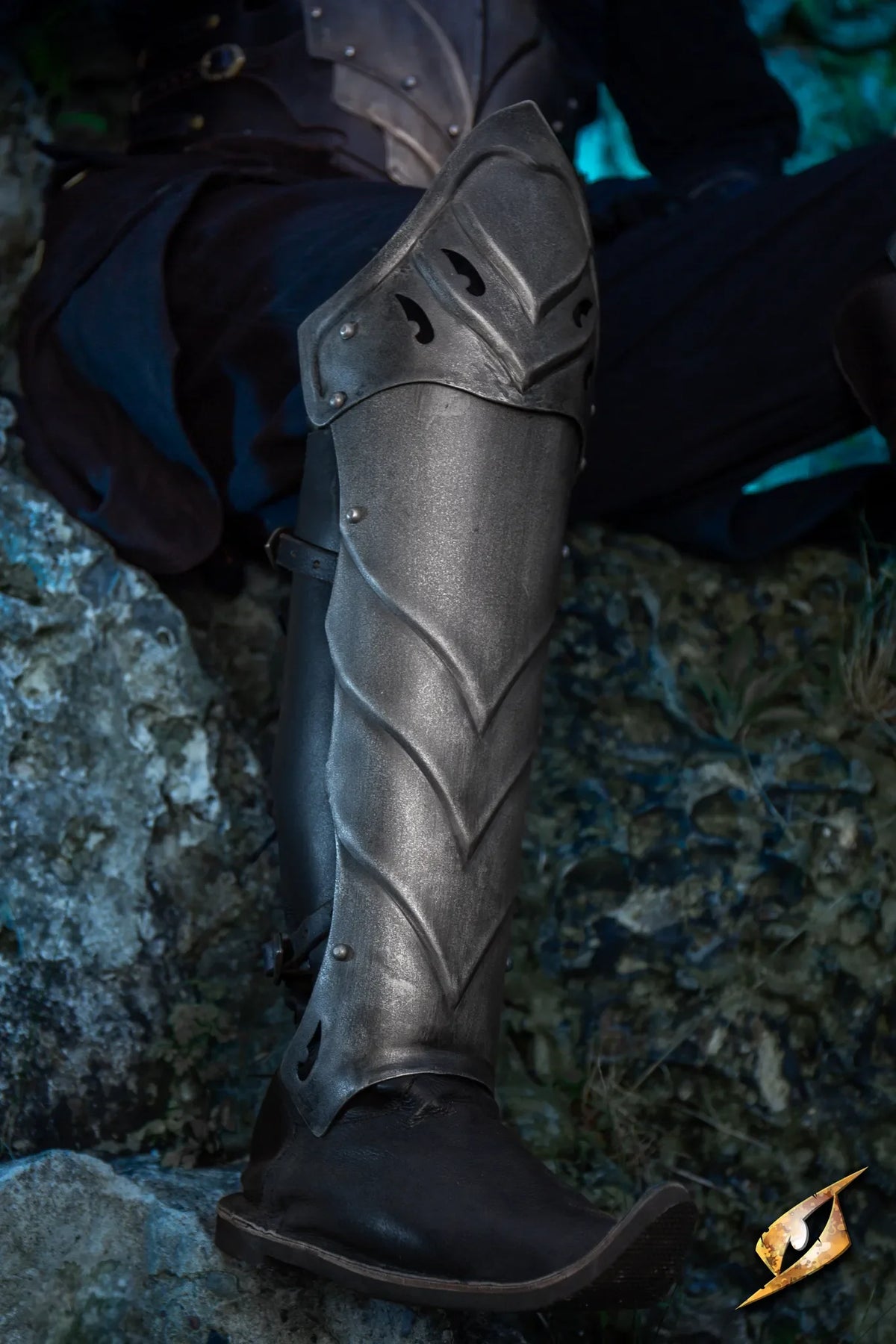
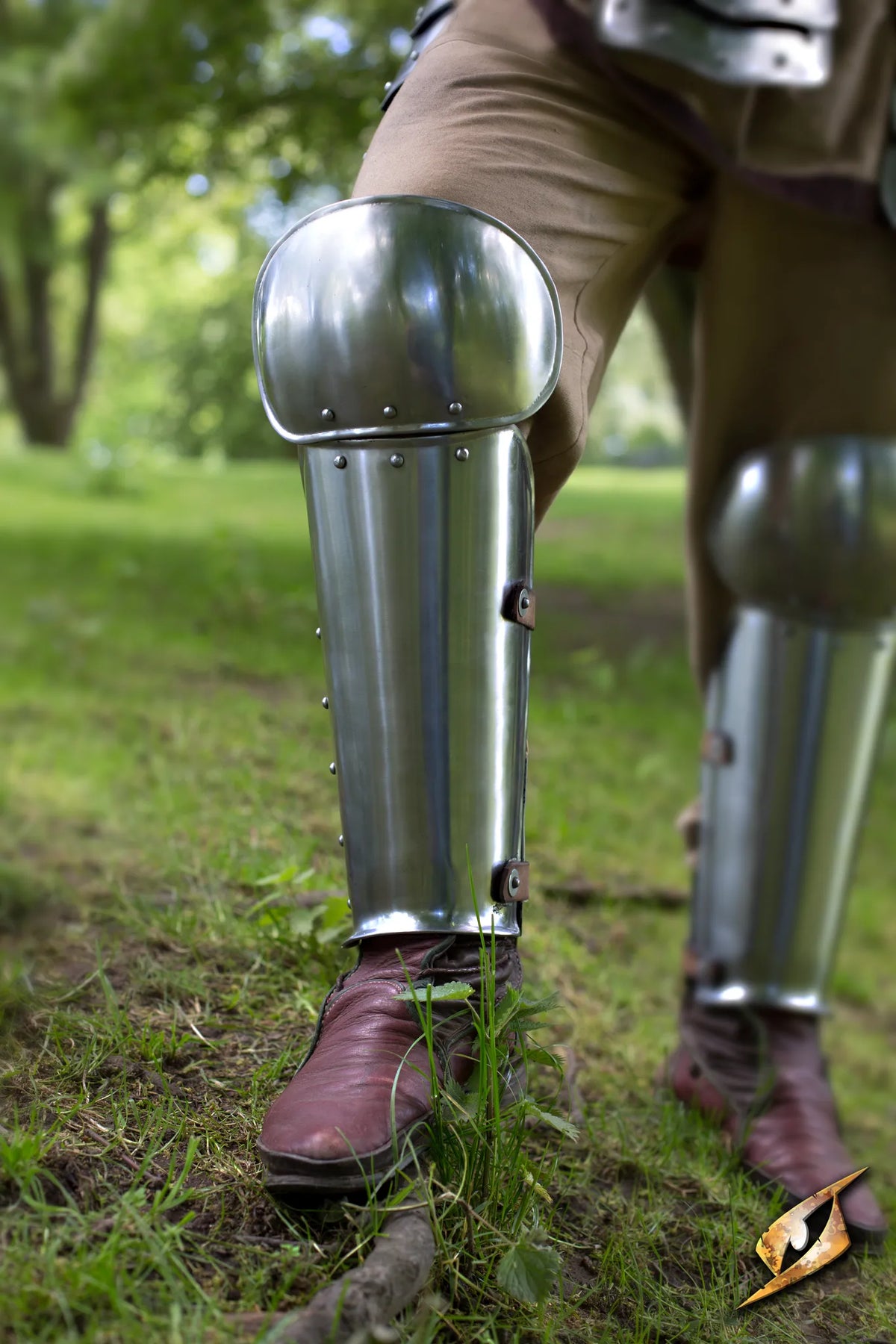
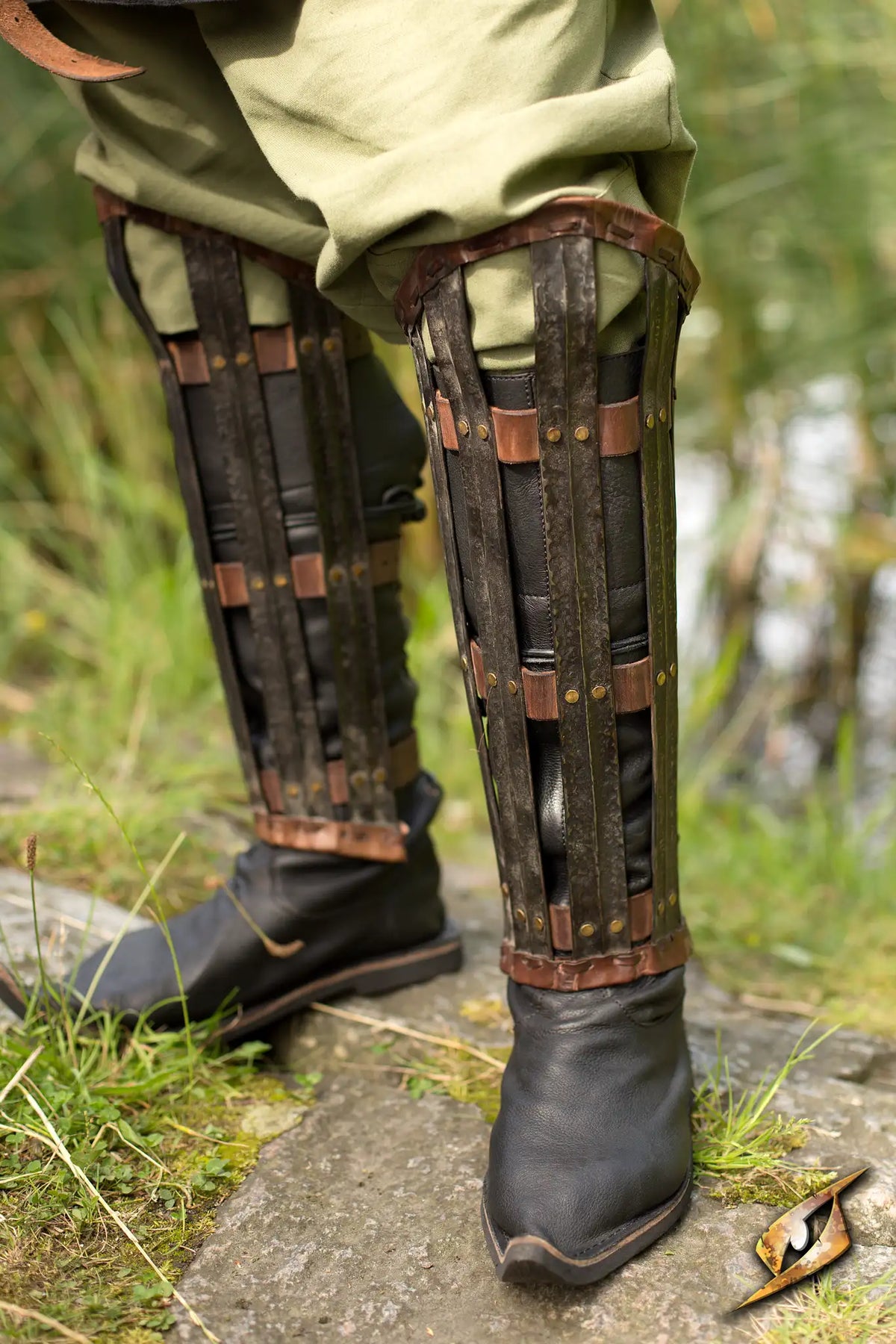
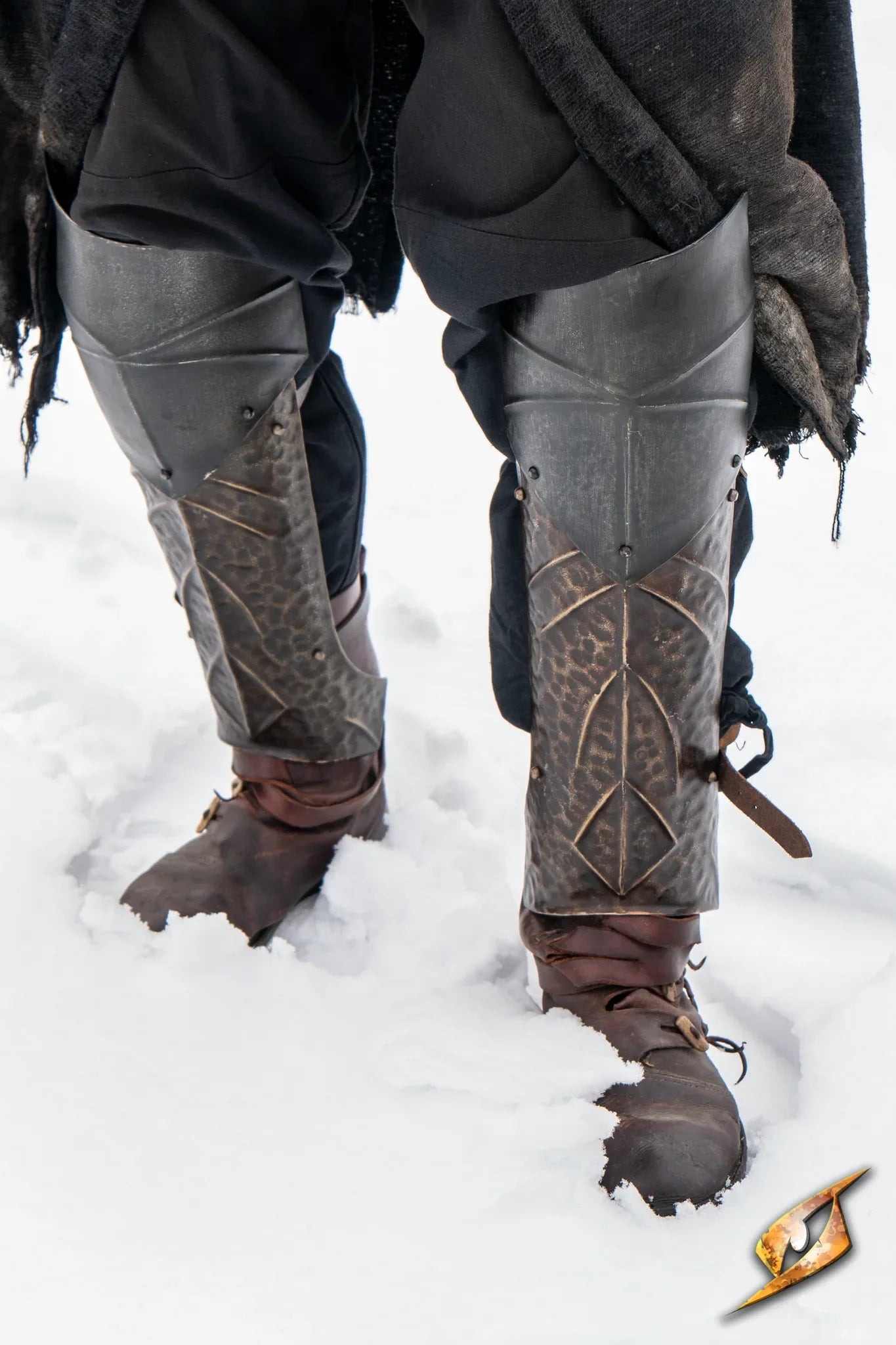
Greaves are the lower leg plate, protecting the area from below the knee to the ankle. They are also one of the oldest forms of leg armor in the Western tradition: bronze greaves appear in ancient Greek and Roman military contexts centuries before plate armor existed in its medieval form.
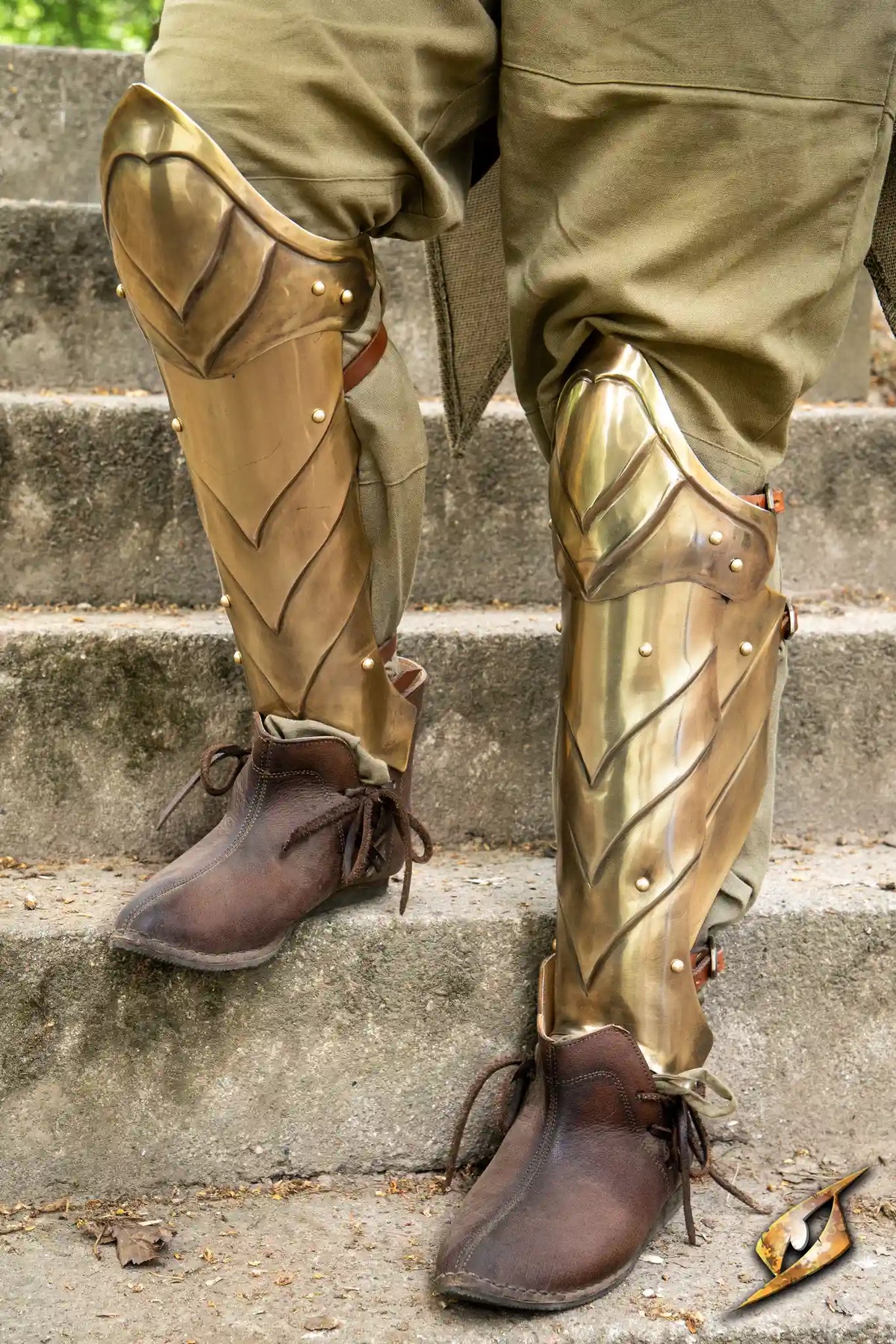
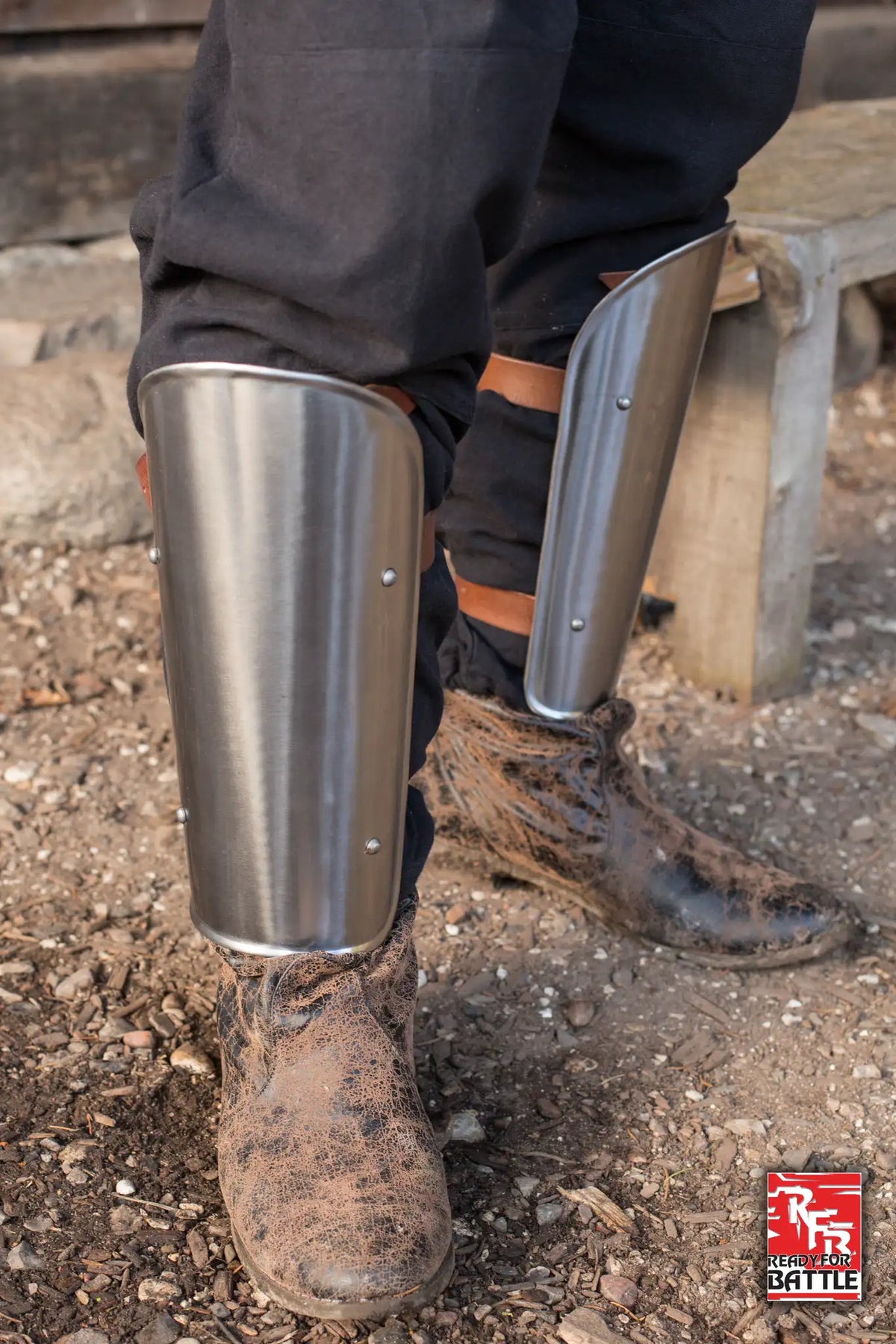
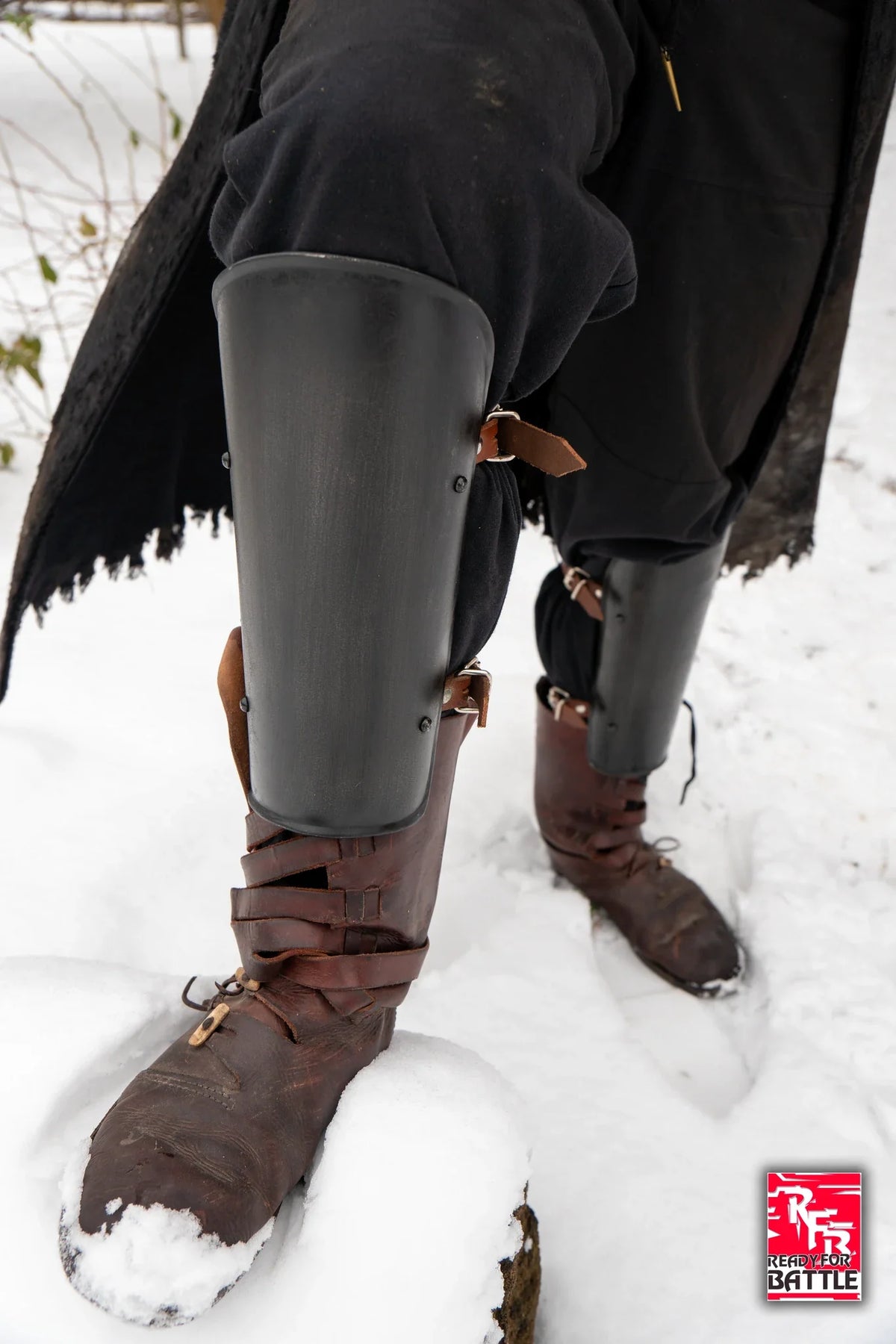
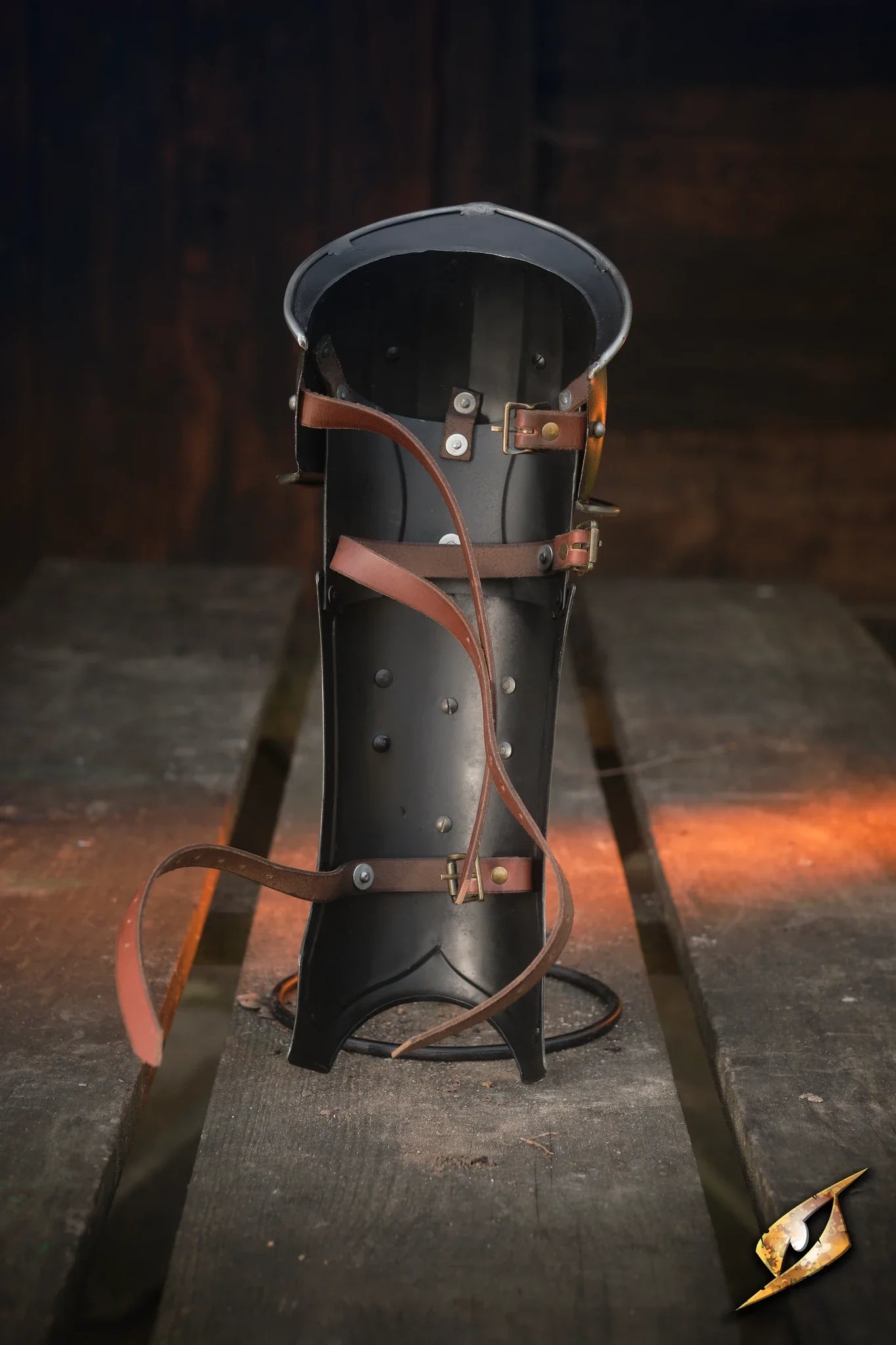
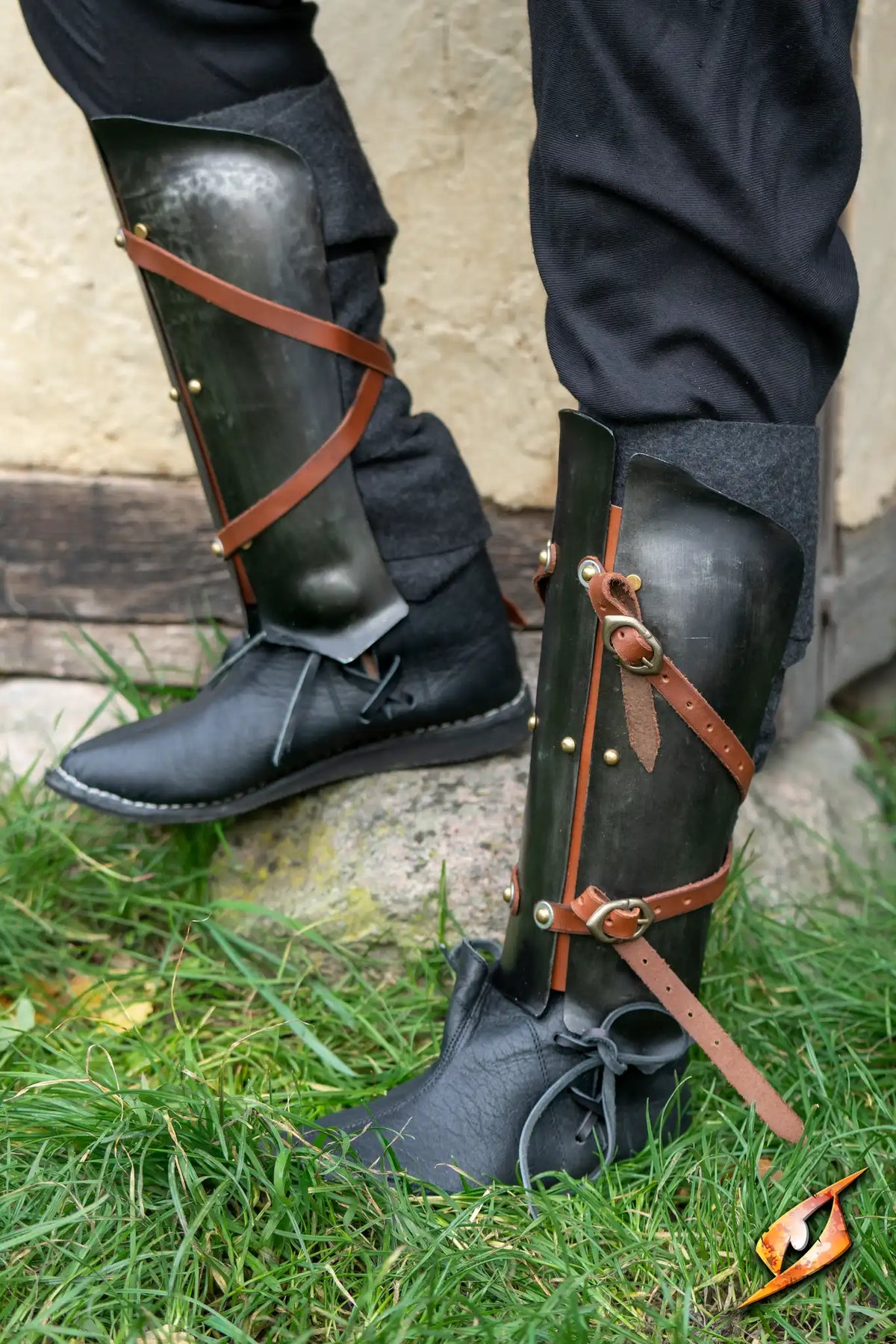
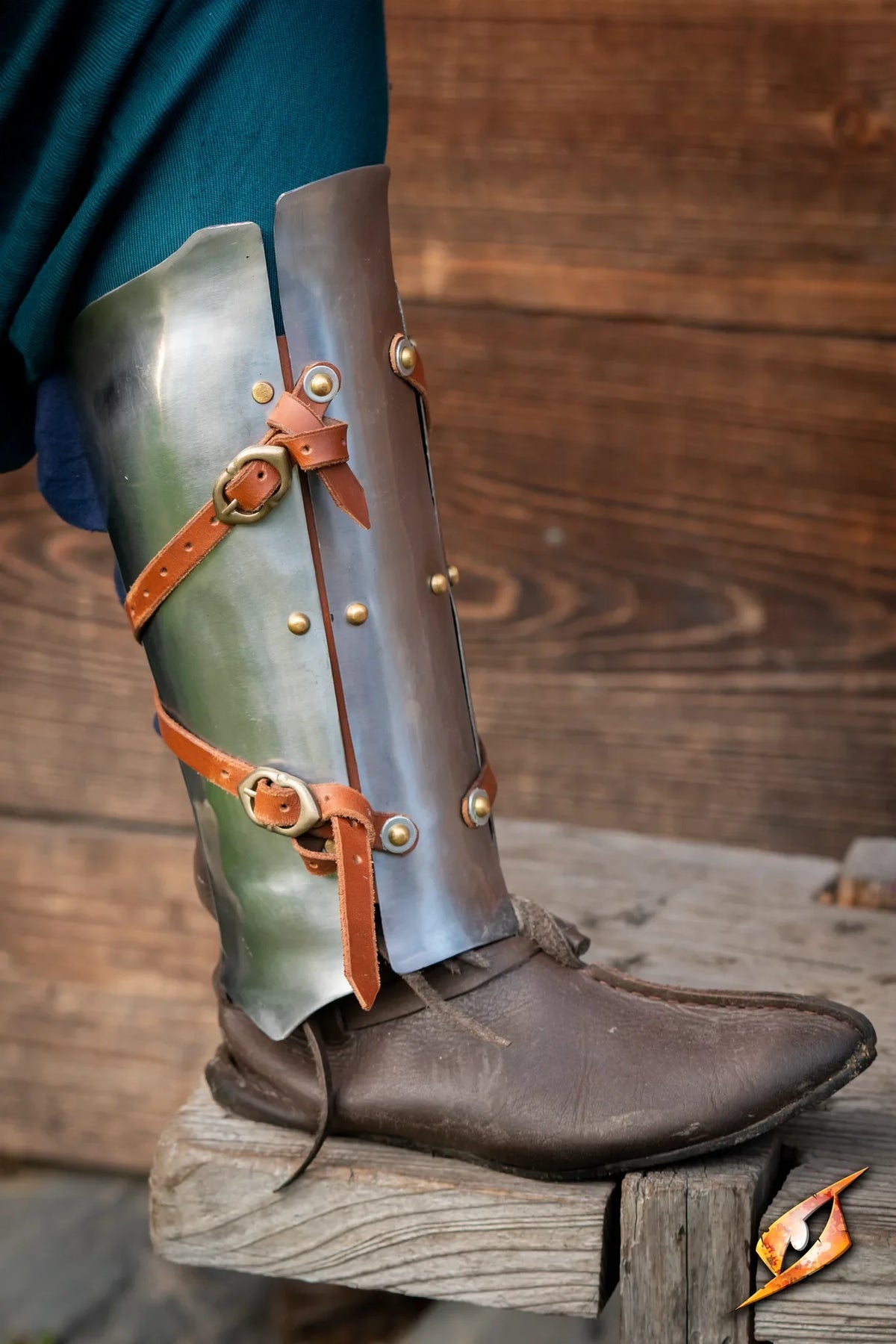
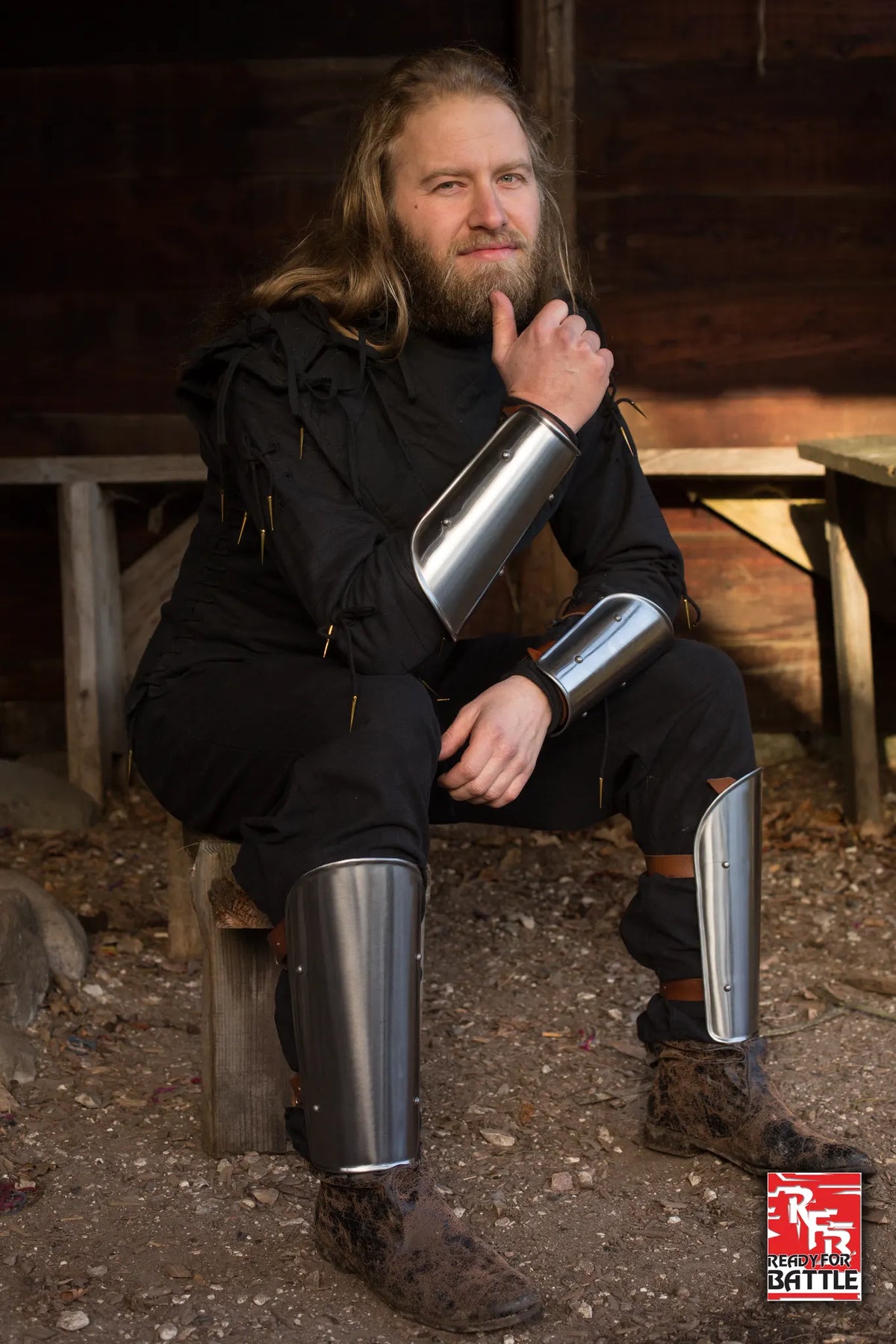
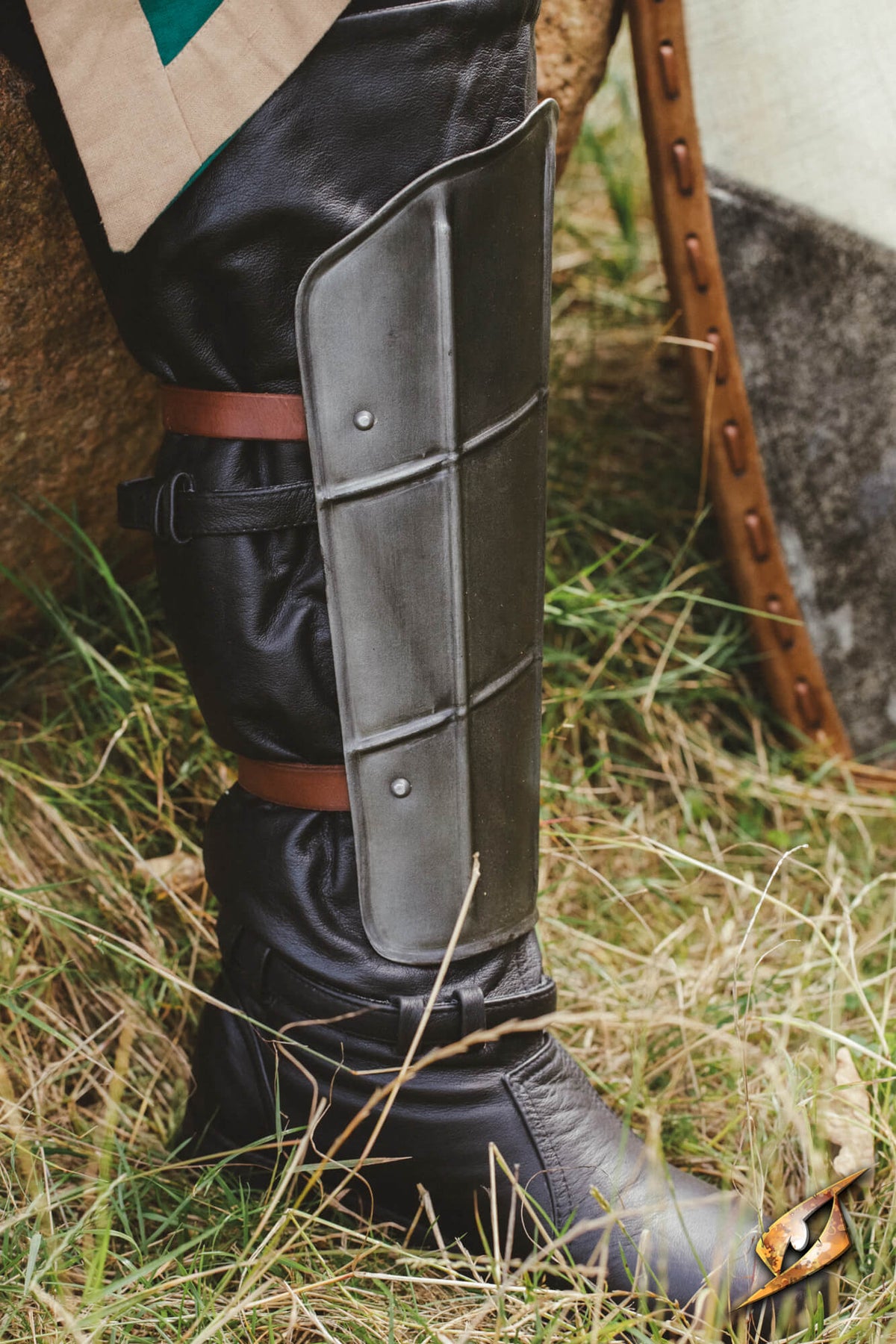
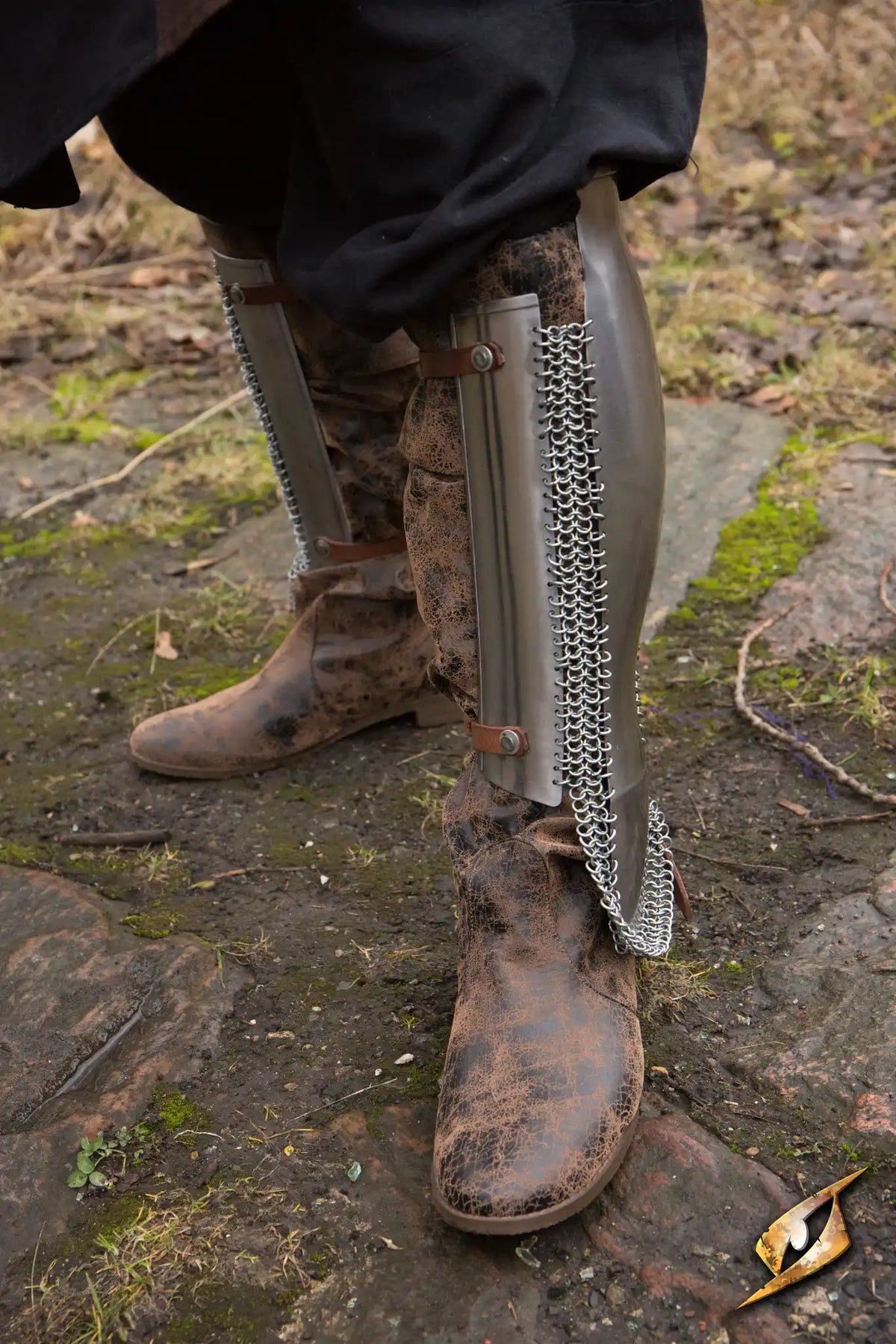
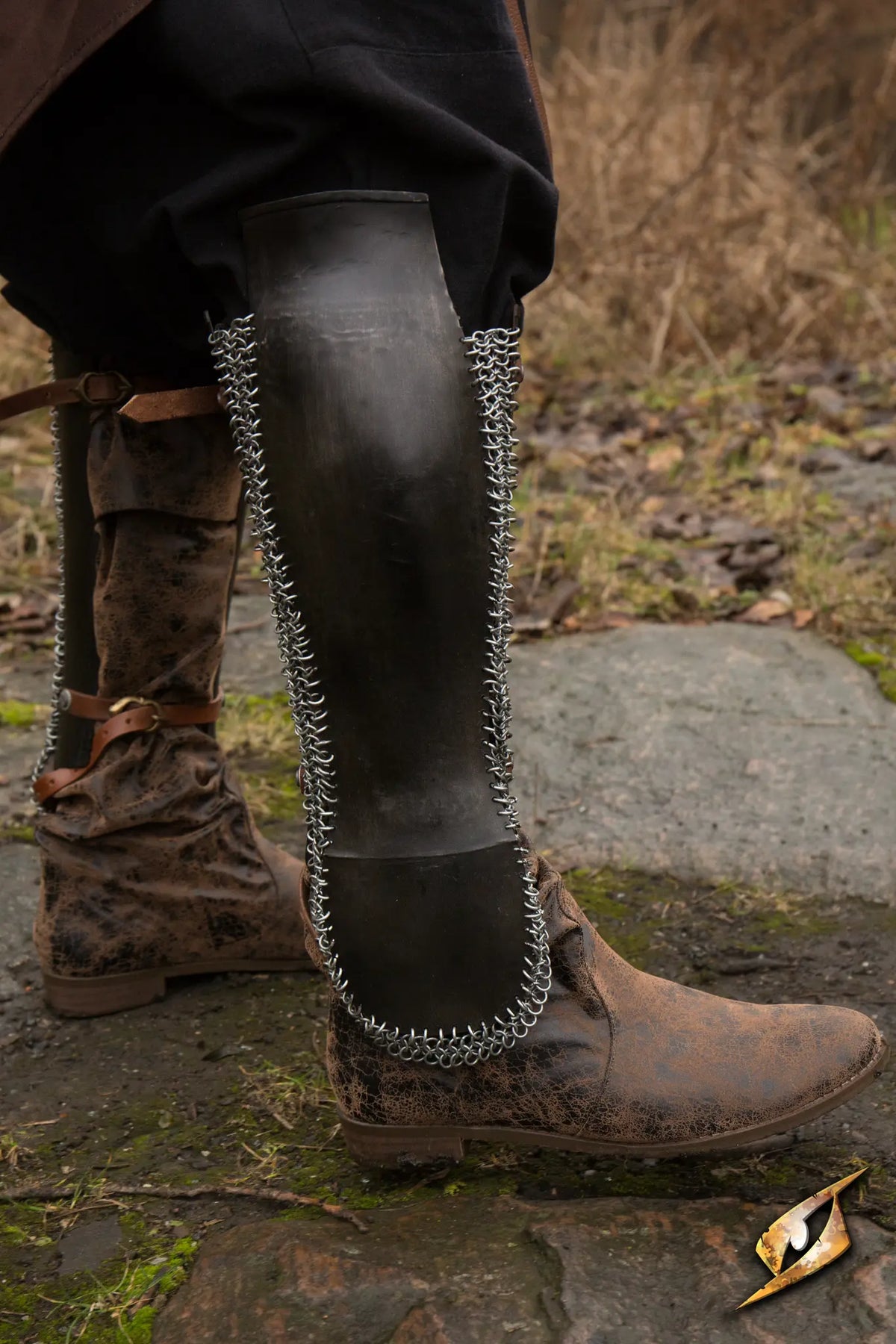
Two distinct forms appear in the range. A half greave covers the front of the lower leg only, a single shaped plate strapped around the shin. Lighter and easier to fit, it suits fighters who prioritize mobility or builds where full enclosure is not the goal. A full greave encircles the entire lower leg in two hinged plates closing around the calf, offering complete lower leg protection and a more historically accurate and substantial profile.
Greaves are typically the final addition to a leg harness, closing the last major gap between the knee and the ankle. For reenactors, they are a necessary component of any fully equipped impression from the 14th century onward.
Building a Leg Harness
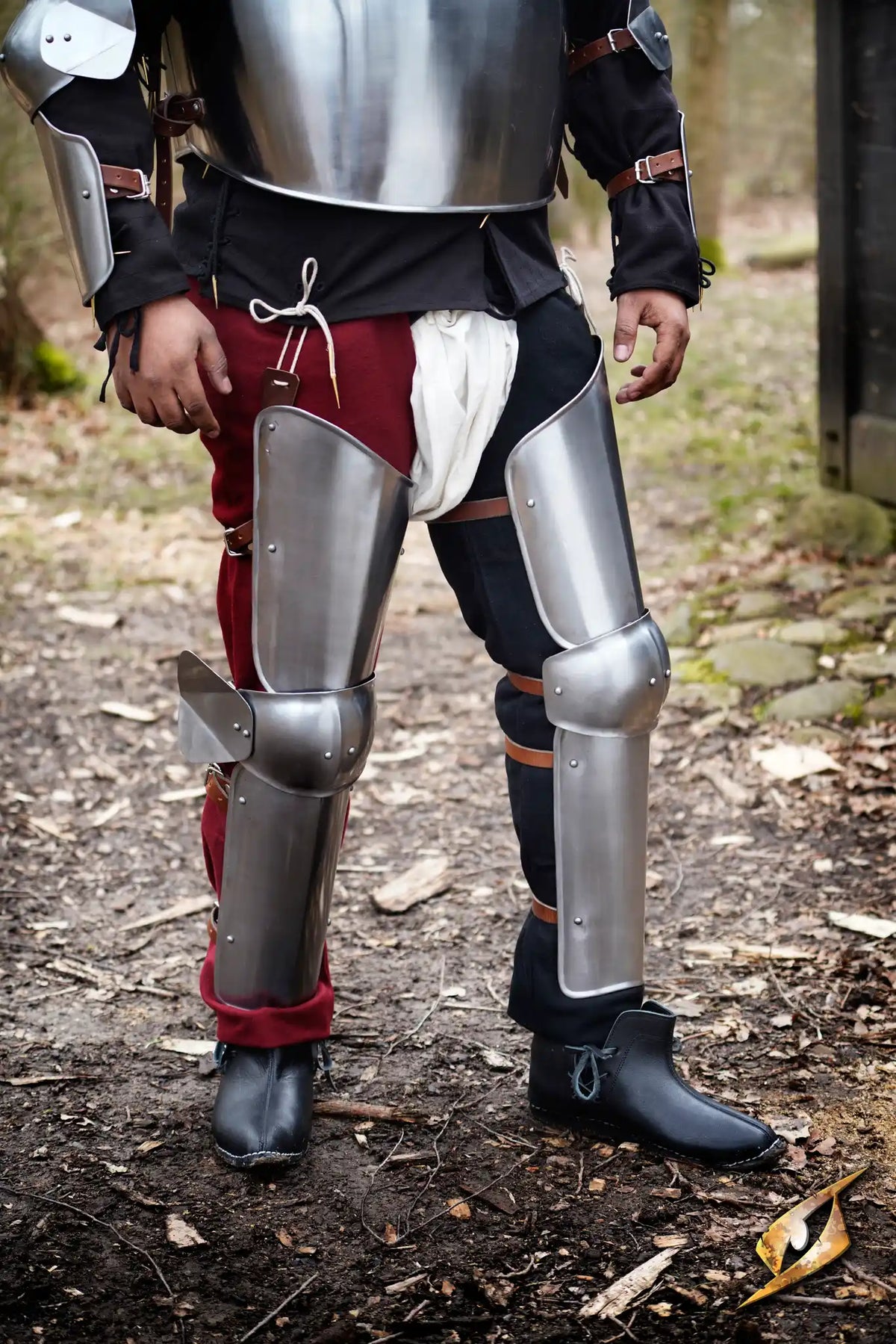
The natural sequence runs cuisses at the thigh, poleyns at the knee, and greaves at the lower leg. Most LARP players build incrementally: cuisses first as the largest and most visually impactful addition, then greaves to close the lower leg, then poleyns to bridge the gap between them. The order matters less than the destination: a complete leg harness that covers every part of the leg from thigh to ankle with no exposed gaps.
Frequently Asked Questions
Do I need all three pieces? Not necessarily all at once. Cuisses make the biggest immediate visual impact and are the natural starting point. Greaves complete the lower leg. Poleyns close the gap at the knee. Each adds meaningfully to the kit on its own, and a complete leg harness combines all three.
Can I wear leg armor without a full upper body harness? Yes. Leg armor works as a standalone addition to any kit and pairs naturally with leather or textile torso armor as well as plate. It is a common and effective way to add weight and presence to a build without committing to a full harness.
How does leg armor attach? Most pieces attach via leather straps buckled around the thigh, calf, or both depending on the piece. Wear them over a padded base layer or thick hose for comfort and to prevent shifting during movement.
What is the difference between cuisses and tassets? Tassets hang from the lower edge of a cuirass and protect the upper thigh from above. Cuisses wrap around the thigh itself and provide considerably more complete coverage. The two work together rather than replacing each other.