

Greek & Roman Helmets
The ancient world helmet is the most recognisable silhouette in armour. A Corinthian profile reads as Greek before anyone sees the rest of the kit. A Galea crest reads as Roman from the back of the field. These are the helmets that costume designers reach for when they need a single image to do all the work.
We make steel Greek and Roman helmets for larp, festival, reenactment, and display. Hand-shaped mild steel, padded leather liner inside every piece, leather chin strap, built lighter than their historical counterparts so you can wear one through a full event rather than just photograph it. The range covers the iconic styles from both cultures, plus a couple of ancient world pieces from further east.
Browse by style
Greek helmets - Hoplite and warrior helmets from archaic and classical Greece. Mostly closed-faced, mostly bronze in period but we make them in steel for durability.
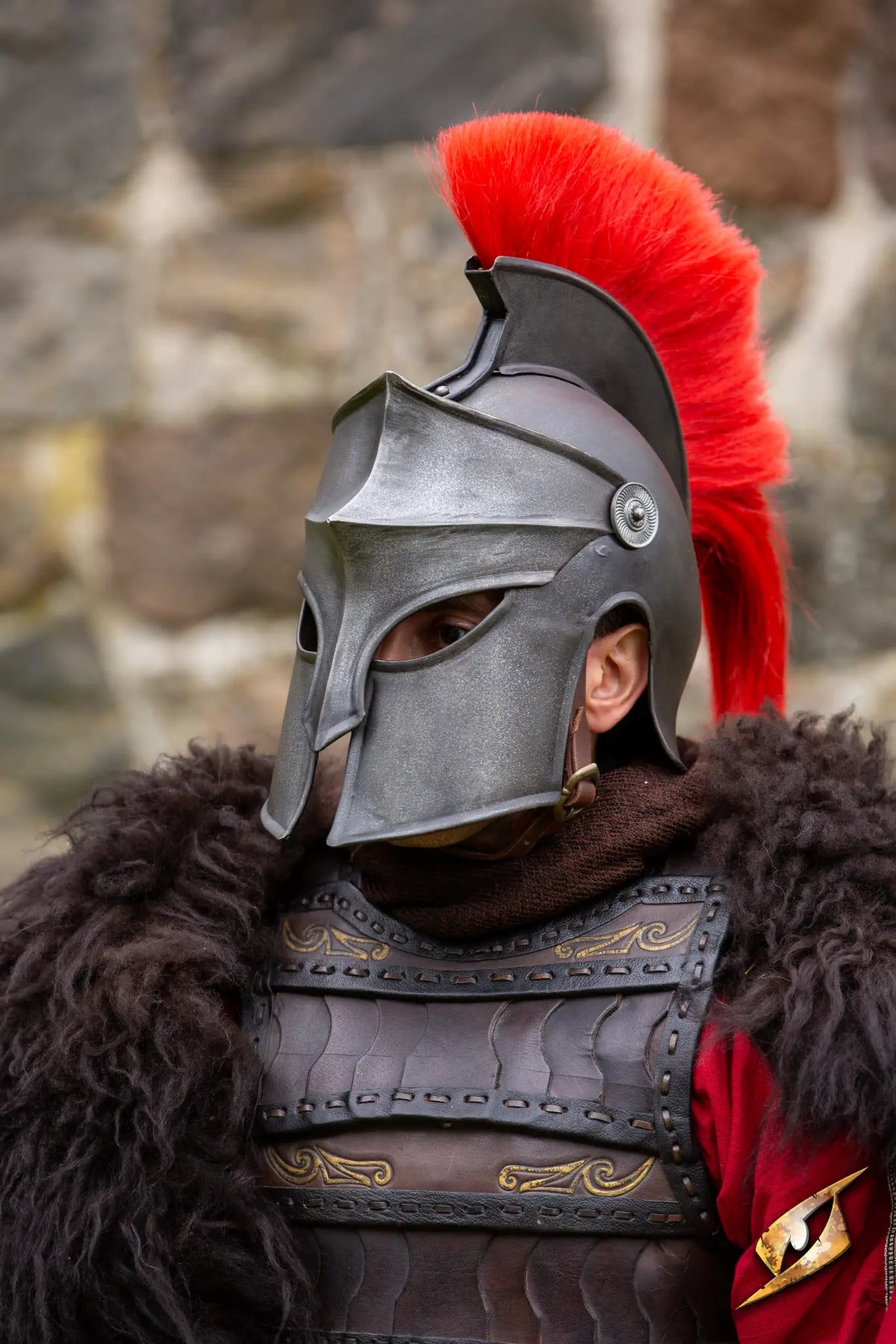
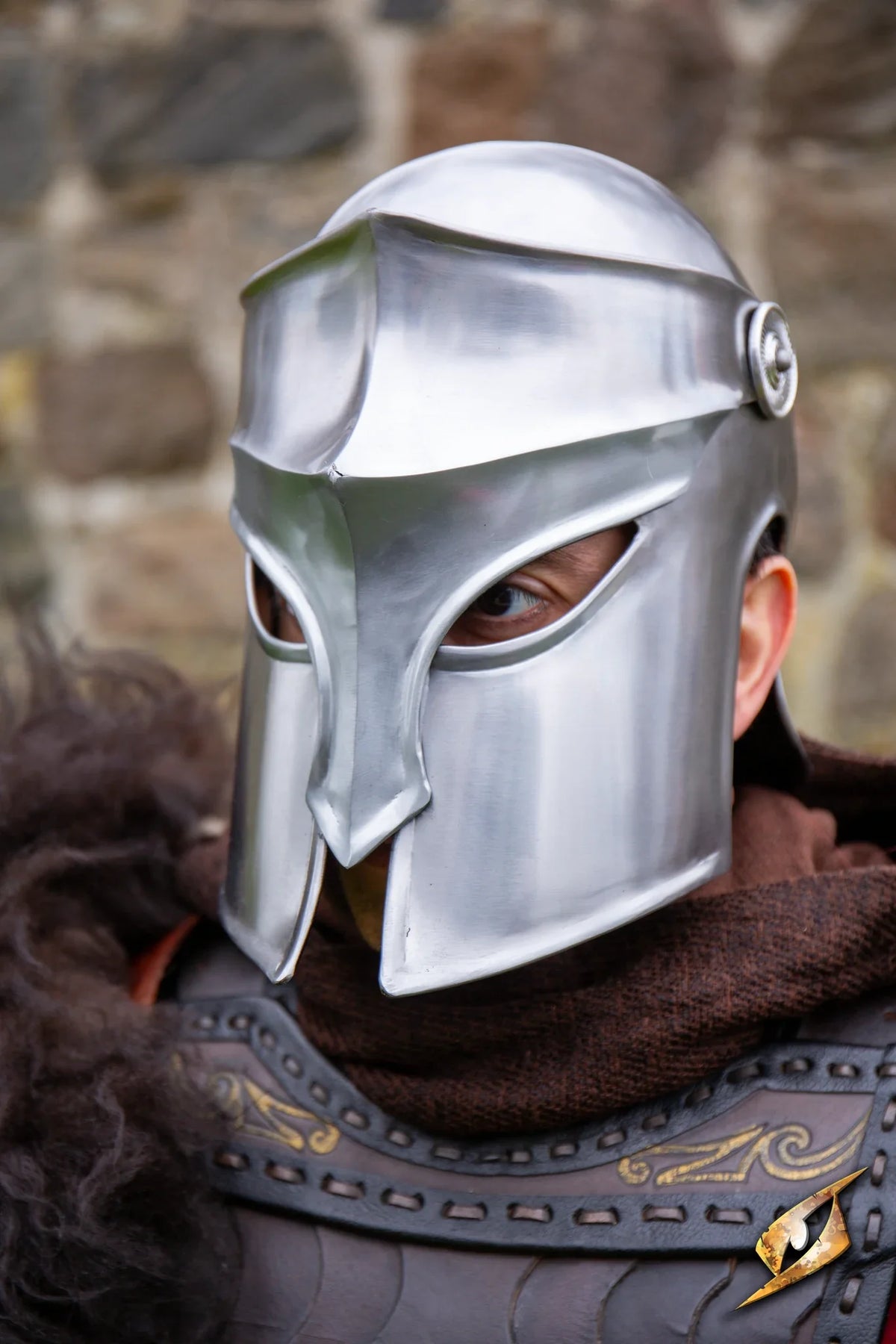
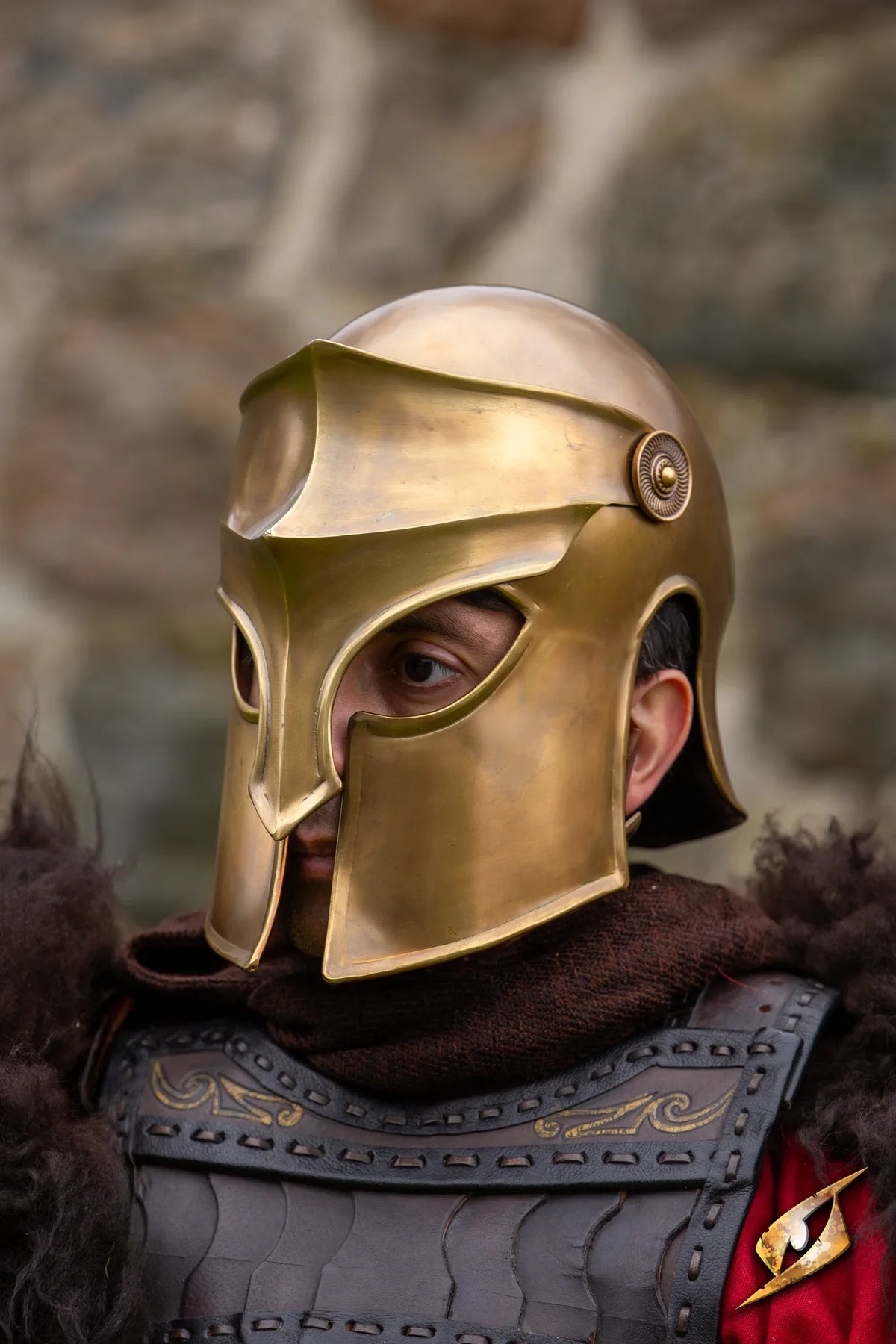
- Corinthian Helmet - The defining Greek silhouette. Full coverage, characteristic nose-guard and cheek pieces, narrow eye slits. What you picture when you picture a Greek hoplite.
- Corinthian Helmet with Plume - Same shell, transverse plume across the crown. The officer's version. Reads as commander rather than rank-and-file warrior.
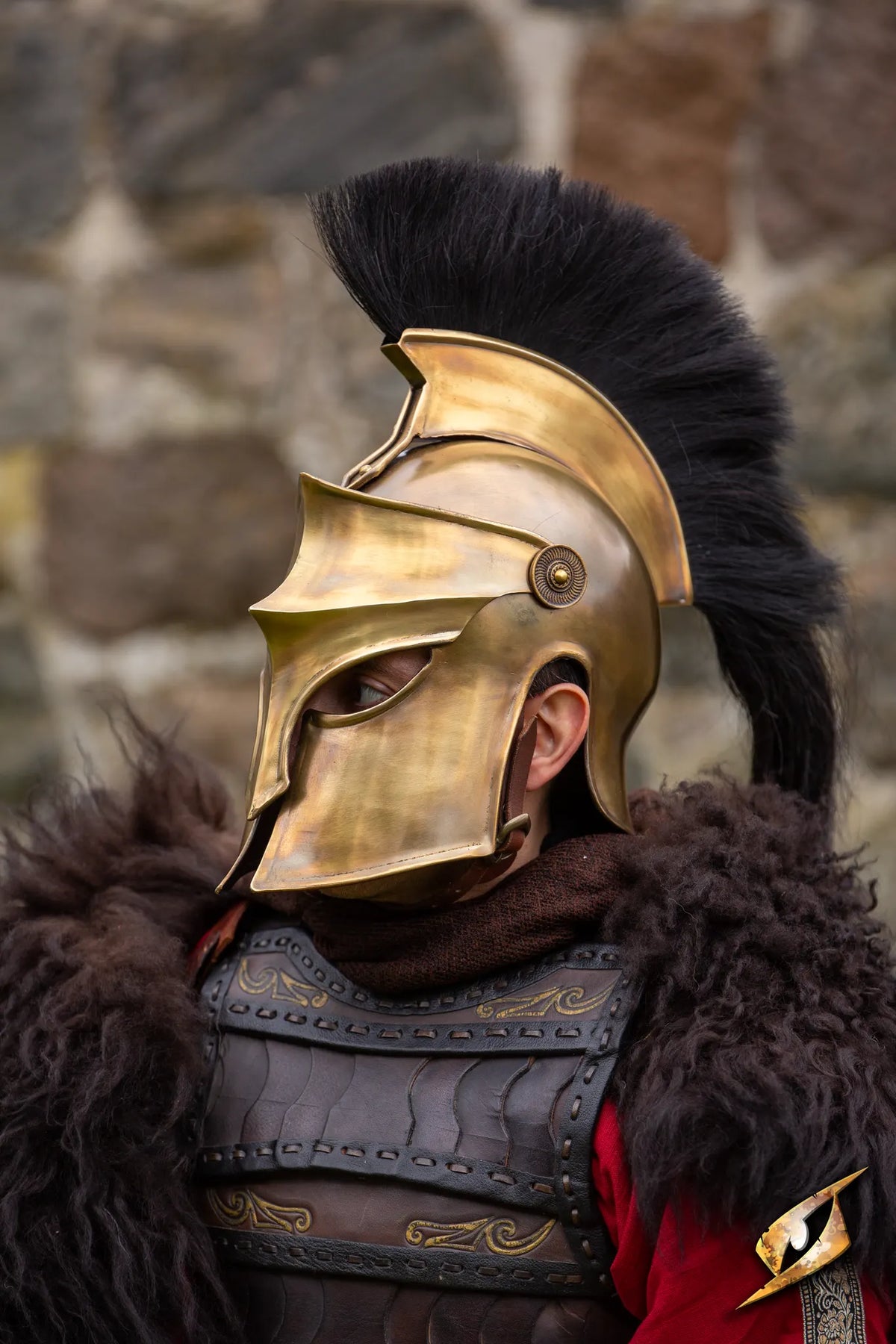
- Spartan Helmet (PU) - Our one polyurethane piece in this range, and a deliberate choice. PU weighs a fraction of steel, photographs nearly identically, and stays comfortable through hot-weather events where a steel Greek helmet would cook. The right answer for summer larp, Mediterranean festivals, and anyone who wants the look without the load. Maintenance-free, no rust, no oiling.
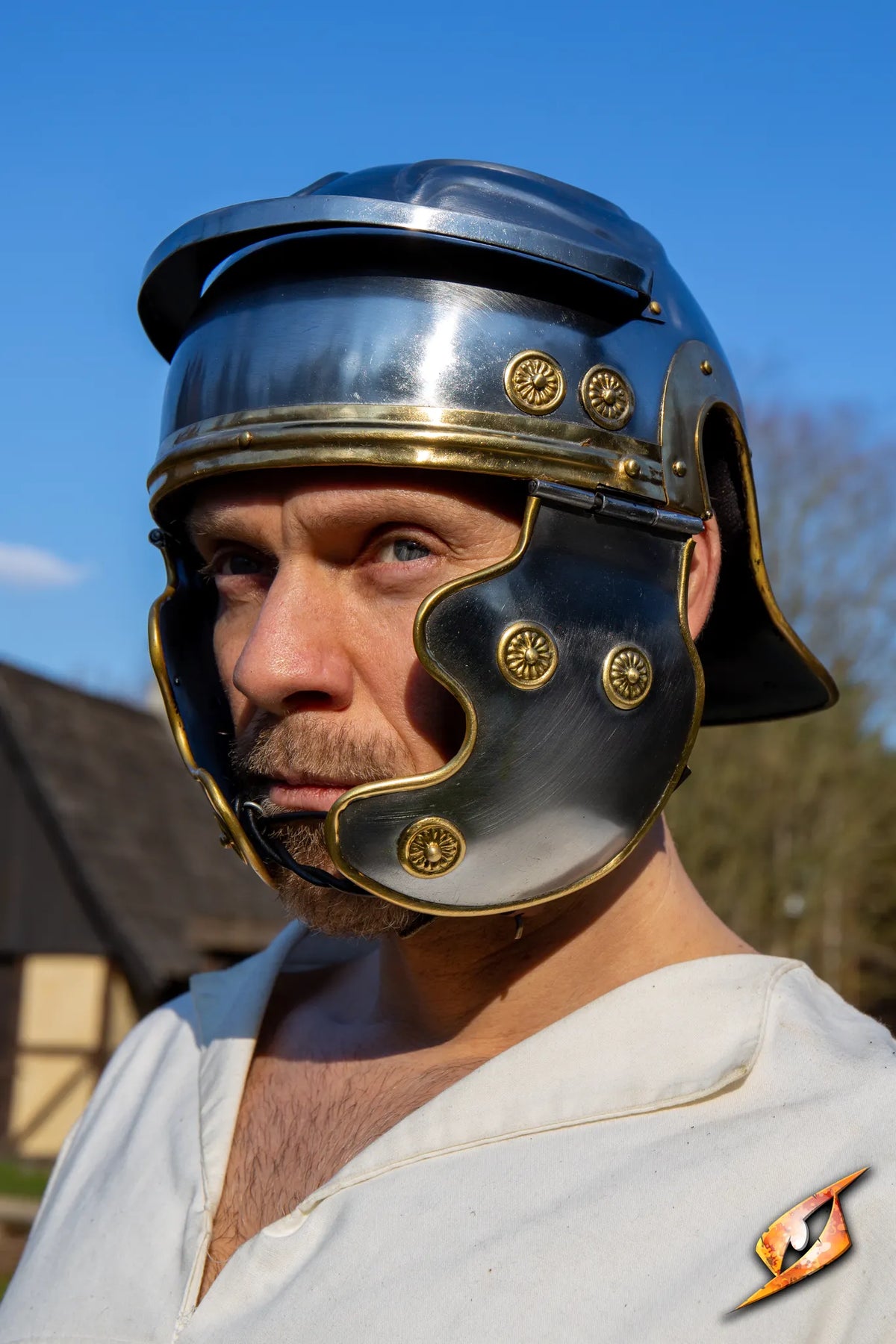
Roman helmets (Galea) Galea is the Latin word for the Roman military helmet. The shapes evolved over centuries, from the Republican-era Montefortino through the Imperial Gallic helmets of the early Empire and on into the late Roman ridge helmets. Ours sit in the iconic Imperial Roman tradition, the legionary look most people picture.
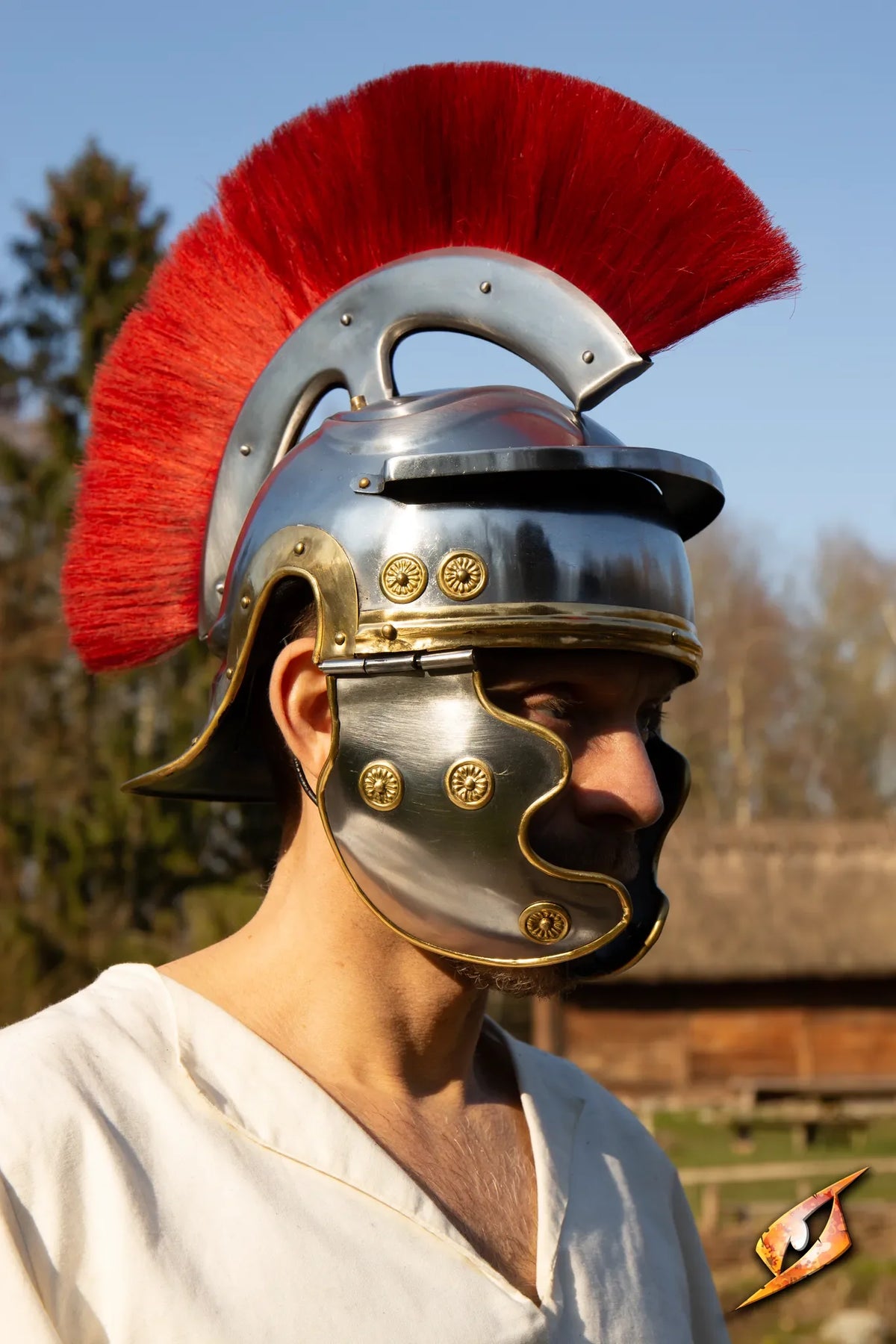
- Galea Roman Helmet - Standard legionary helmet. Bowl-shaped crown, integrated neck guard, hinged cheek pieces. The Galea you see on every Roman soldier in every film and museum diorama.
- Galea Roman Helmet with Plume - Same helmet, transverse red plume across the crown. Historically the mark of a centurion, and the version most often chosen for officer or character roles.
Other ancient world
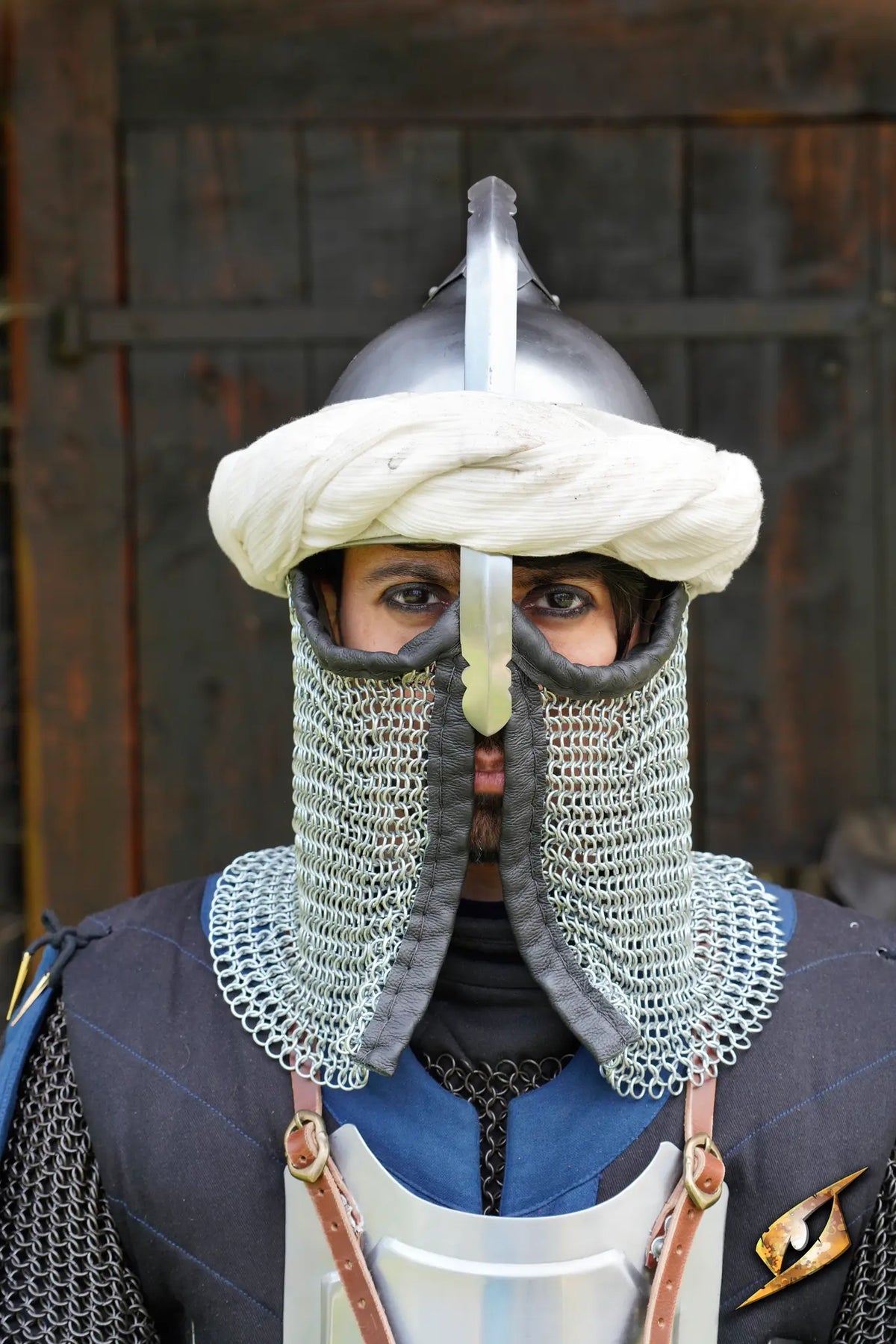
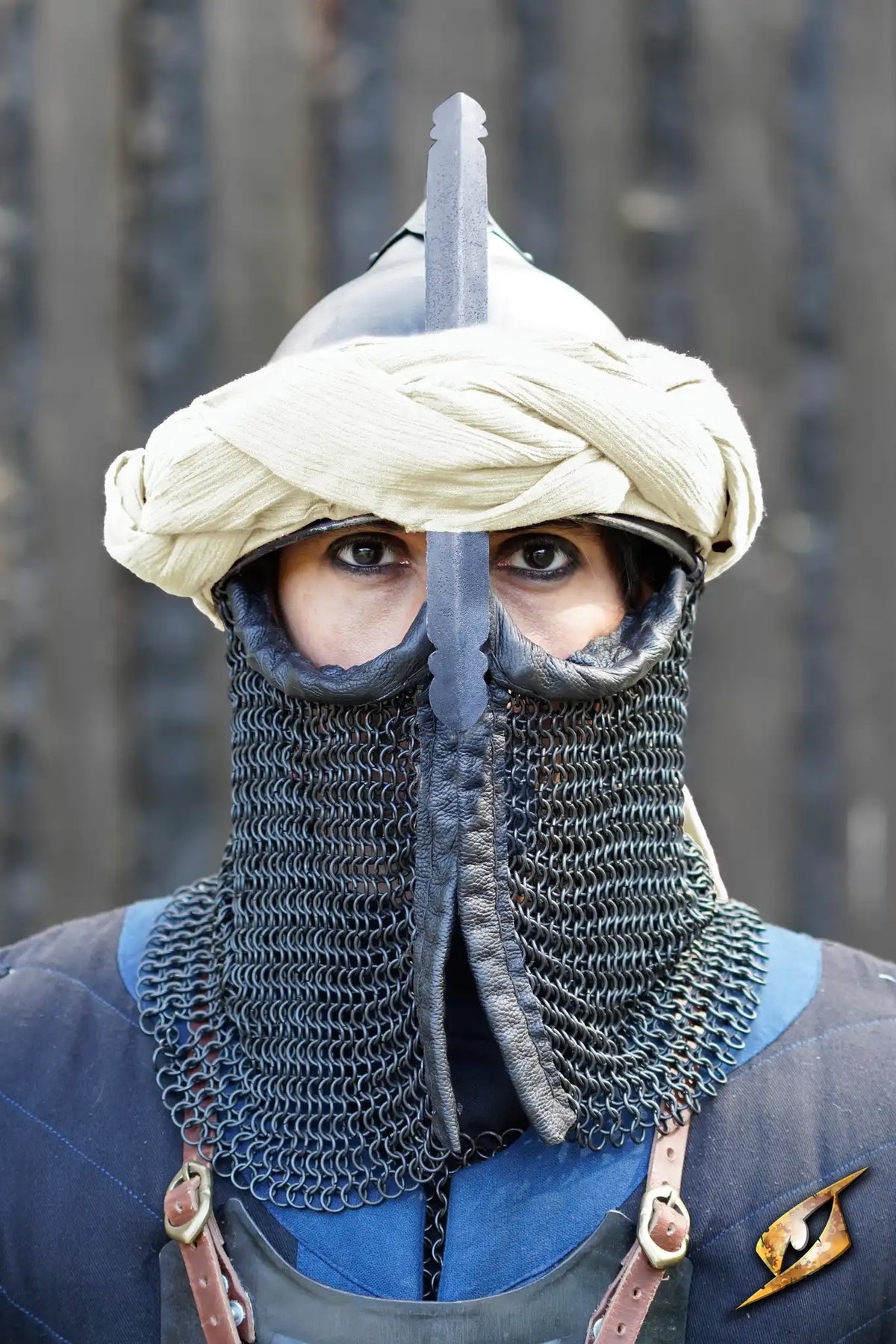
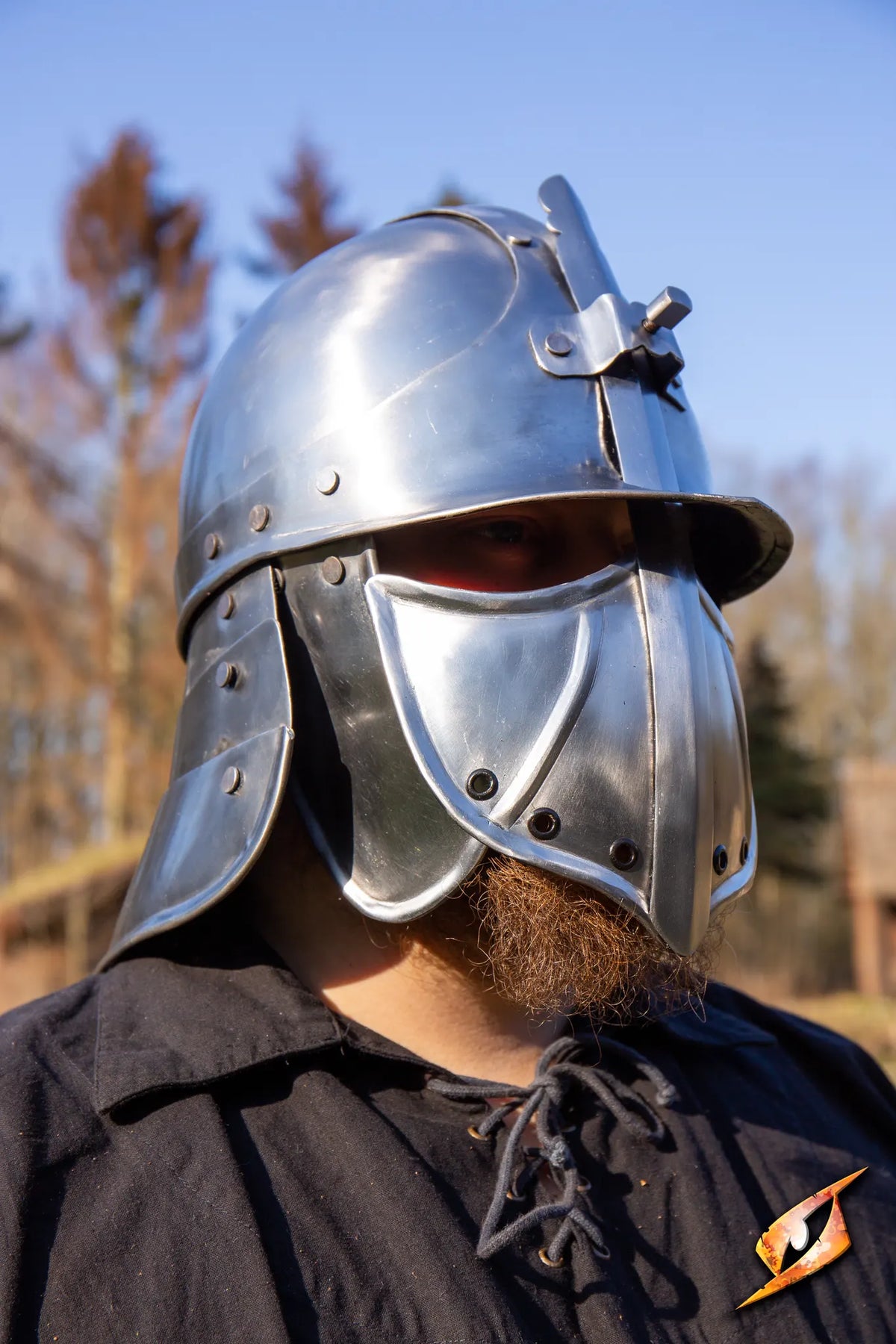
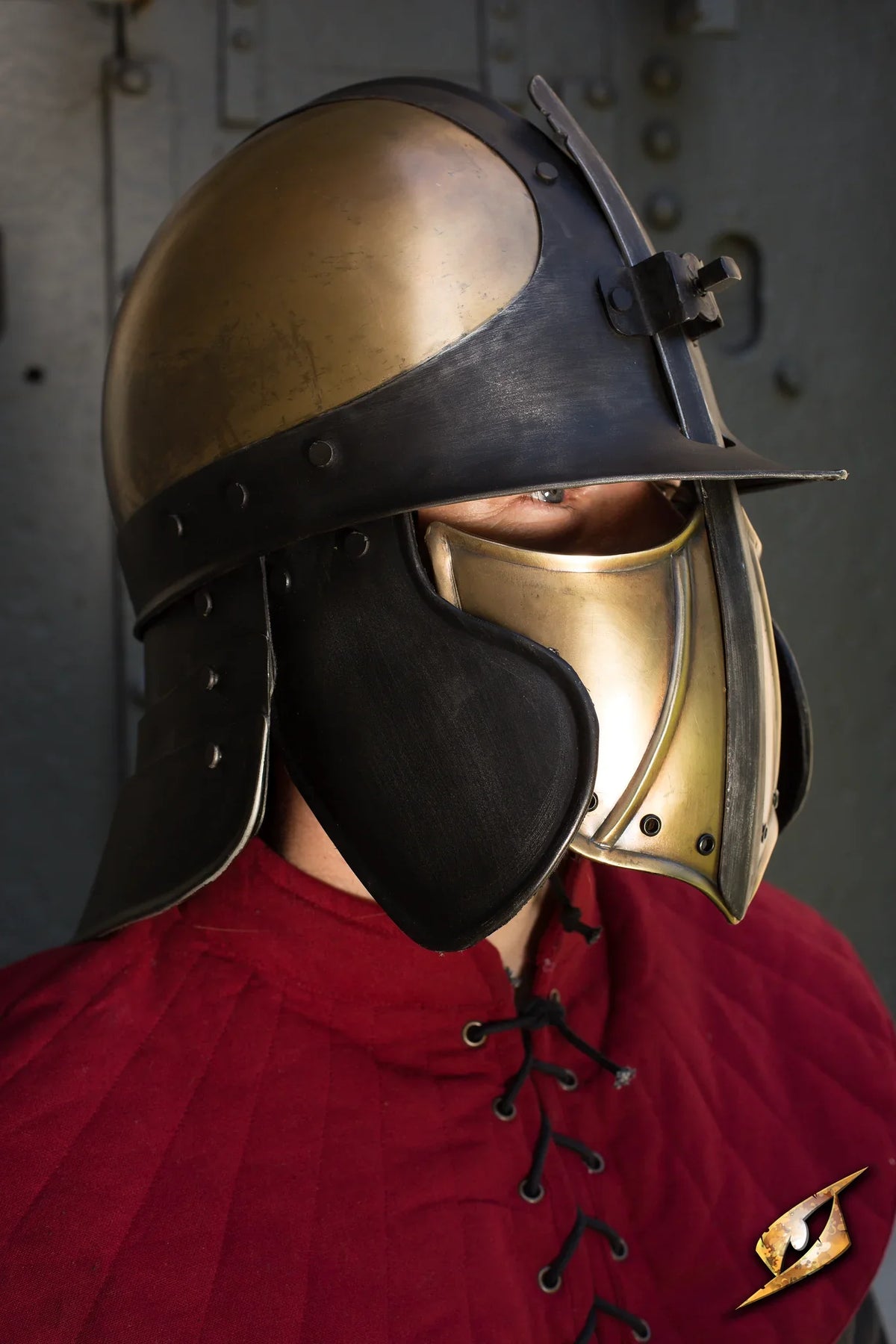
- Persian Helmet - For Persian Immortal characters, Achaemenid soldiers, or anyone playing into the eastern half of the ancient world. Steel construction to the same standard as the rest of the range.
- CQ Ratio Helmet - Loosely Persian-inspired, fits the broader ancient-east aesthetic. Works for fantasy concepts, mixed-culture characters, or anyone who wants an ancient world look that doesn't lock them into a specific time and place.
Pair any of them with our chainmail coif if your character or your group's rules call for neck coverage beyond what the helmet itself provides.
How to choose
Greek or Roman. This is the real question and most of the time the character has already decided for you. Hoplite, Spartan, mythological Greek, Trojan-era warrior, that's the Corinthian family. Legionary, centurion, Roman officer, gladiator, that's the Galea. The two cultures didn't borrow each other's helmet shapes, so picking one anchors the rest of the kit.
Open face or closed face. The Galea is open-faced. You can see, you can be seen, you can shout commands. The Corinthian is nearly closed, with narrow eye slits and full cheek coverage. It looks unbeatable in photographs and limits your vision and breathing meaningfully when you're actually wearing it. Historically the Greeks pushed the Corinthian back on top of the head when not actively fighting, which is why so many statues show it worn that way. You can do the same.
Plume or no plume. Plumes mark rank or status. A plain helmet reads as a soldier. A plumed helmet reads as an officer, a hero, or someone important. If your character is meant to stand out at the front of a unit, plume. If they're meant to blend into one, no plume.
Steel or PU. Steel for presence, weight, sound, and longevity. PU for hot events, for new players who want the look at a lower entry point, and for anyone who'd rather not deal with oiling and rust. Our PU Spartan is built to the same shape as the steel pieces and reads the same in photos. If you can't decide, ask yourself how many hours you'll be wearing it per event. Past about four hours of continuous wear, PU starts to look very attractive.
Sizing. Measure the circumference of your head just above the eyebrows, where the helmet will sit. The padded leather liner adjusts within a range, the shell doesn't. Between sizes go up, a slightly large helmet can be padded out, a tight one stays tight.
Why ours
Mild steel, hand-shaped, lighter than the originals. A historical Galea ran around 2 kilos. A bronze Corinthian could run heavier. Our versions sit lower because you're going to wear them for a day, not survive a battle in them. Padded leather liner in every steel helmet, leather chin strap, no shortcuts on the parts that take the load. The PU Spartan is built to the same shape standards. We figured the right way to do an ancient world range was to make pieces you could actually use, whether that meant wearing them at an event or putting them on a stand at home. Plenty of customers do both.
Things people ask us
What is a Galea? Galea is the Latin word for the Roman military helmet. It covers several centuries of evolving designs, from the bronze Montefortino of the Republic to the iron Imperial Gallic helmets of the early Empire and the late Roman ridge helmets that came later. When most people say "Roman helmet" they mean the Imperial Gallic style, which is what our Galea pieces are modelled on.
What helmet did Spartans actually wear? Corinthian helmets, mostly. The pop-culture Spartan helmet from 300 and similar media is a stylised version of the late Corinthian or sub-Corinthian type. Real Spartan hoplites in the classical period wore Corinthians and later pilos helmets (a simpler conical cap). Our Spartan PU piece sits in the cinematic Corinthian-derived tradition, which is what most customers actually want when they ask for a Spartan helmet.
What's the difference between a Corinthian and a Spartan helmet? Historically, very little. The Spartans were Greek and wore Greek helmets, primarily Corinthians. "Spartan helmet" as a distinct category is a modern label driven by film and games. If you want a historically accurate Spartan look, a Corinthian is the right piece. If you want the cinematic Spartan look, our Spartan PU is the right piece.
What helmet did Roman soldiers wear? Depends on the century. Republic-era legionaries wore the Montefortino. Early Imperial legionaries (the ones most people picture, the ones from any film about Rome) wore the Imperial Gallic, which is what our Galea is. Centurions wore the same shape with a transverse plume. Late Roman soldiers wore ridge helmets, a different and simpler design.
Are these safe for larp combat? Yes. Larp uses foam or latex weapons, and a steel helmet handles those without issue. The PU Spartan is built for larp impact too. Check your specific larp's rules, a small minority restrict metal headwear.
Can I see properly out of a Corinthian? Better than the look of it suggests. Closed Greek helmets cost you some peripheral vision, the same way a Sallet or Sugar Loaf does, but most first-time wearers are surprised by how much they can still see and how quickly they adapt. You turn your head a little more, you track opponents a little more deliberately, and within a fight or two it stops feeling restrictive. If you want maximum visibility between engagements, you can push the helmet back on top of the head the way the Greeks did. For display or photography, the closed look is exactly what you want.
How heavy are they? Our steel Greek and Roman helmets sit between 1.2 and 2 kilos depending on style. The PU Spartan is around 0.5 kilos. Historical originals were heavier in both cases.
How do I look after them? Steel: wipe down after events, store dry, light coat of oil before long storage. PU: basically nothing, wipe clean if it gets dirty. Mild steel rusts if neglected. Five minutes a few times a year keeps a helmet looking sharp for a decade.