



Recently viewed products
Medieval Undergarments - Yoremade
Every solid medieval kit starts with the right base layer. Medieval undergarments were the foundation of daily dress for men and women across the full medieval period, worn directly against the skin to protect outer garments from sweat and wear. We carry both men's and women's options, handmade and cut for comfort and authenticity.
What Did People Actually Wear Under Their Medieval Clothes?
The base layer had a straightforward job: keep the skin comfortable, add warmth, and protect expensive outer garments from daily wear. Linen was the standard fabric across the medieval period, chosen for its breathability and durability. Cotton and linen/cotton blends are a practical modern equivalent that offer similar comfort and wash easily. What historically separated a peasant's undergarments from a nobleman's was not the cut, which changed relatively little, but the quality of the fabric.
Men's Medieval Undergarments
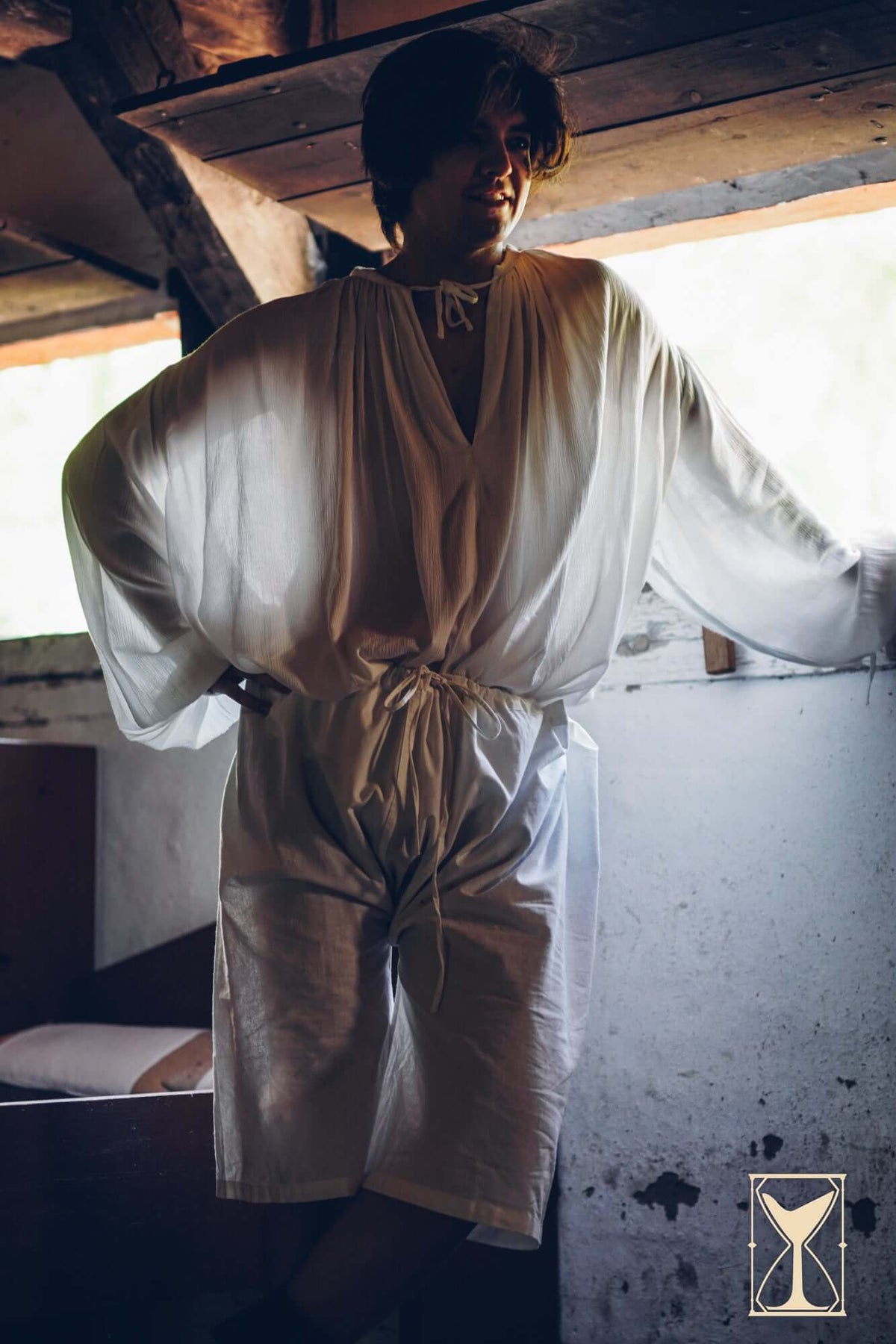
A complete men's medieval base layer consists of three pieces: a shirt or under-tunic on top, braies on the bottom, and a coif on the head. The shirt was worn under every outer garment regardless of class or century. Braies, the loose linen drawers of the medieval period, tied at the waist and provided the attachment point for hose. The coif, a simple close-fitting cap tied under the chin, completed the base layer and was worn by men across all social classes from the 12th century onward.
For our men's options, the Bonifacio is a fitted under-tunic suited to later 14th century impressions, while the Rodrigo is a looser shirt cut for earlier period wear. Both work as a practical and authentic base layer for SCA, LARP, and medieval faire kits.
Women's Medieval Undergarments
Women's medieval dress was built on a single base layer: the chemise, also known as a smock or shift depending on period and region. A loose, ankle-length garment worn directly against the skin, it sat beneath a kirtle, cotehardie, or gown and served as both undergarment and nightwear. The cut was simple and consistent across the period, with fabric quality being the main class distinction.
Our women's options are the Colette, a generously cut chemise suited to 13th and 14th century dress, and the Marian, a slightly more fitted smock designed for later 14th and early 15th century impressions. Both are the natural starting point for any women's medieval kit.
Frequently Asked Questions
What is the difference between a chemise and a smock? The same garment, different terms. Chemise is the French-derived word, smock and shift are the common English equivalents. All refer to the loose linen base layer worn by women in the medieval period.
What fabric should I choose? Linen is the most historically accurate option. Cotton and linen/cotton blends are a practical alternative with similar comfort and easy care. Check each product page for the specific fabric used.
Are these suitable for SCA and LARP? Yes. All our undergarments are cut for movement and comfort and hold up well for full-day events.
How do I size medieval undergarments? Chemises and smocks are generously cut and forgiving in fit. Shirts and braies need accurate chest, waist, and hip measurements. Check the size guide on each product page before ordering.