

Recently viewed products
Renaissance Clothing
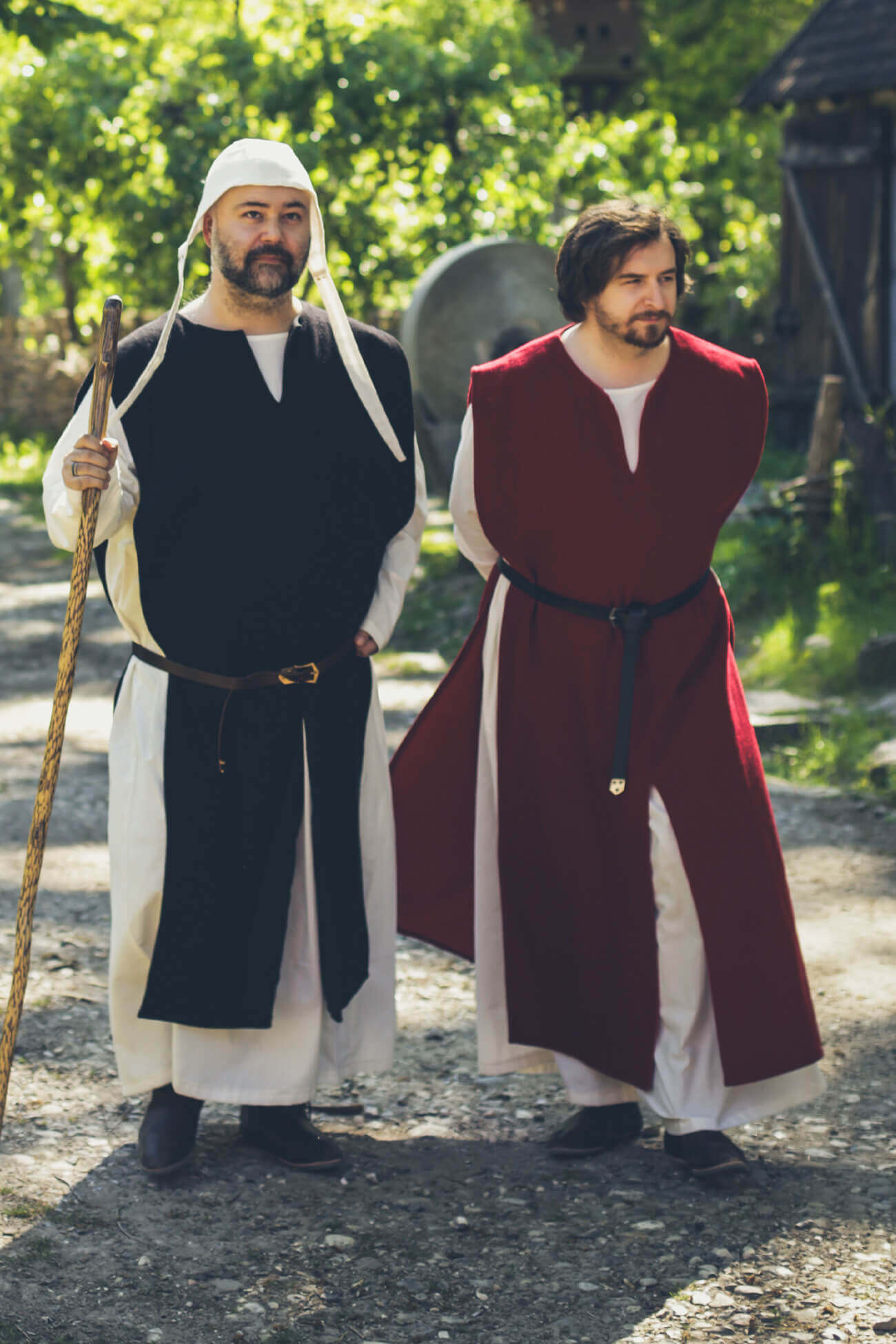
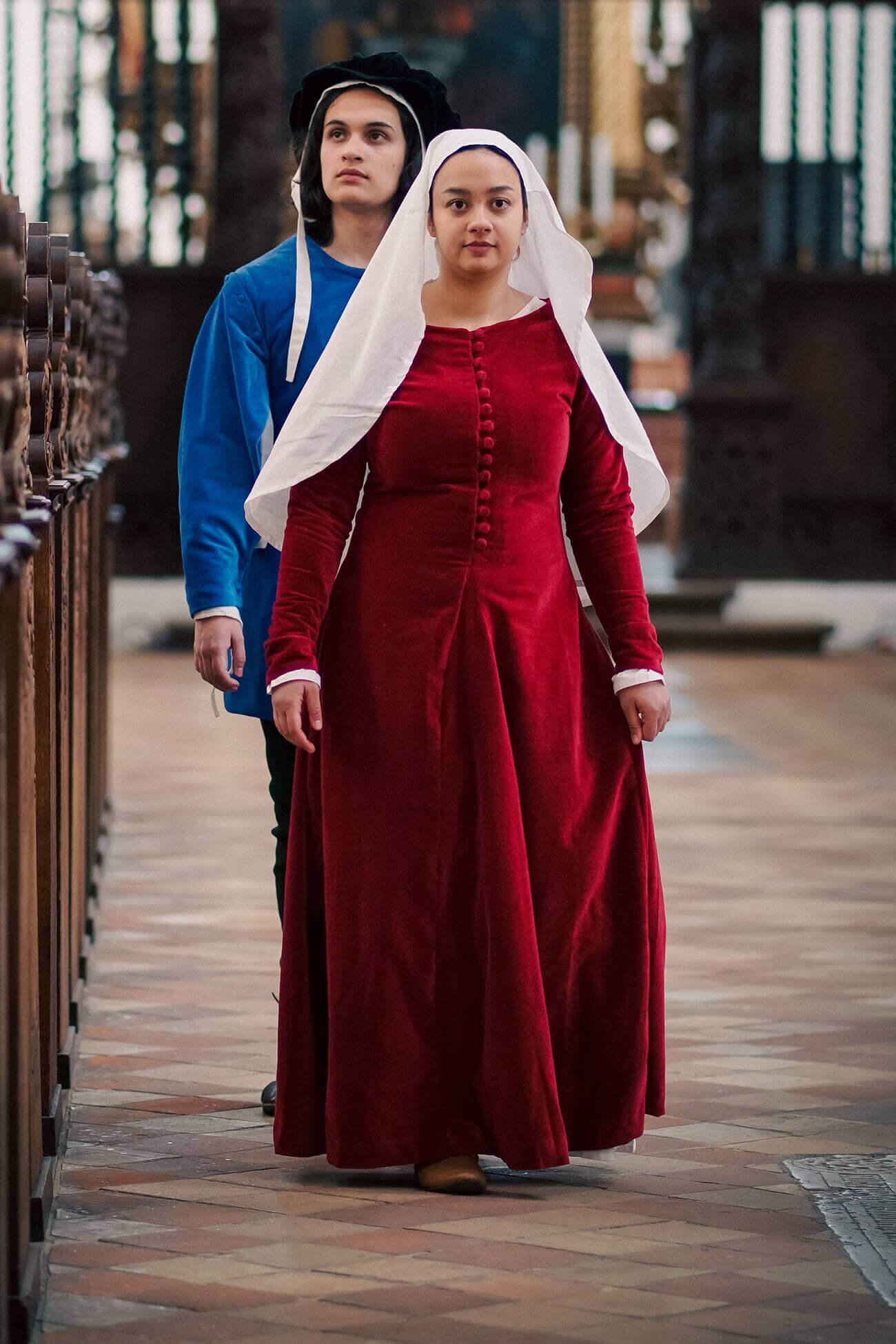
Renaissance clothing refers to the fashions of Europe from 1400 to 1600, characterized by fitted silhouettes, natural wool and linen fabrics, and garments that varied dramatically by social class. At Yoremade, by Epic Armoury, we believe that Renaissance fashion represents the peak of historical tailoring, where the loose robes of the medieval world transformed into structured, intentional shapes. Our collection of authentic Renaissance garments covers everything from essential linen base layers to the iconic Landsknecht clothing that defined the 16th-century mercenary.
What Is Renaissance Clothing?
Renaissance clothing is the historical dress of Europe between the 15th and 16th centuries, defined by body-conscious tailoring, natural fibers, and a distinct separation of silhouettes by region. While earlier periods relied on loose draping, the Renaissance introduced curved seams and structural padding to create specific silhouettes. This era produced some of the most visually distinctive Renaissance attire in history, including the flamboyant styles of the Holy Roman Empire and the refined elegance of the Italian city-states.
A Brief History of Renaissance Fashion
The history of Renaissance fashion is a story of technical innovation and the rising influence of the merchant class.
-
The High Renaissance (c.1450–1530): During the 15th century, Italian fashion centers like Florence and Venice began to dominate the aesthetic landscape. This period introduced detachable sleeves and more complex tailoring, though the universal base layer remained the linen Shift Giulia or Shirt Duccio.
-
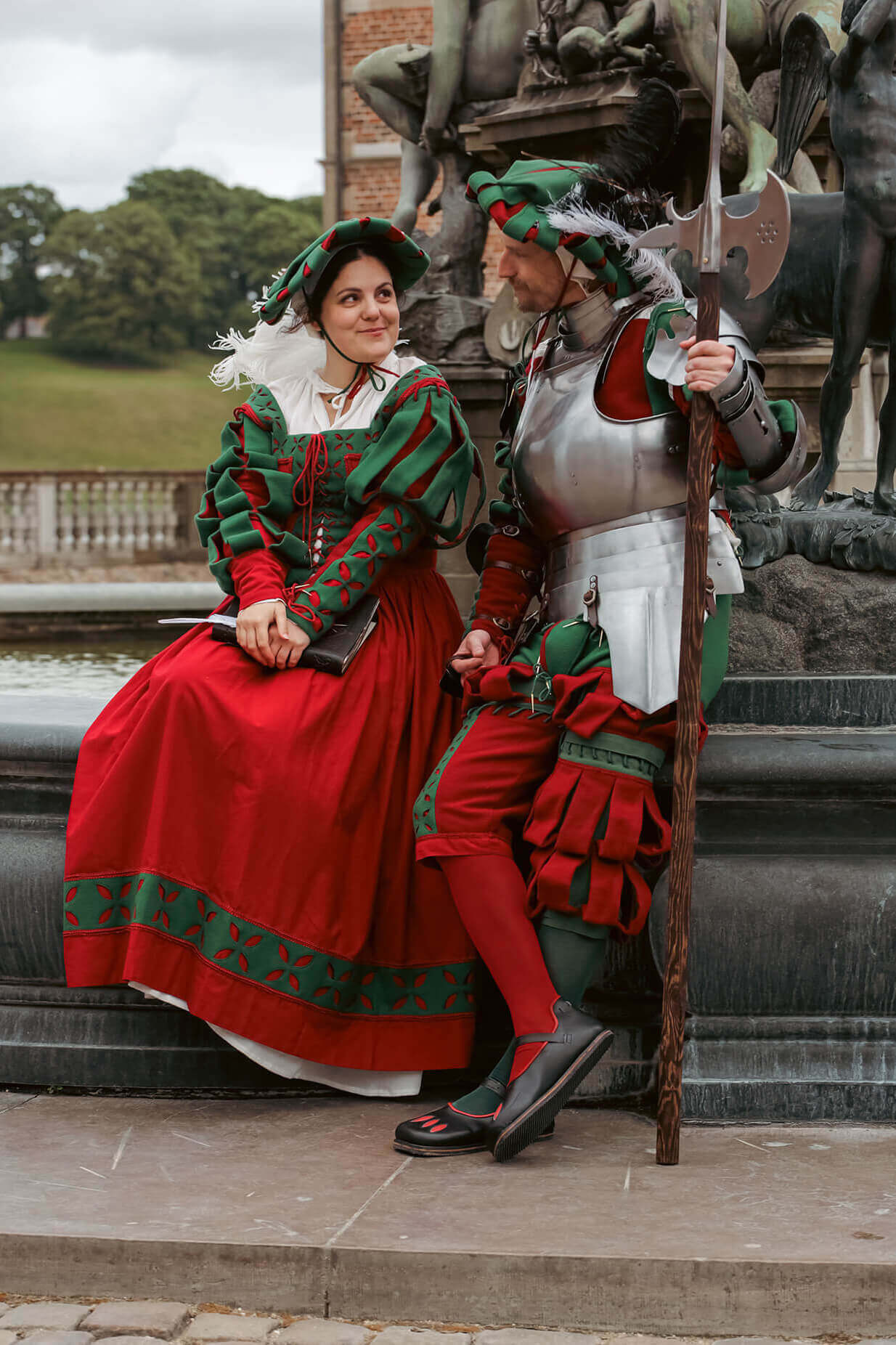
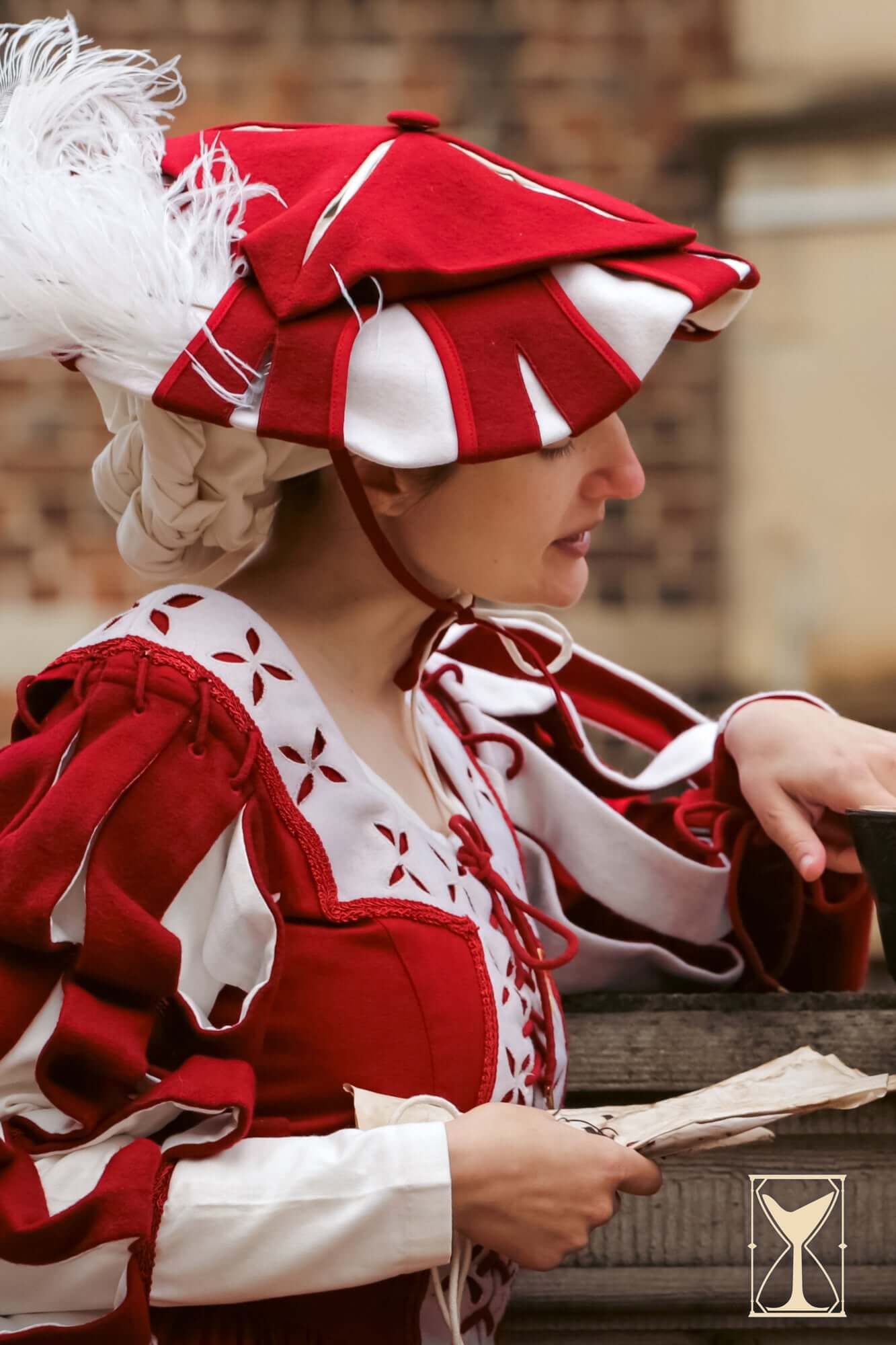
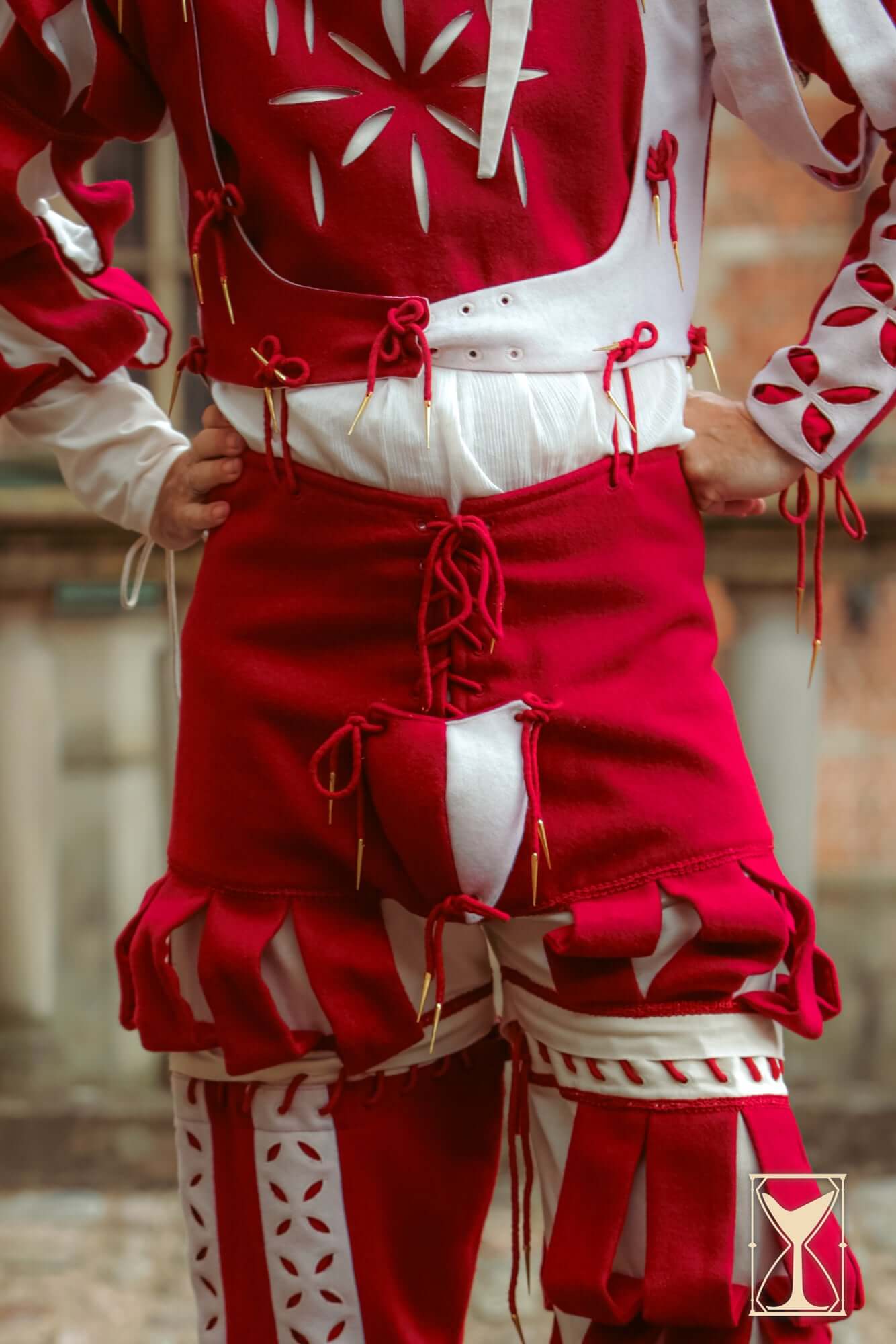
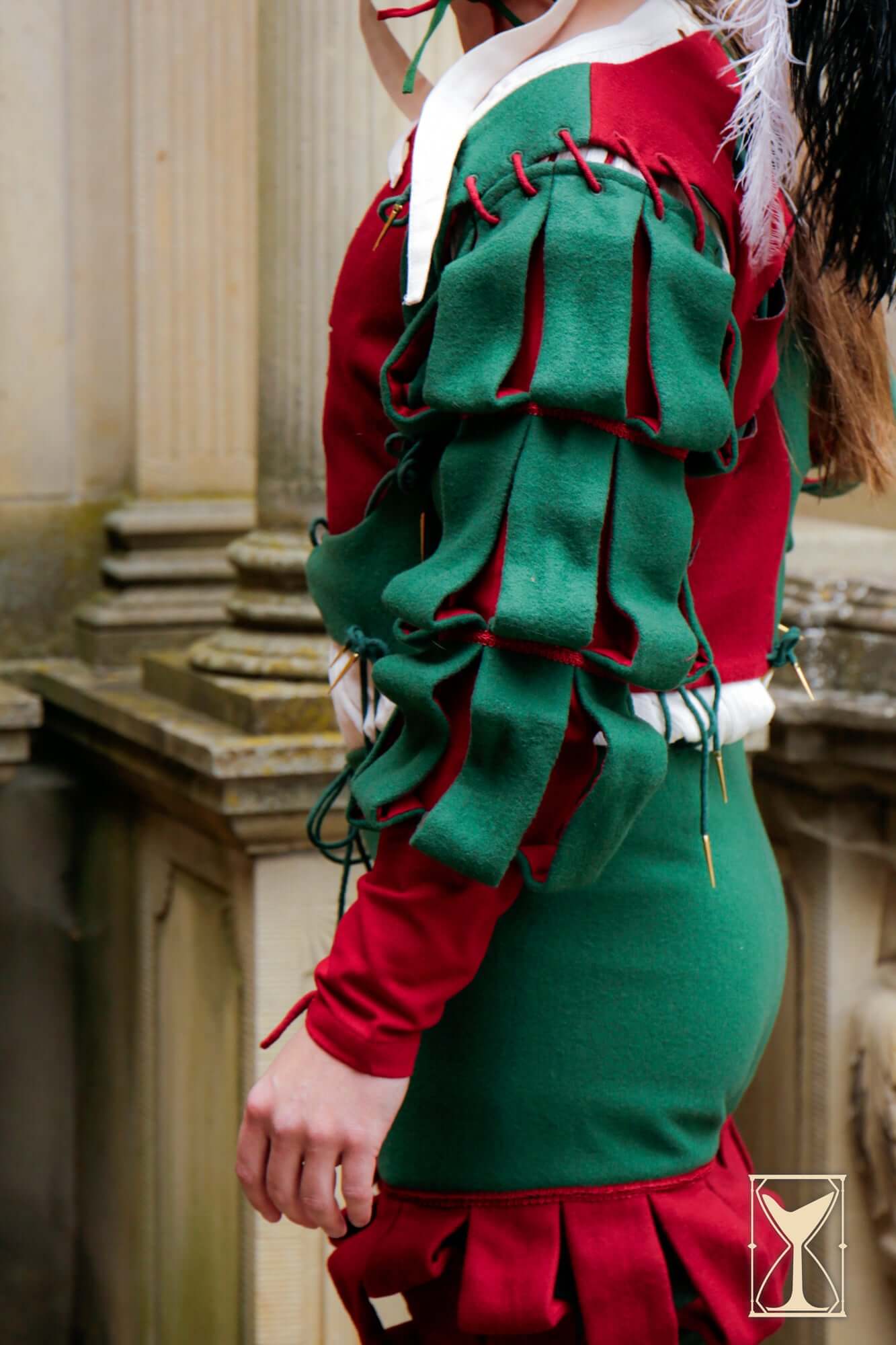
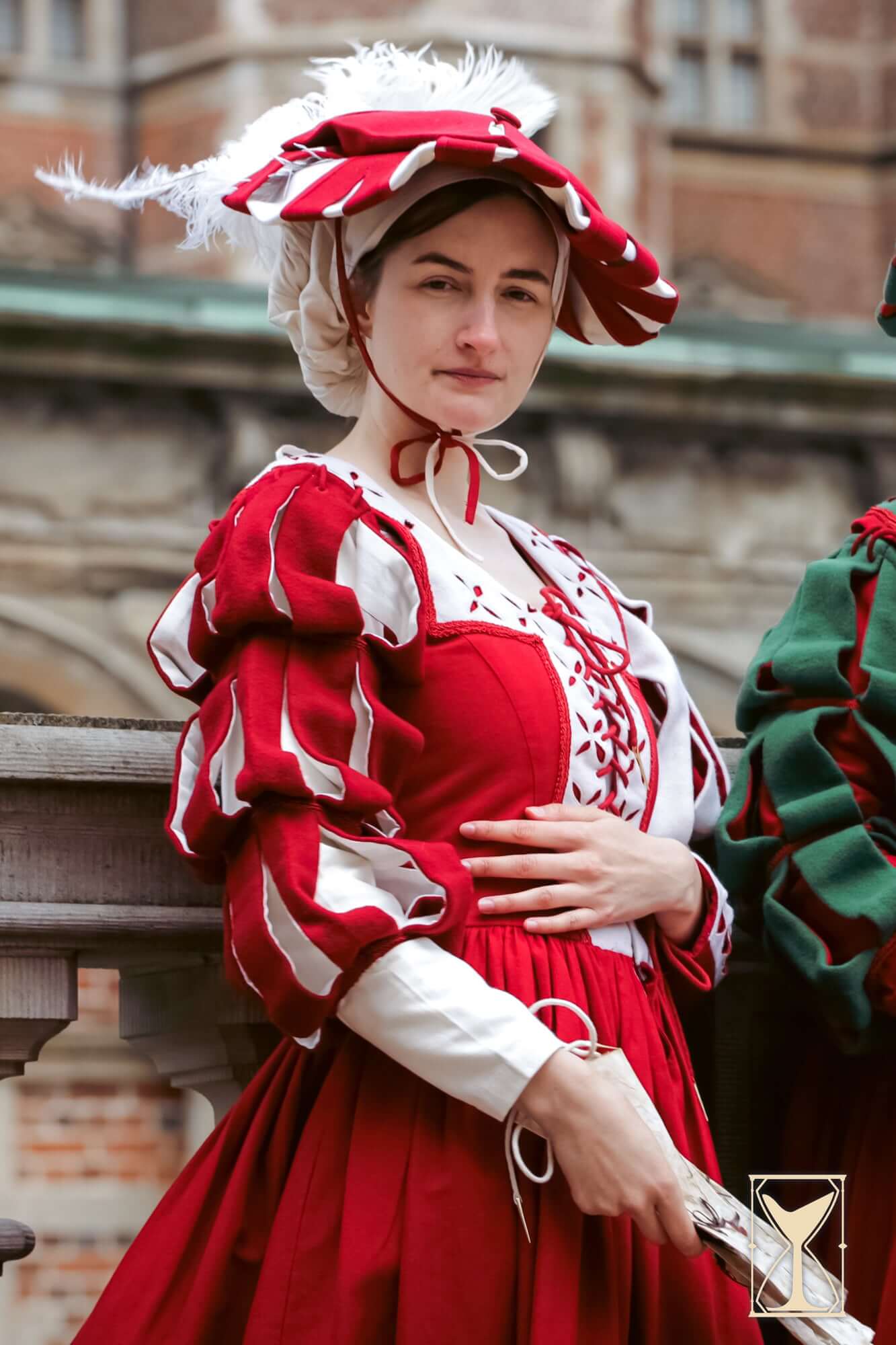
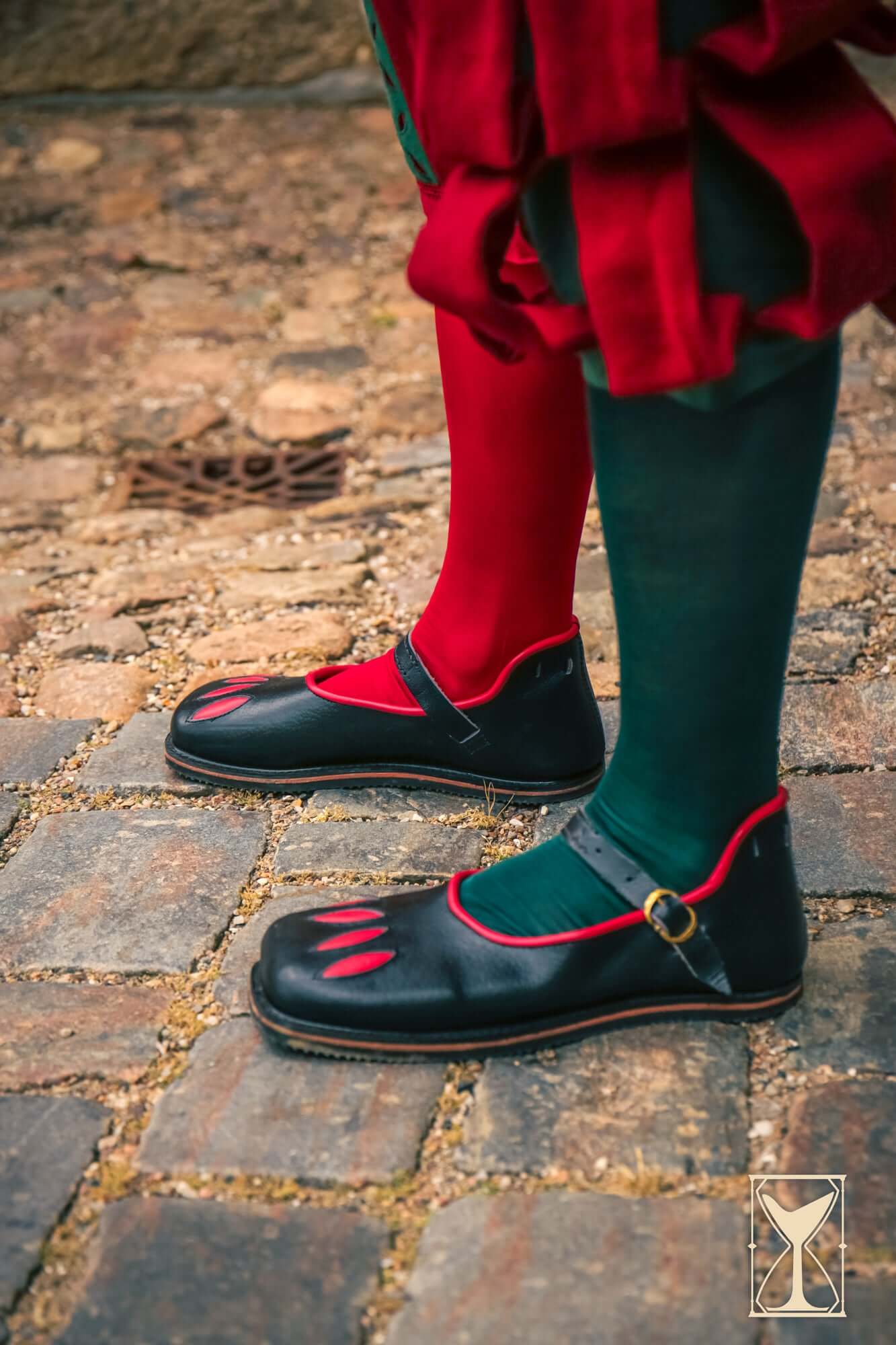
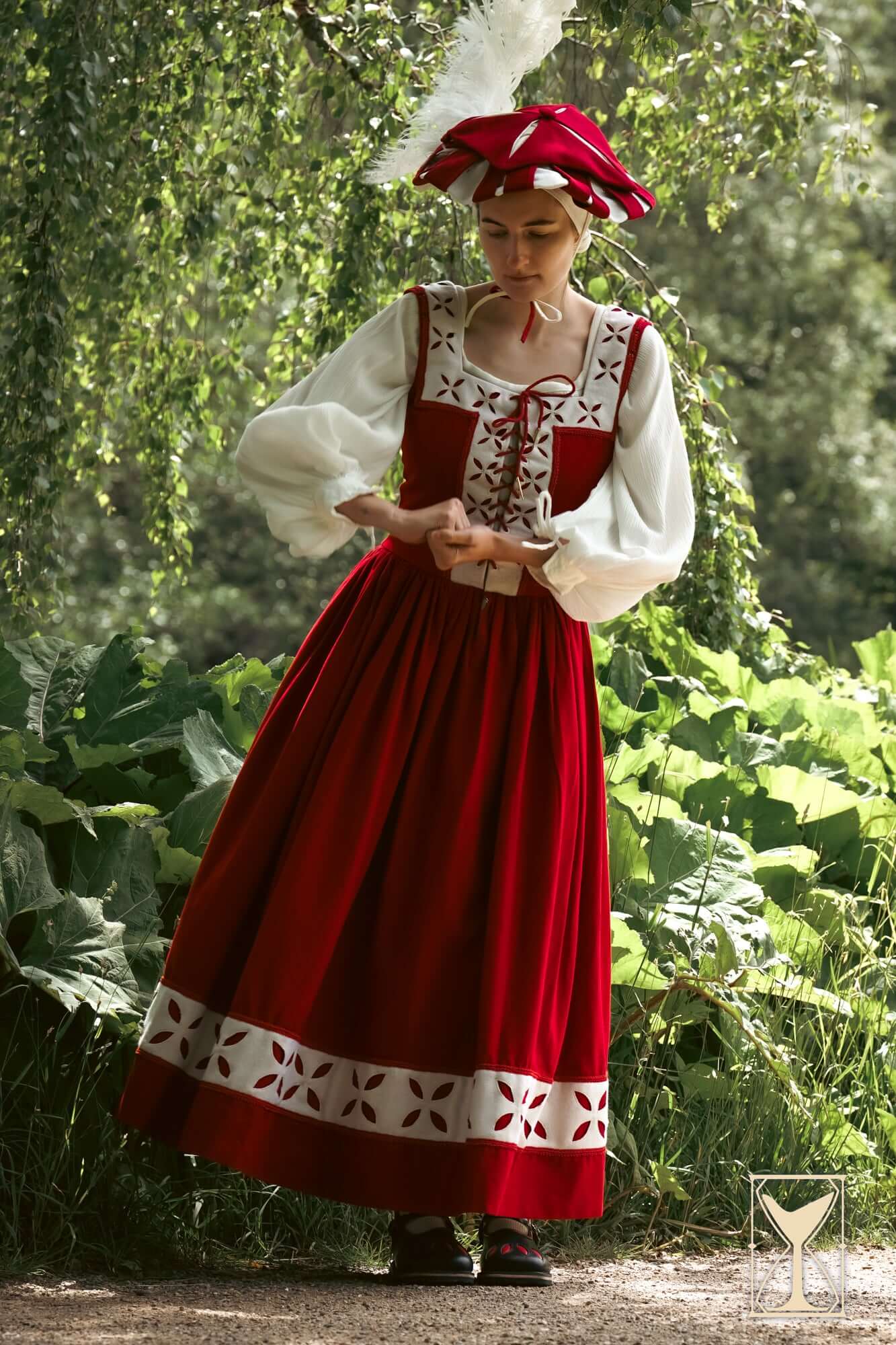
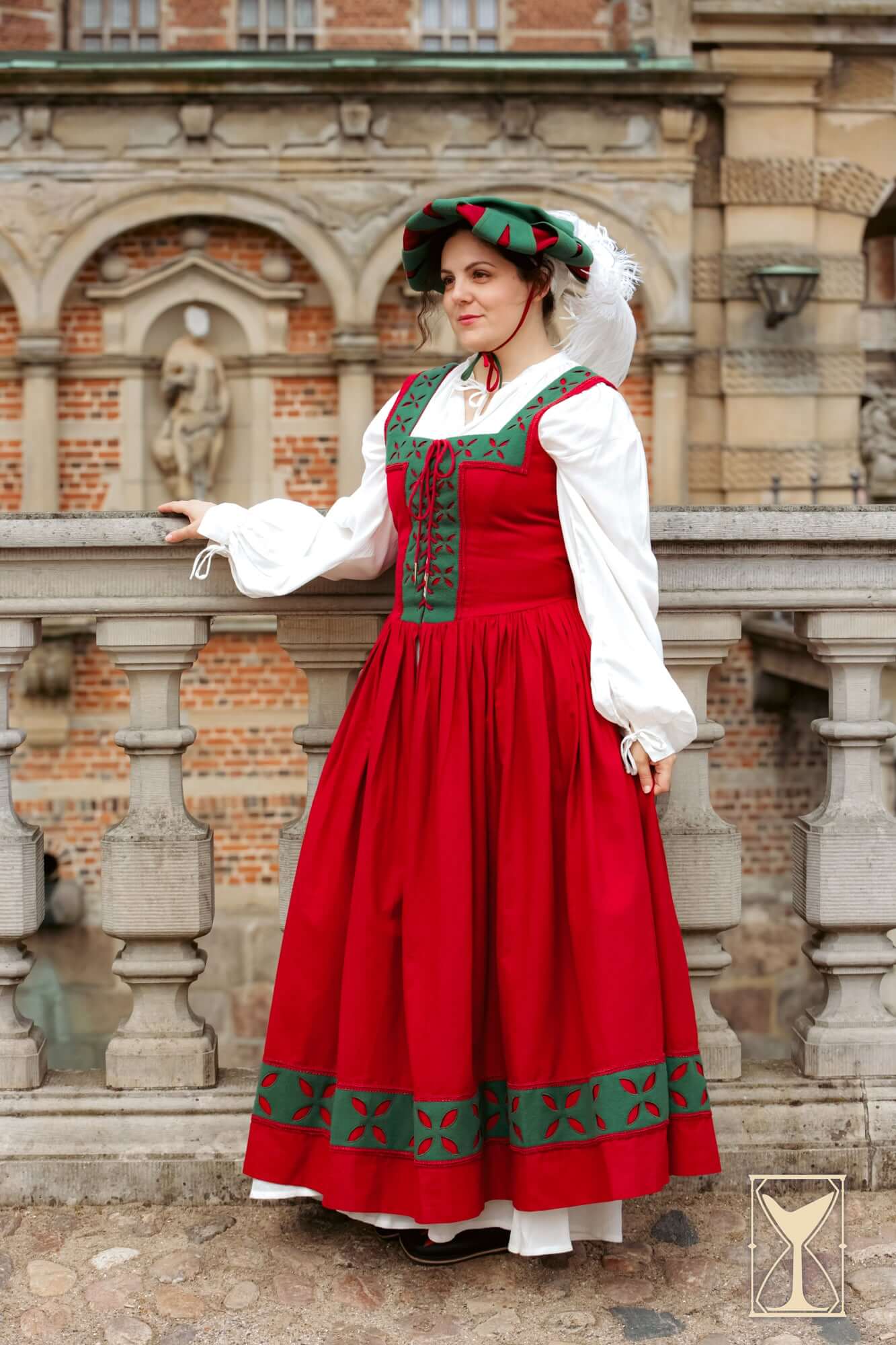
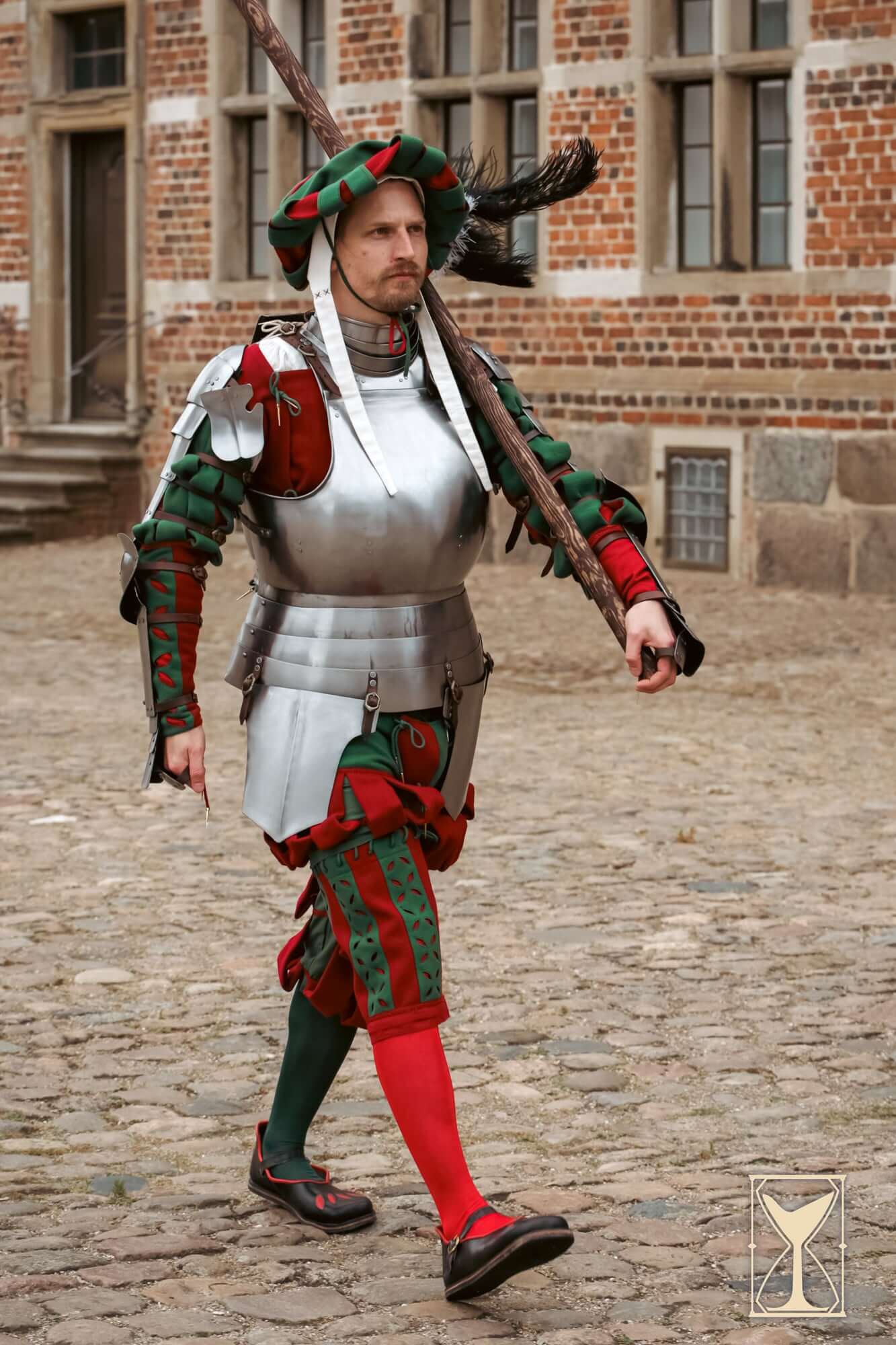
The Landsknecht Revolution (c.1490–1560): The 16th century saw the rise of the German mercenary soldiers known as Landsknechts. They created a deliberately radical style characterized by slashed doublets, puffed breeches, and bold, two-tone mi-parti color schemes. Their female counterparts, the Kampfrau, wore equally striking fitted gowns like our Kampfrau Dress.
What Did Women Wear in the Renaissance?
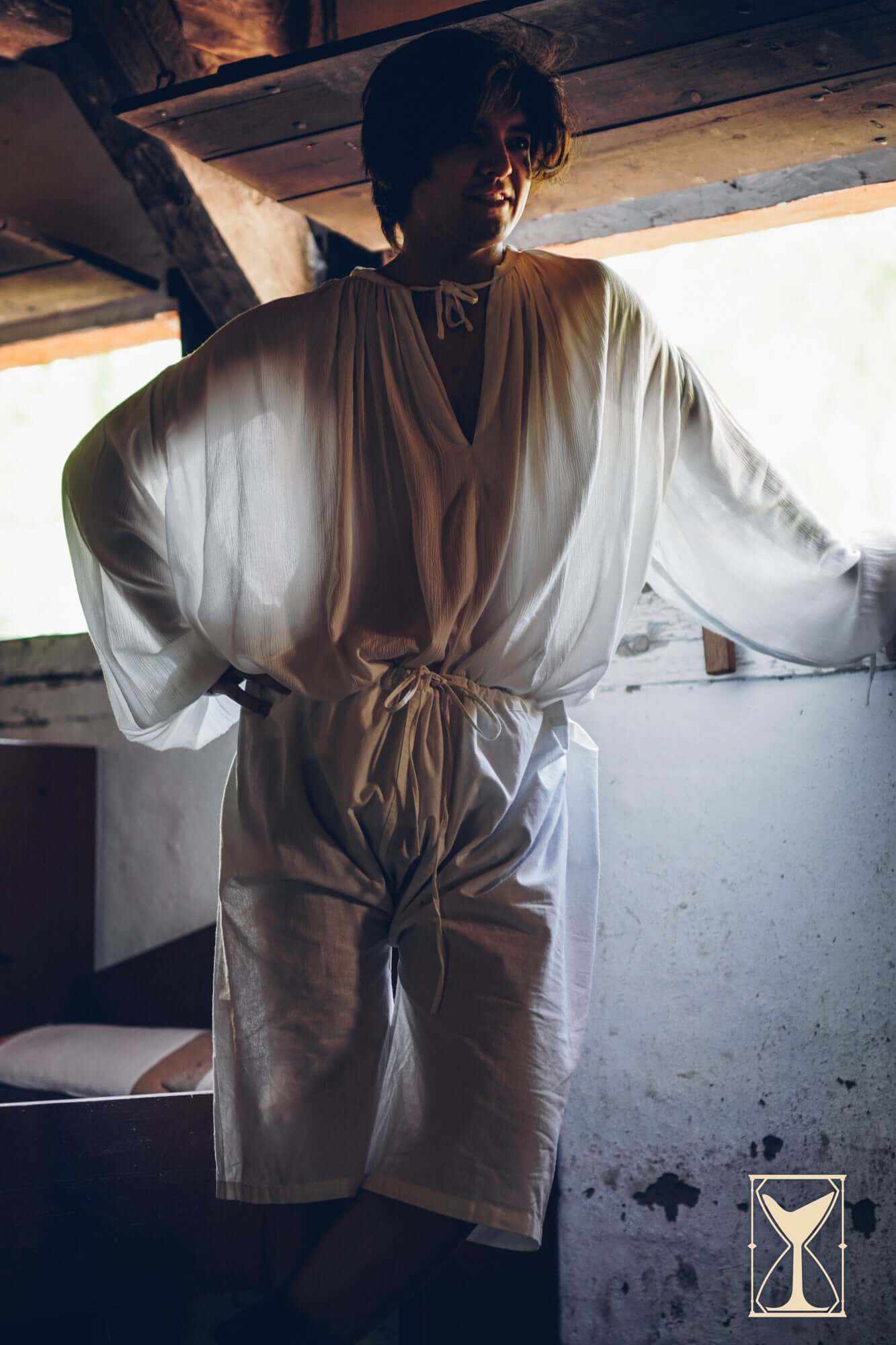
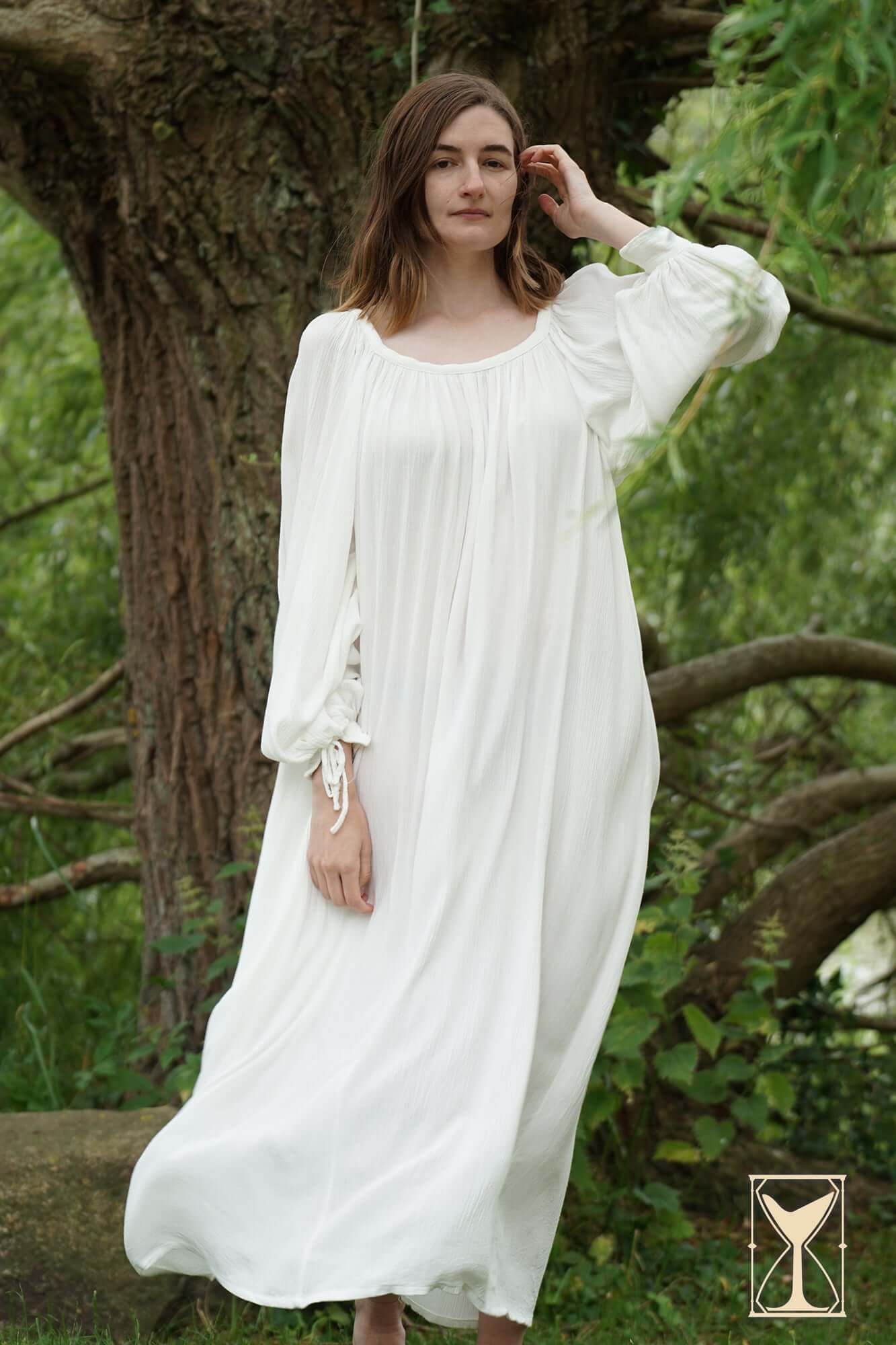
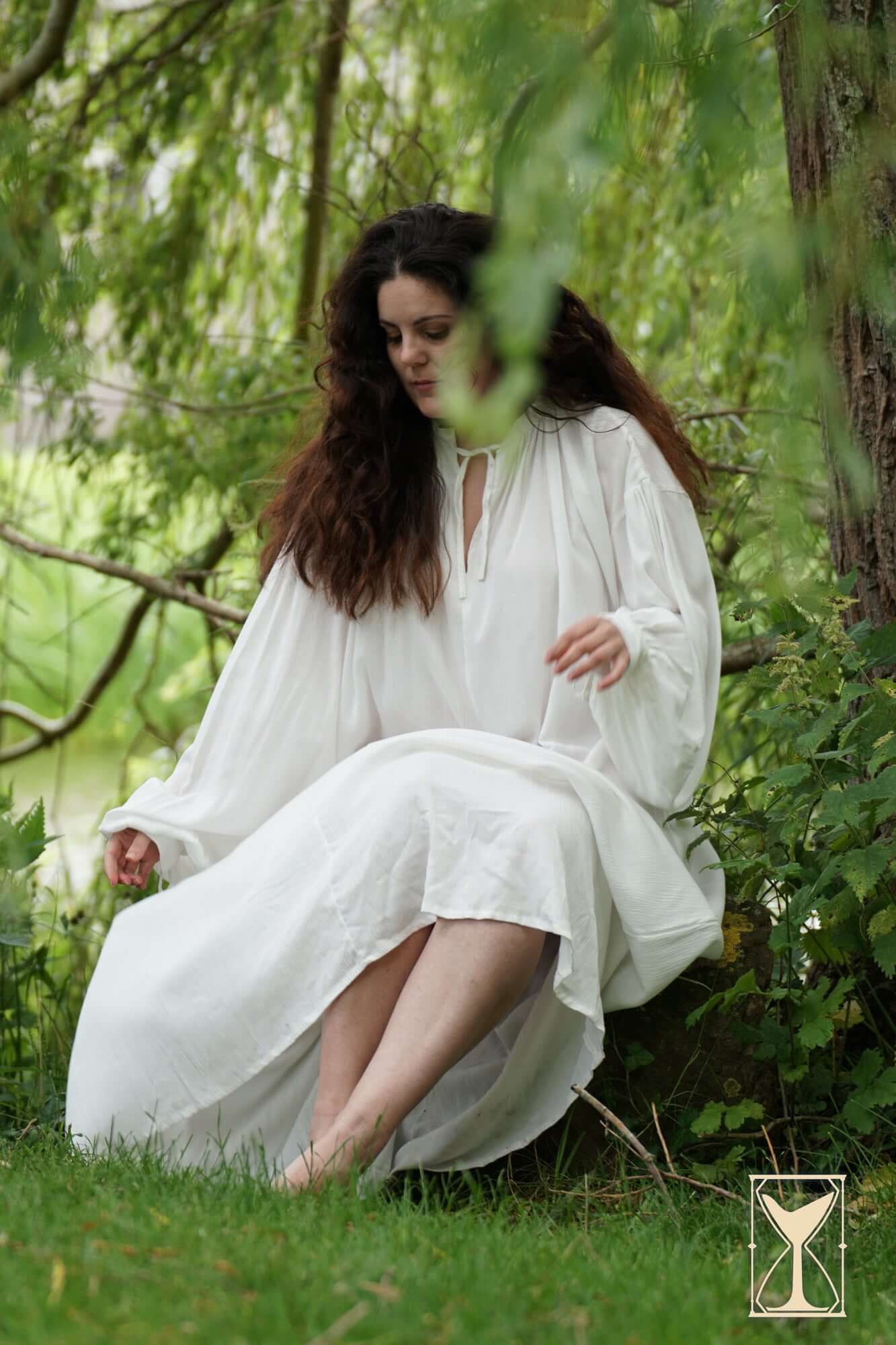
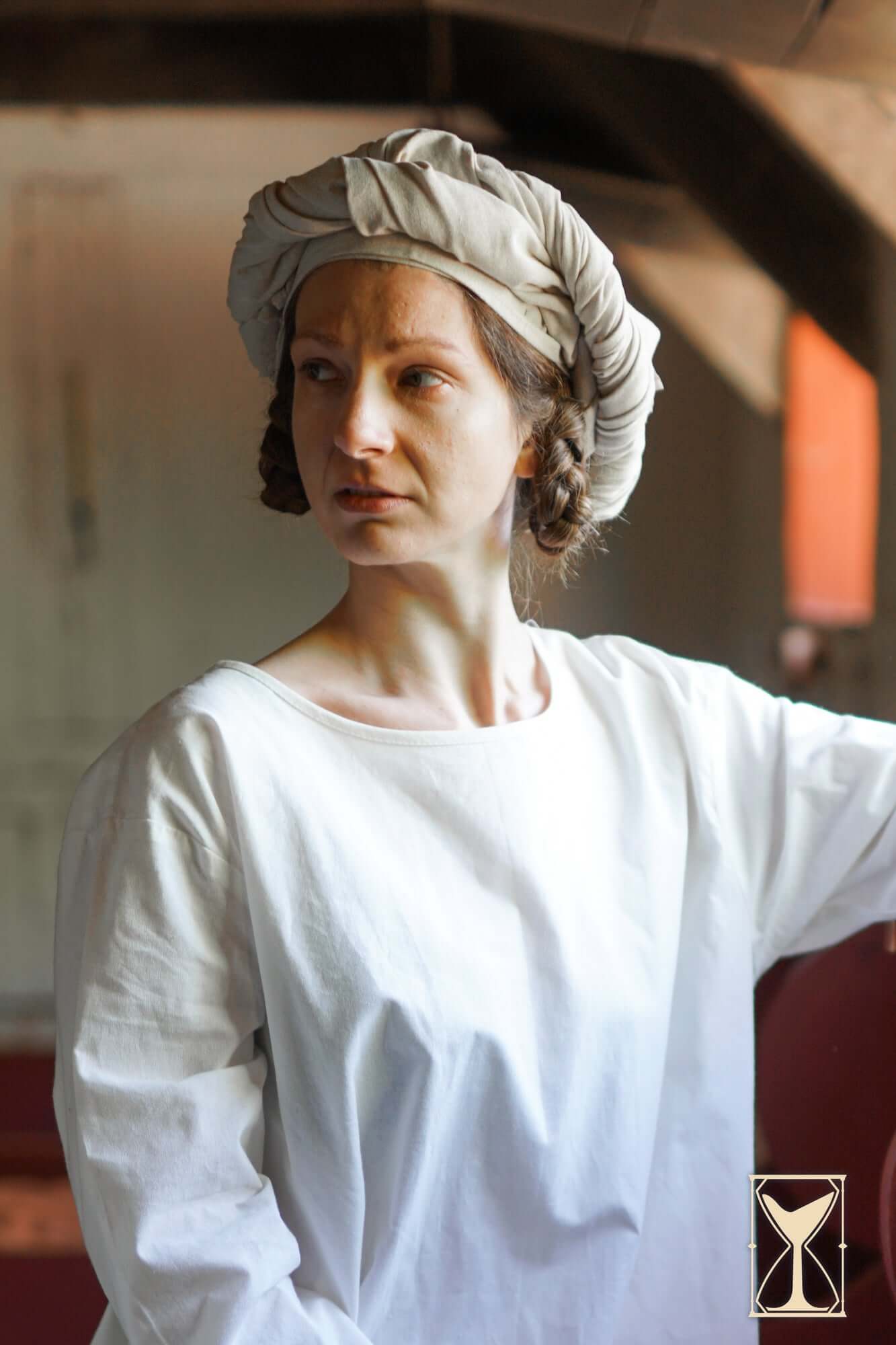
Renaissance women wore a linen chemise as a base layer, over which they dressed in a fitted gown or kirtle with a structured bodice and full skirt. This layering system provided both a modest appearance and a comfortable foundation for the heavier wool outer layers.
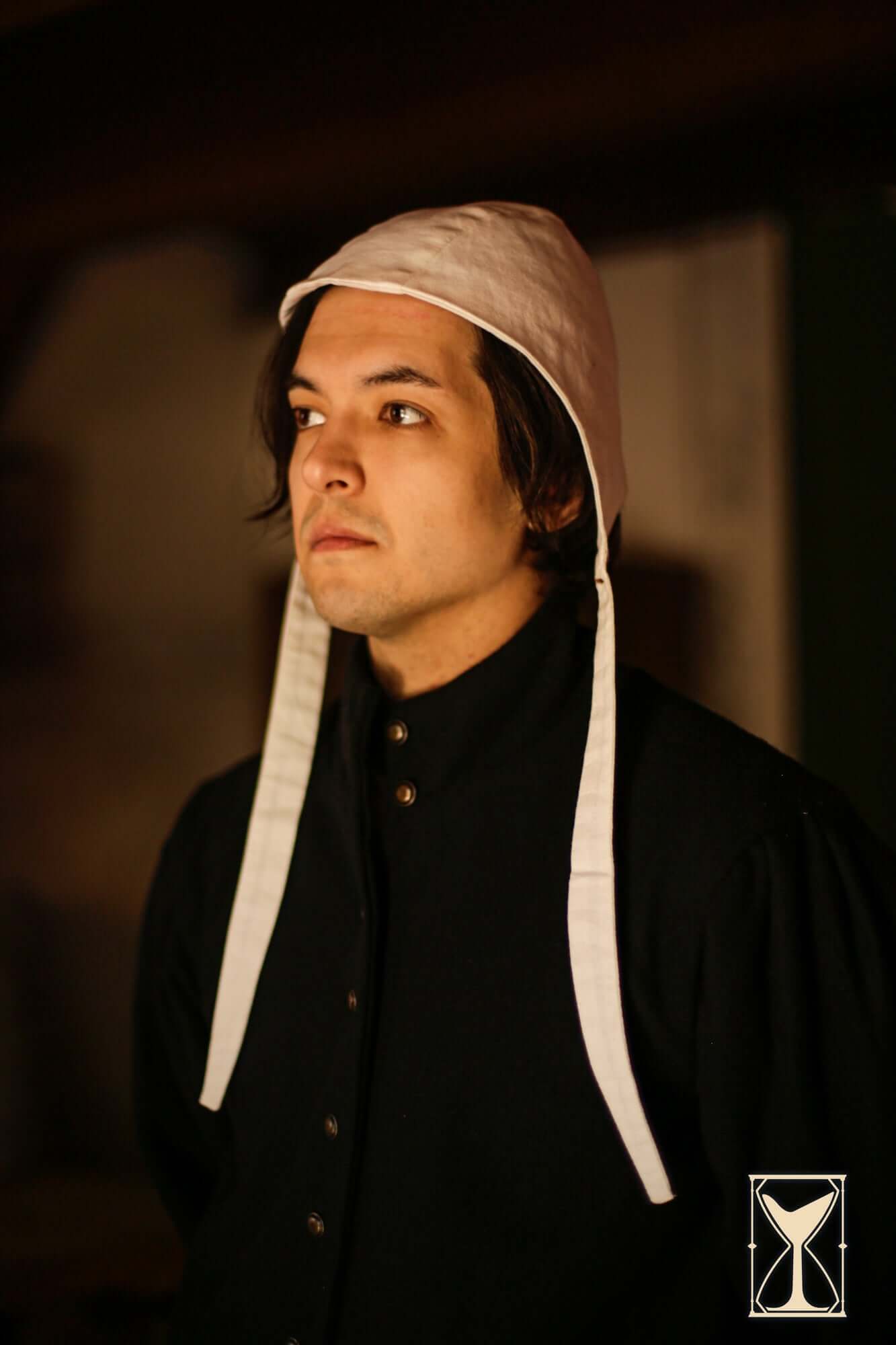
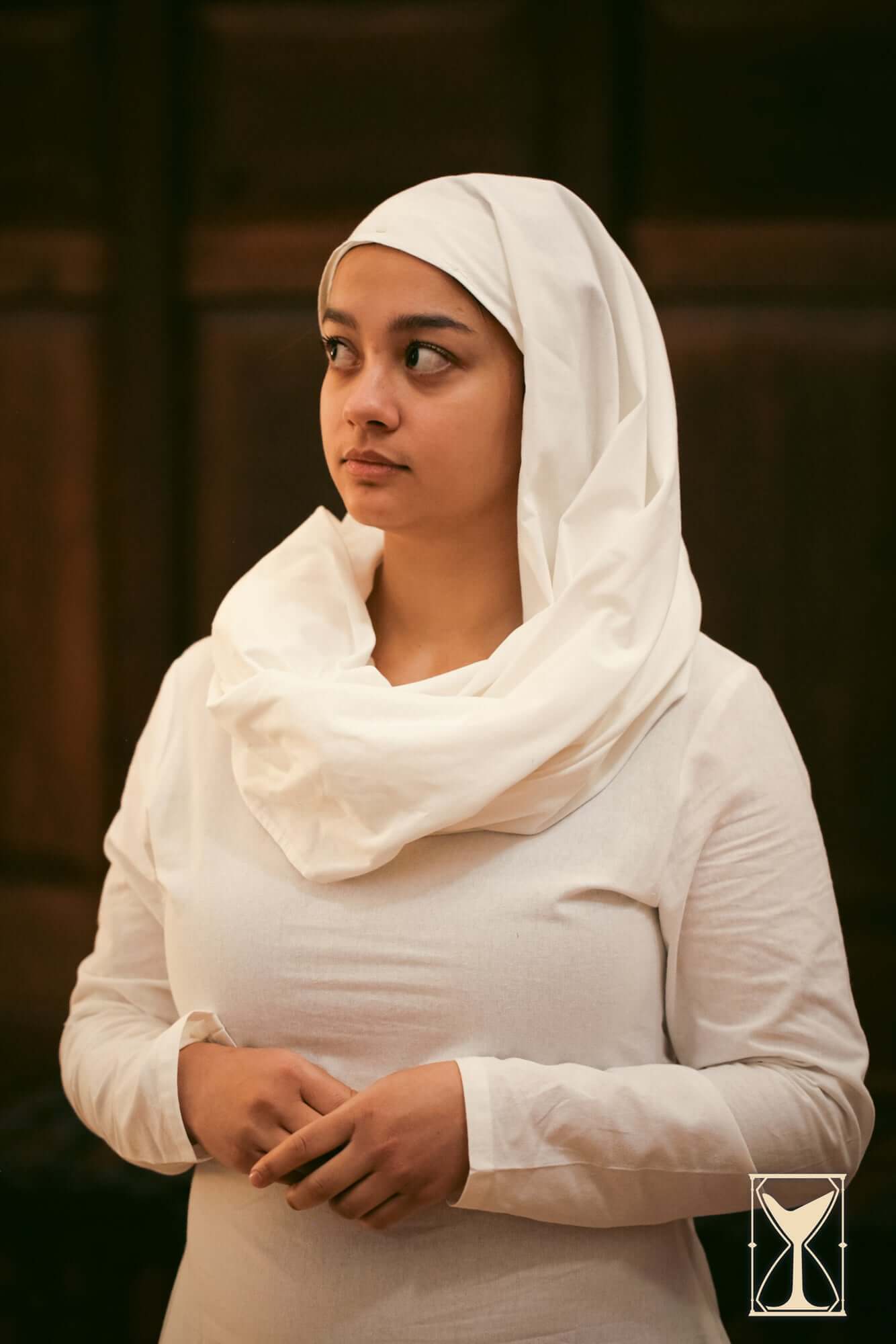
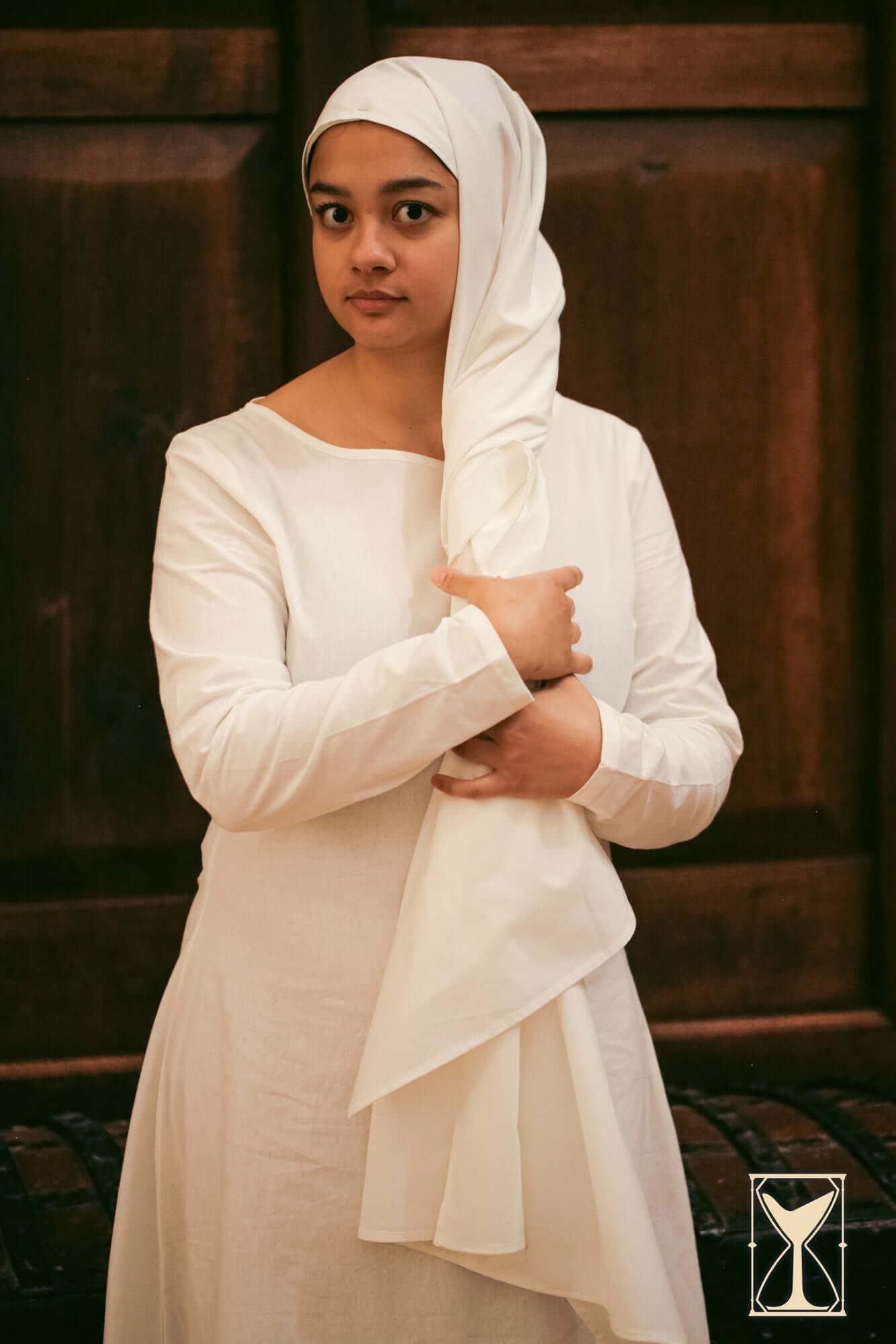
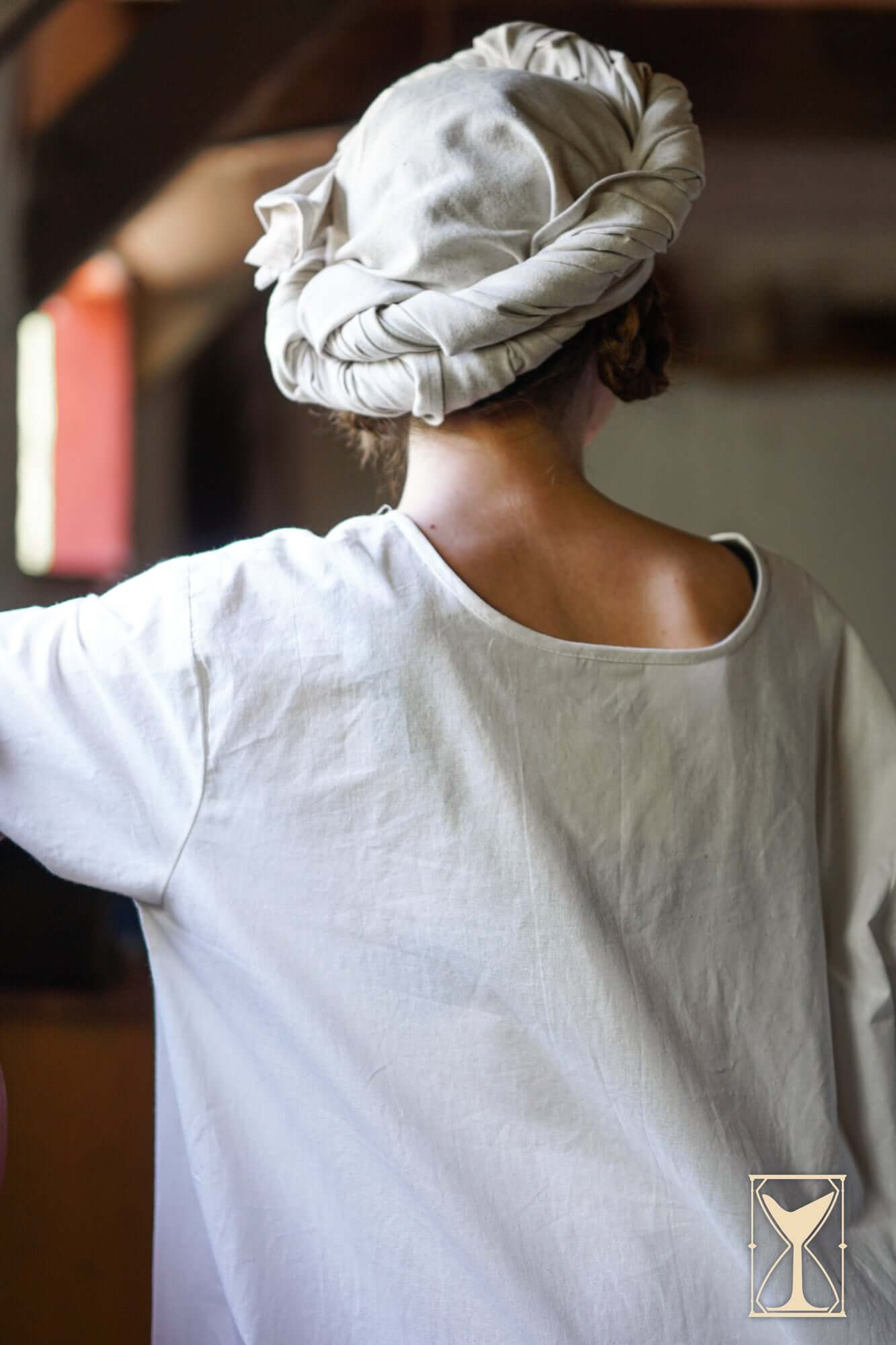
- The Universal Outfit: Most women began with a linen shift or smock worn directly against the skin. Over this came a fitted kirtle or gown, often with a structured bodice, and finished with headwear such as a rectangular veil and fillet, a linen coif, or a hood, with regional variations spanning from Italian Renaissance styles to Gothic crossover looks further north.
- What We Offer: Our women's range covers the full layering system, from shifts and smock chemises as your foundation, through fitted outer gowns, to period-accurate headwear options including veils, fillets and coifs. We also carry the distinctive Kampfrau style, featuring the characteristic wide neckline and slashed sleeves designed to showcase the contrasting smocked chemise beneath.
What Did Men Wear in the Renaissance?
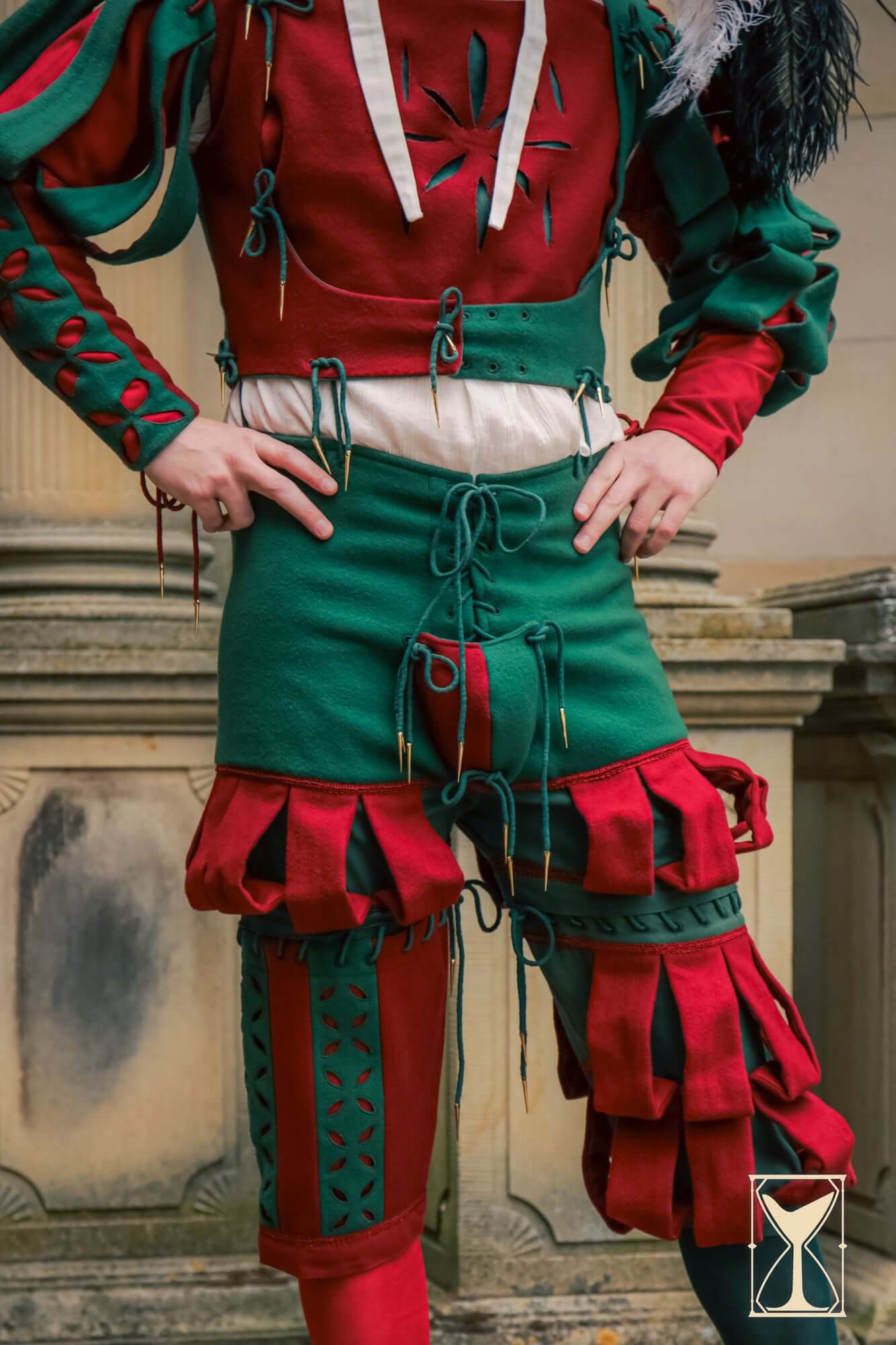
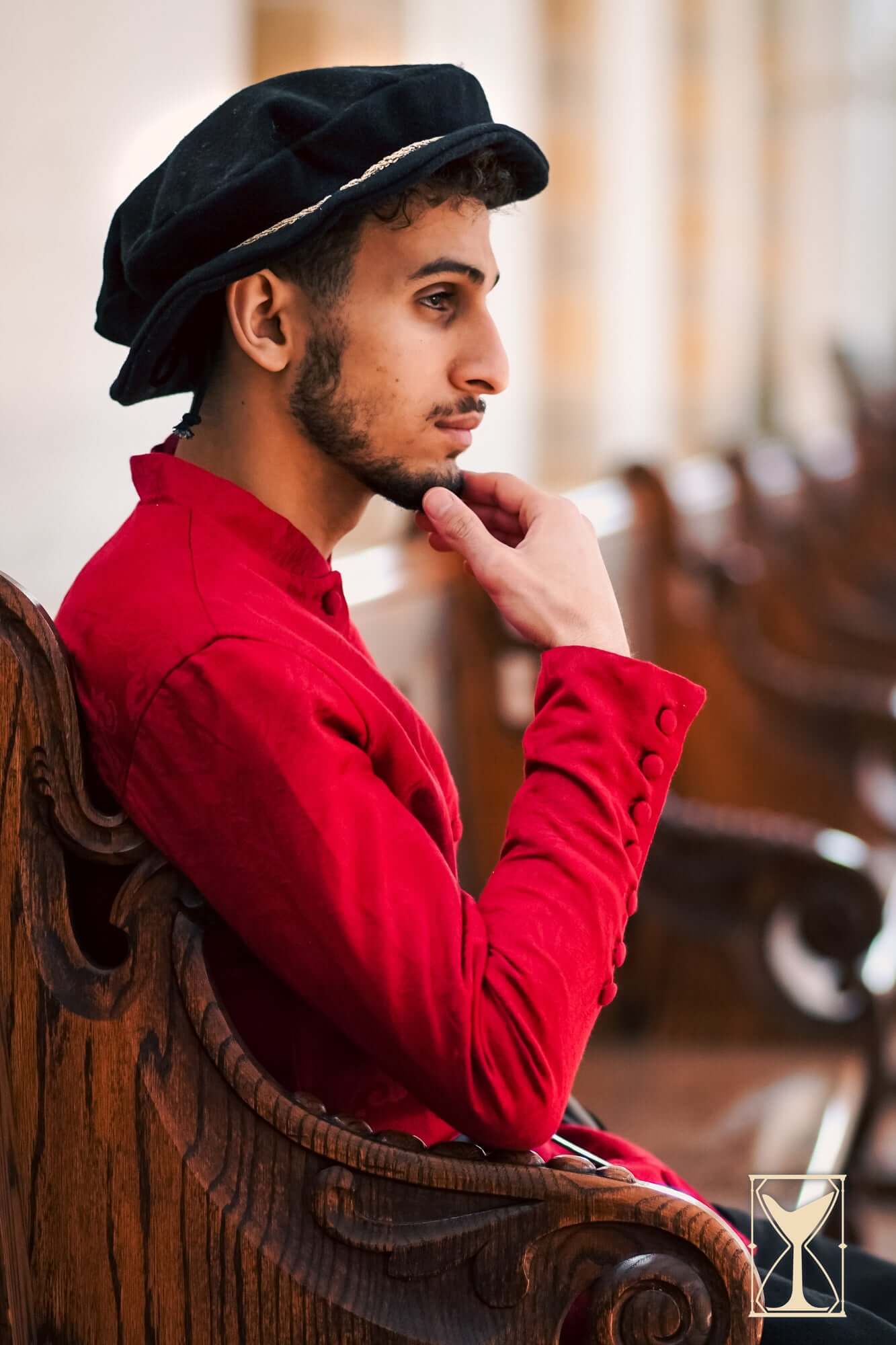
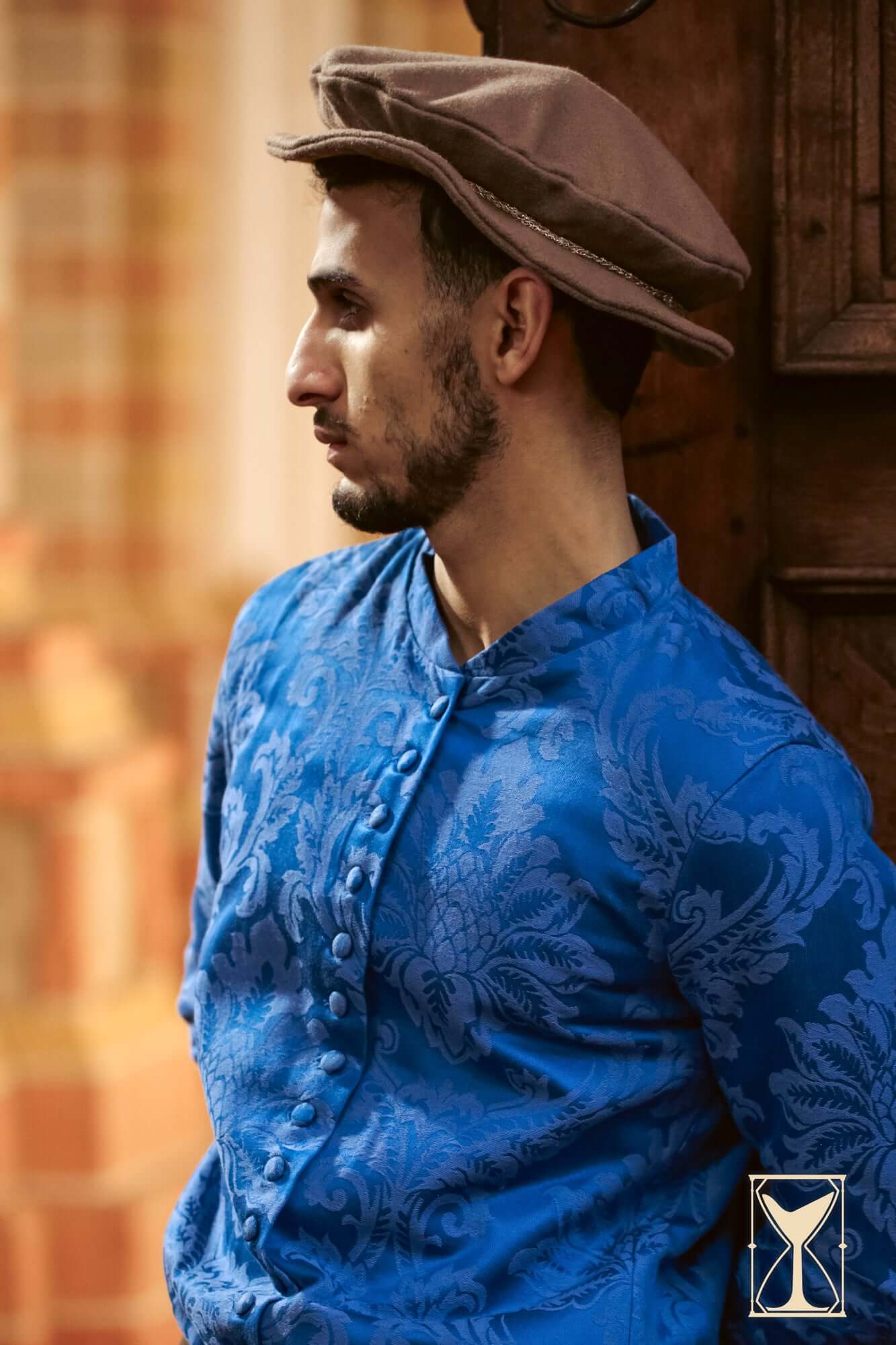
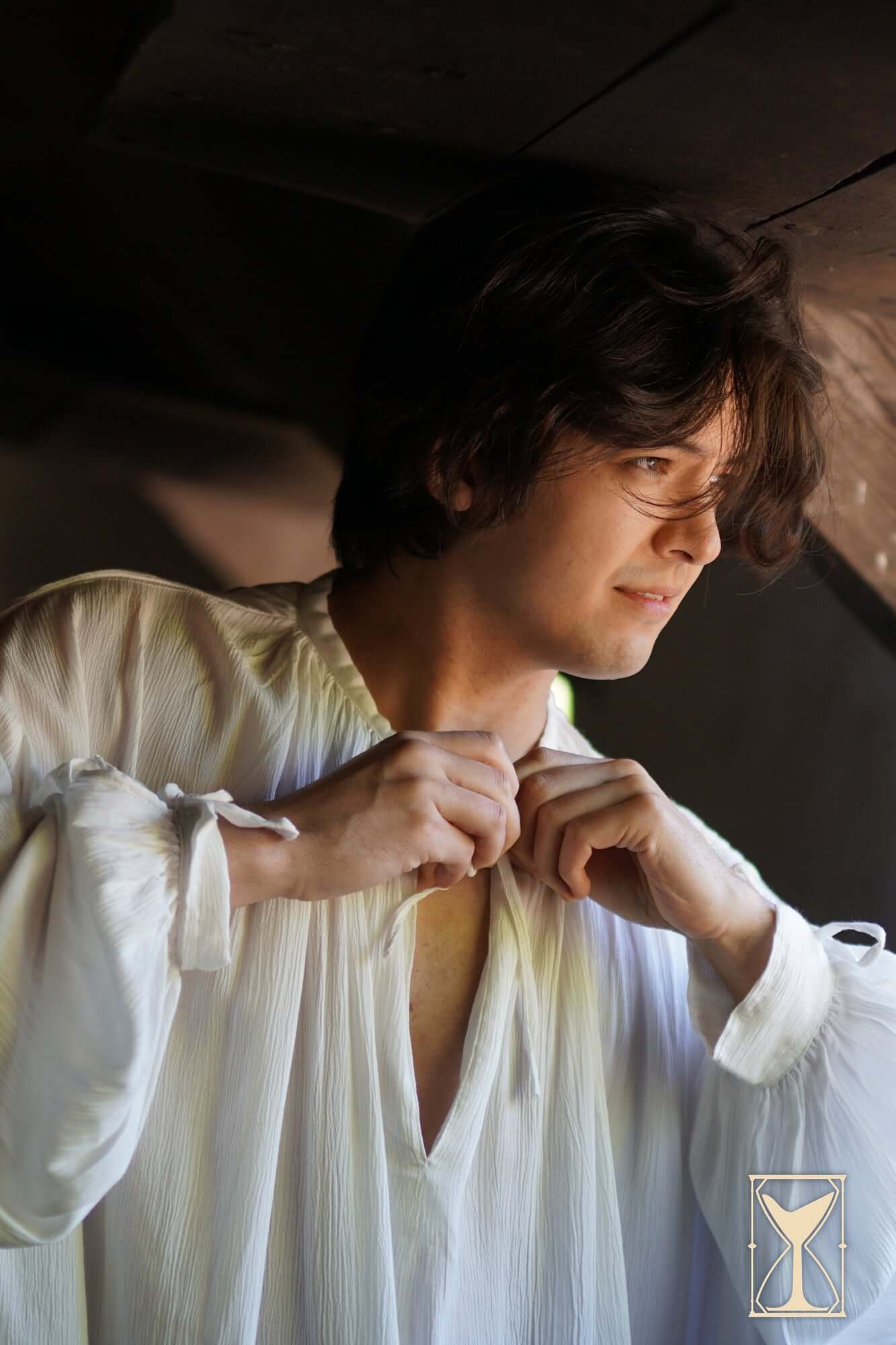
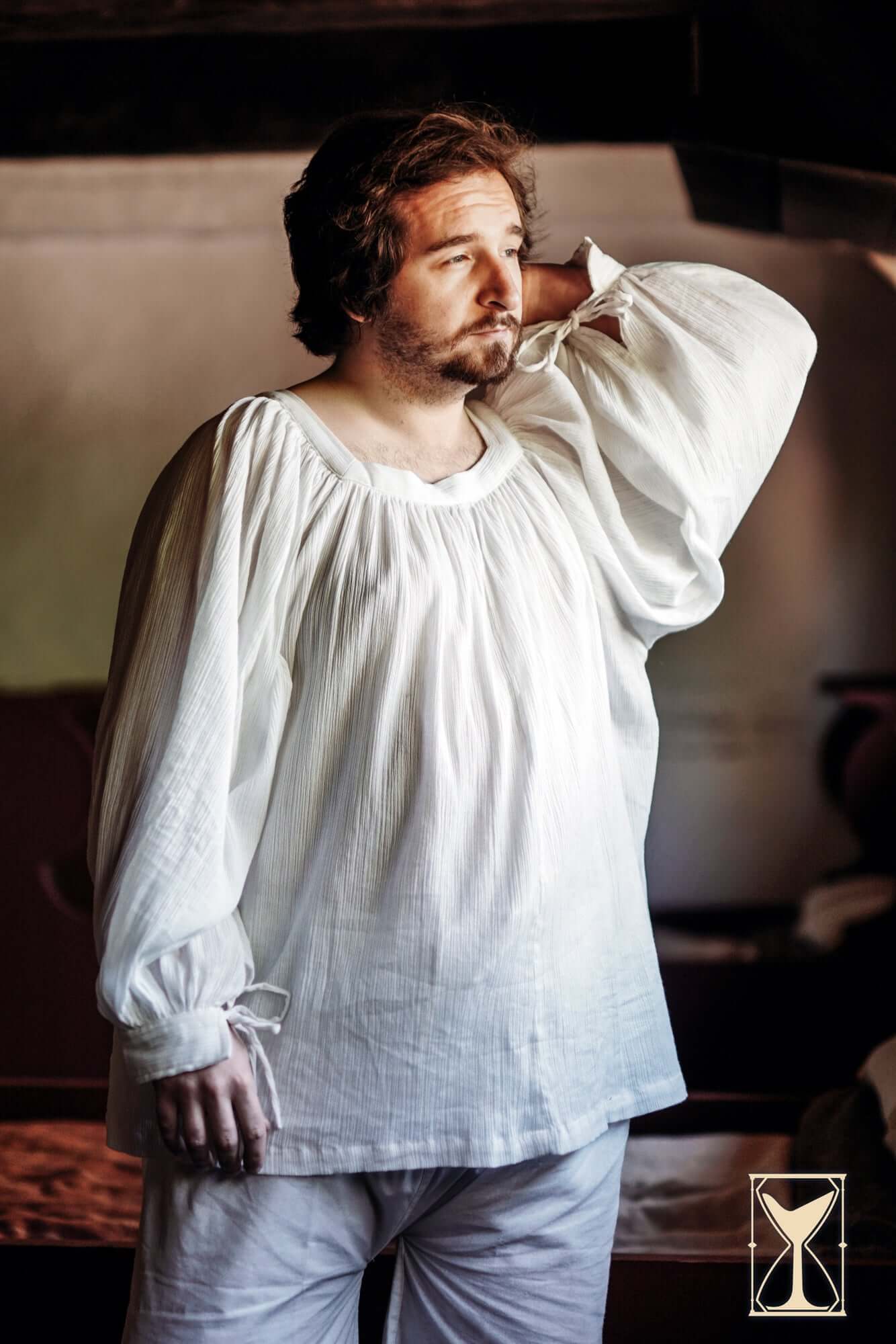
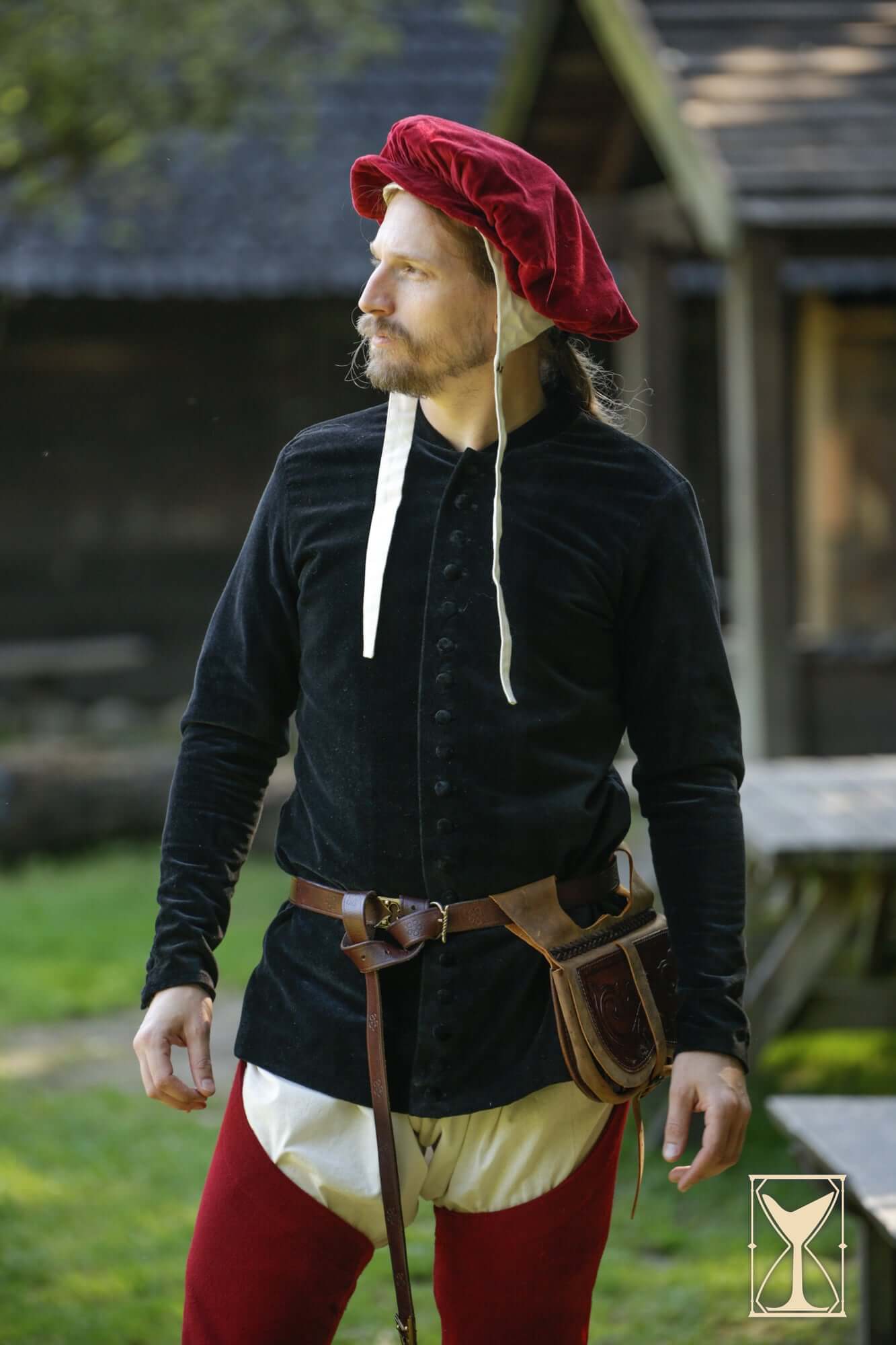
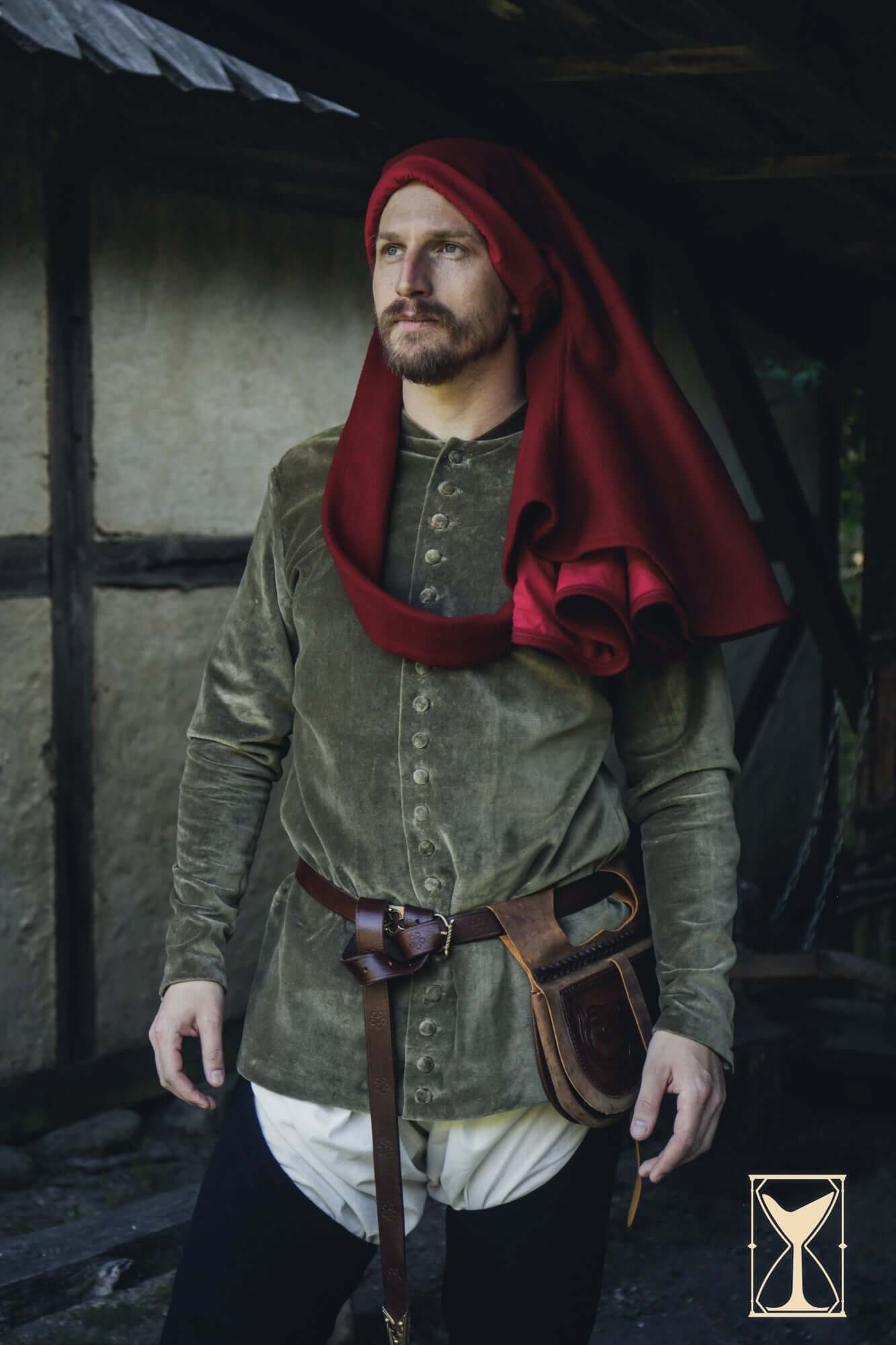
Renaissance men wore a linen shirt as a base layer, over which they fitted a doublet, a structured jacket that defined the masculine silhouette. Below the waist, hose and breeches were attached to the doublet via laced ties called points, while braies served as the historical undergarment beneath.
- The Standard Masculine Kit: A man's Renaissance wardrobe was built around a linen shirt paired with a fitted doublet, breeches, and hose tied at the waist with points. Outerwear varied by region and status, from simple cloaks and jerkins to elaborately slashed and paned garments favored by the German and Italian courts.
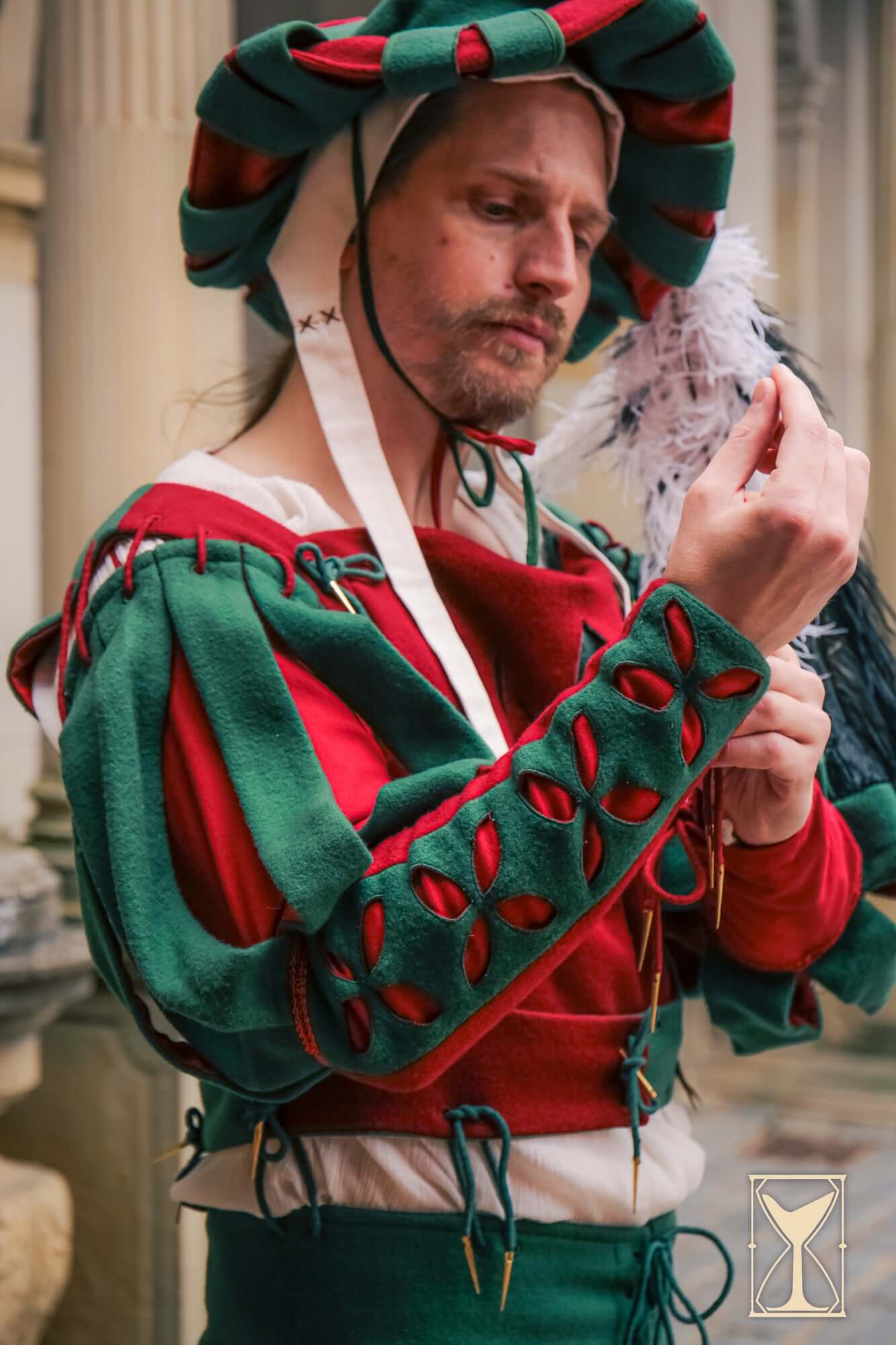
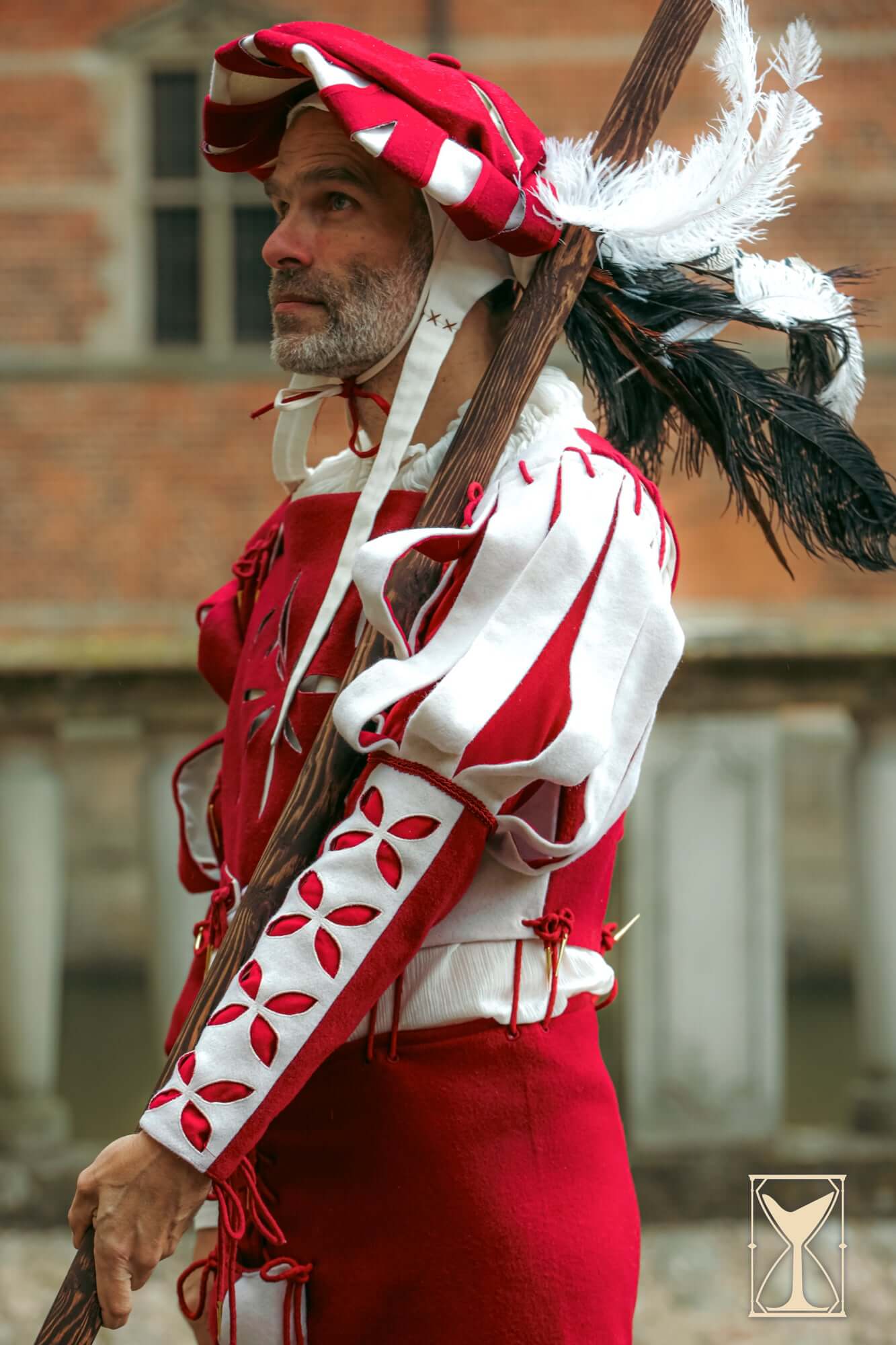
- What We Offer: Our men's range covers the full Renaissance kit, linen shirts in several historical cuts, fitted doublets, and period breeches to serve as your foundation. For those drawn to the flamboyant Landsknecht aesthetic, we carry the complete mercenary look: doublet, breeches, feathered hat, and the signature detachable waterfall sleeves that lace directly onto the doublet.
What Fabric Was Used in Renaissance Clothing?
Wool and linen were the foundation of all Renaissance clothing, worn by every social class across the 15th and 16th centuries.
-
Wool: This was the economic engine of the era and the primary choice for outer garments. Wool is warm, durable, and holds rich dyes, making it the correct choice for a Landsknecht Doublet or a Kampfrau Dress.
-
Linen: Soft and breathable, linen was the universal fabric for skin-contact layers. It is the historical standard for the Smock Violet and Shirt Duccio. While cotton is a modern accessible alternative, linen Renaissance shirts are the choice for those seeking true authenticity.
The Landsknecht: Renaissance Fashion's Most Daring Style
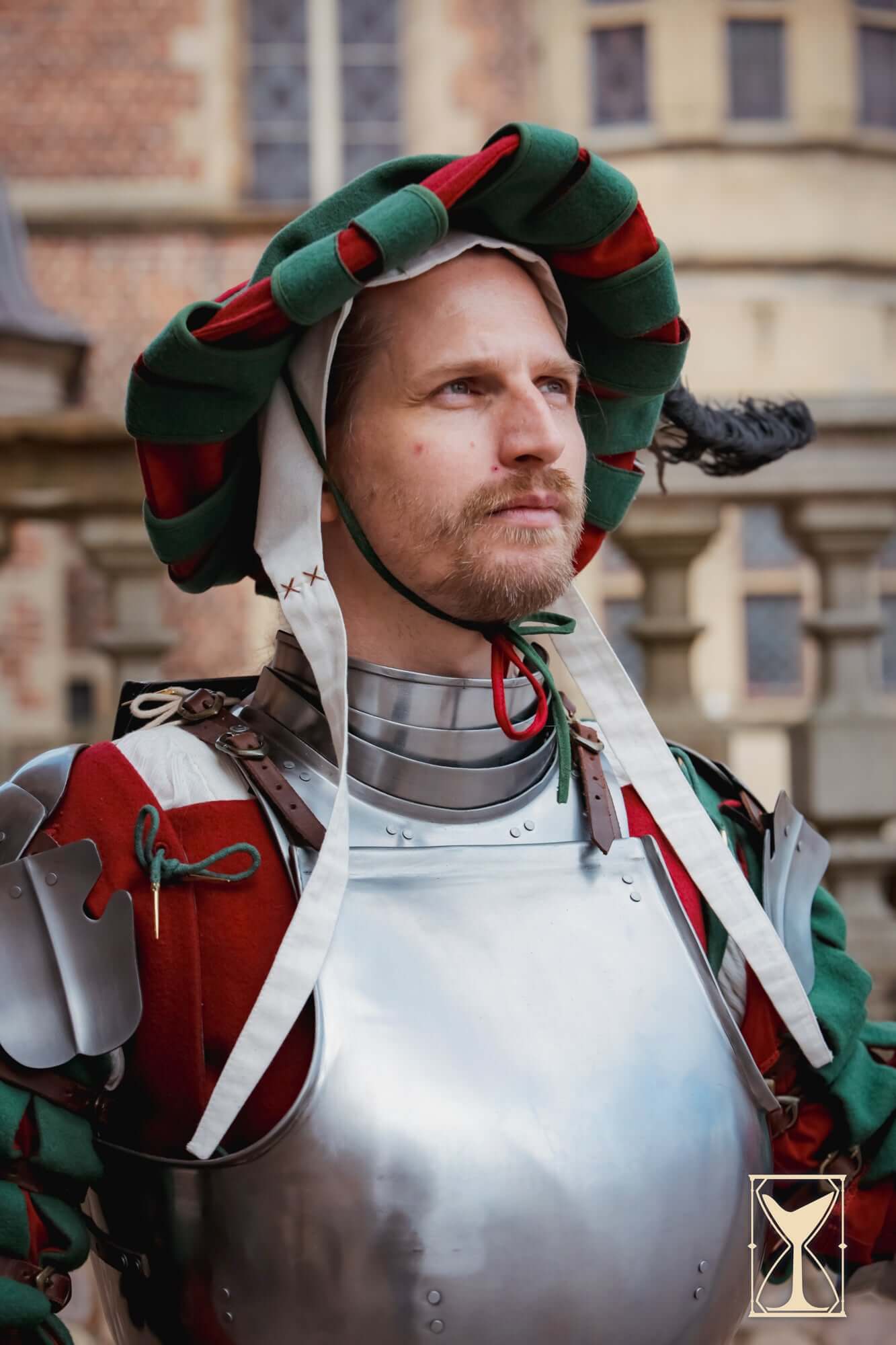
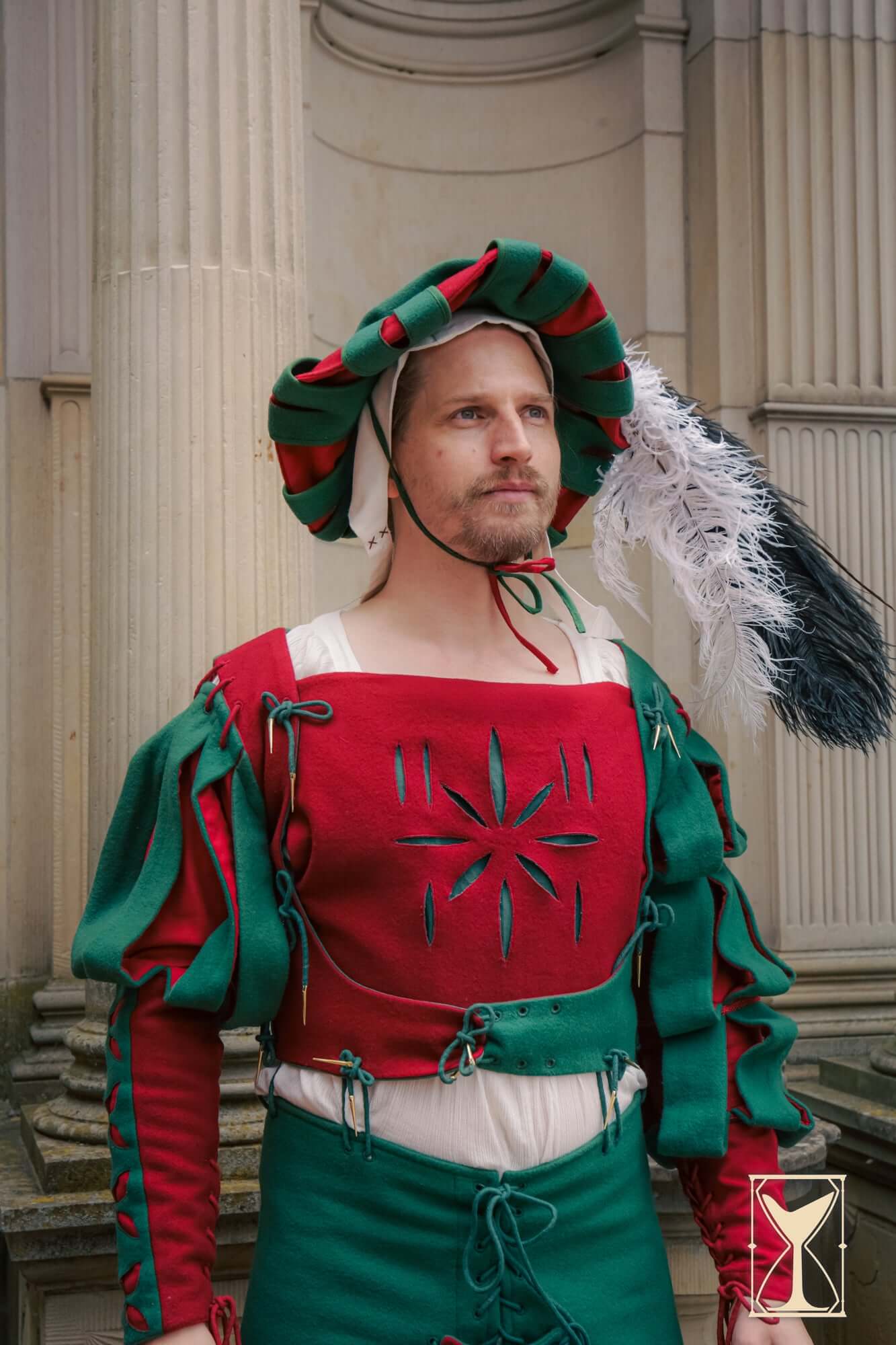
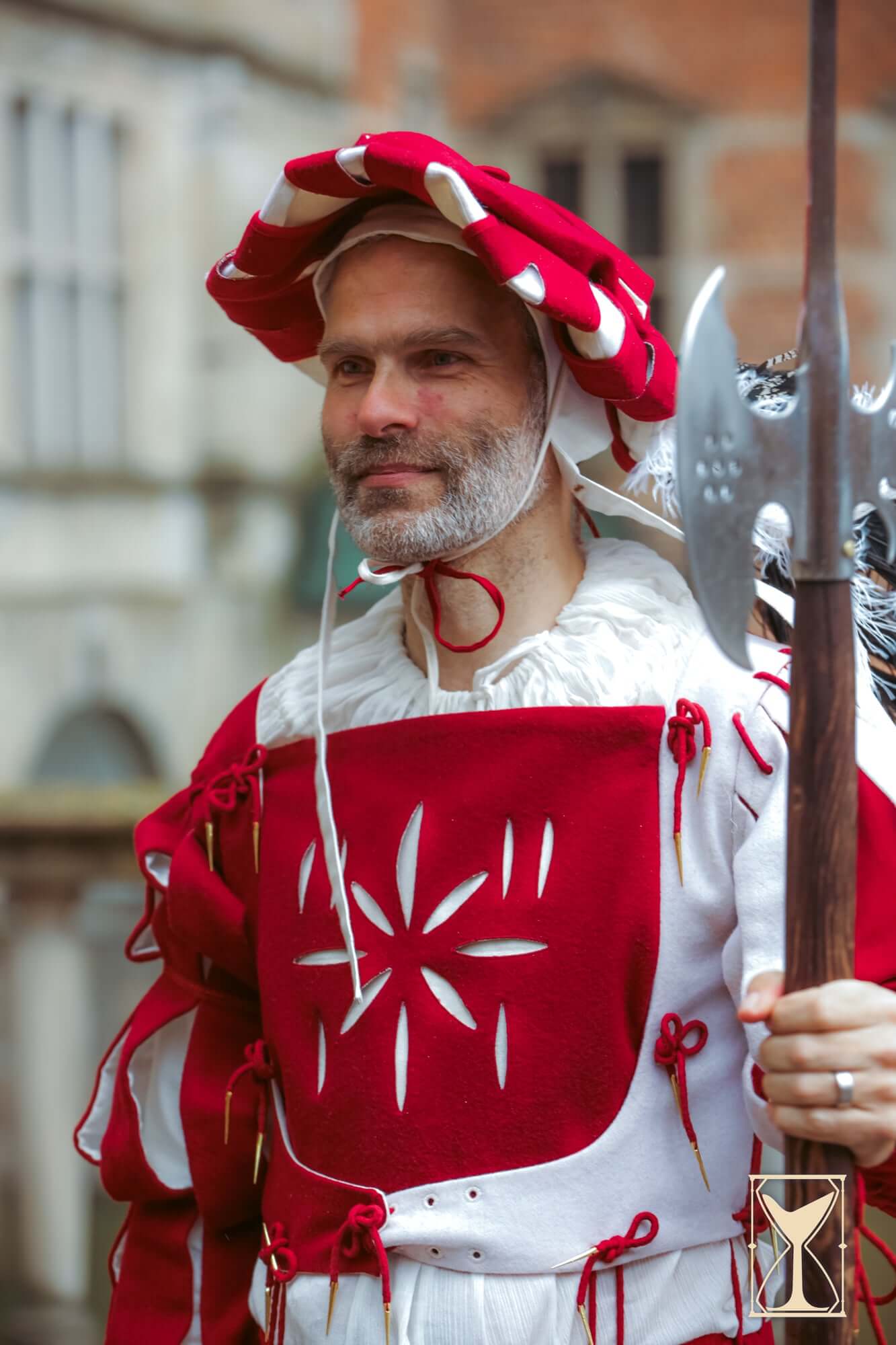
The Landsknechts were German mercenary soldiers who dressed in the most outrageous fashion of the 16th century. Exempt from traditional sumptuary laws, they utilized a technique called slashing, where deliberate cuts in the wool revealed the contrasting linen lining beneath.
The full Landsknecht clothing kit is a modular system consisting of a doublet, breeches, hat, and detachable sleeves. This bold style was also adopted by the Kampfrau, who wore slashed gowns over smocked chemises. Epic Armoury’s Yoremade collection focuses on these technical details to ensure your kit has the structural integrity required for living history.
What to Wear to a Renaissance Faire: A Practical Guide
A Renaissance faire outfit starts with natural fabrics to ensure an authentic appearance and comfort throughout the day.
-
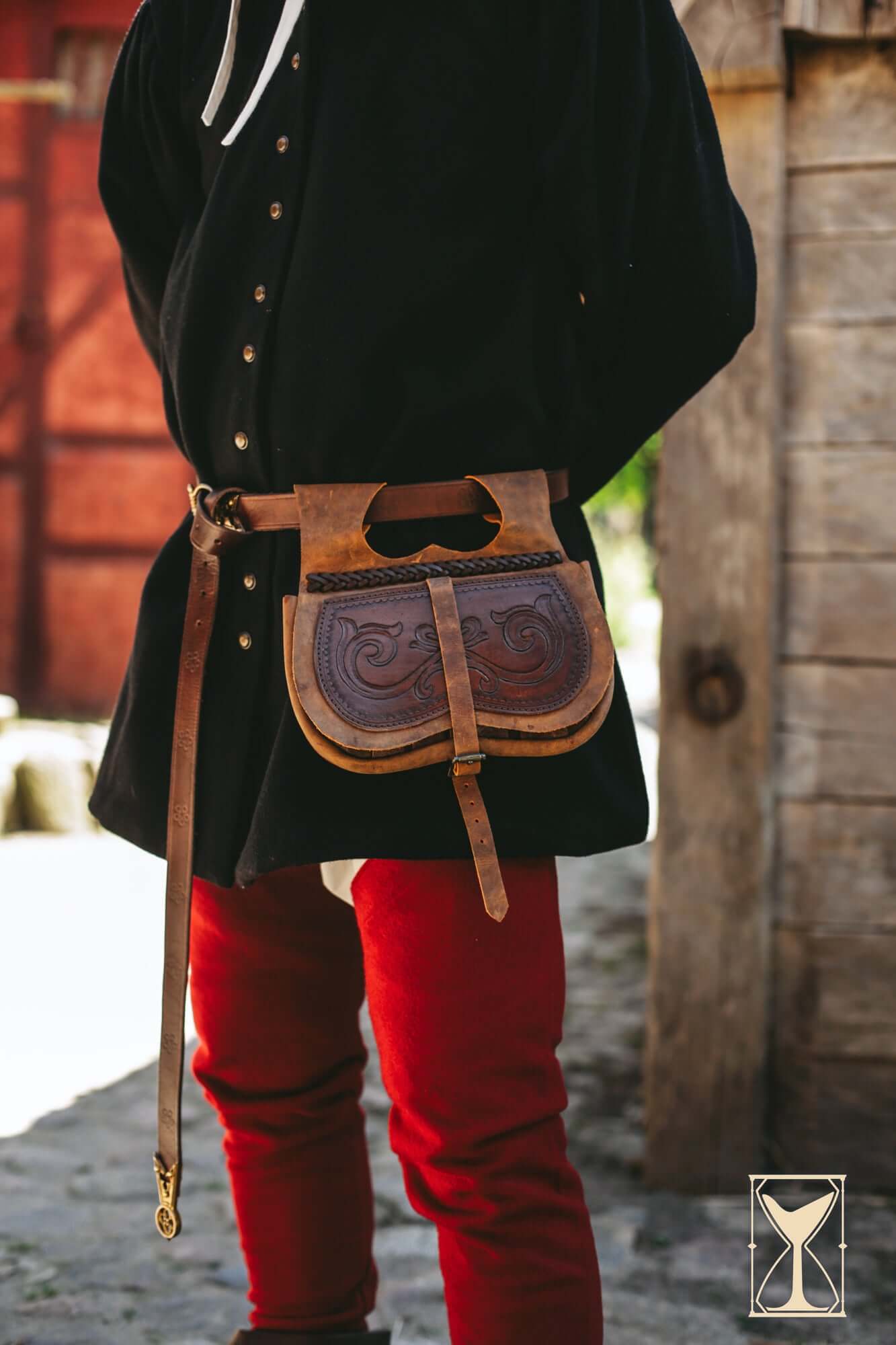
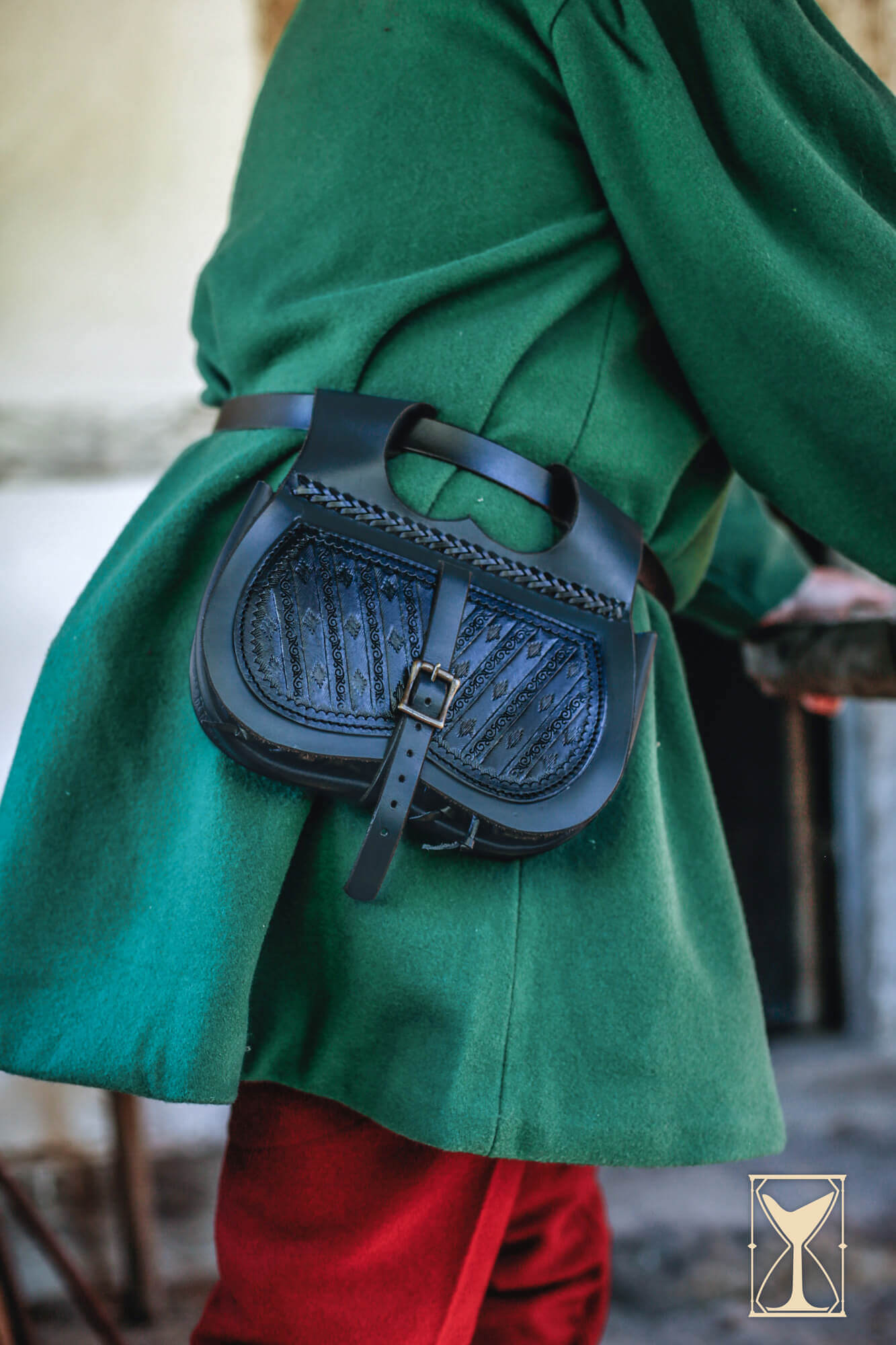
For Women: Start with a Shift Giulia chemise. Layer a fitted bodice or a Kampfrau Dress on top and finish the look with a Rectangular Veil and Fillet and a Kidney Bag for your essentials.
-
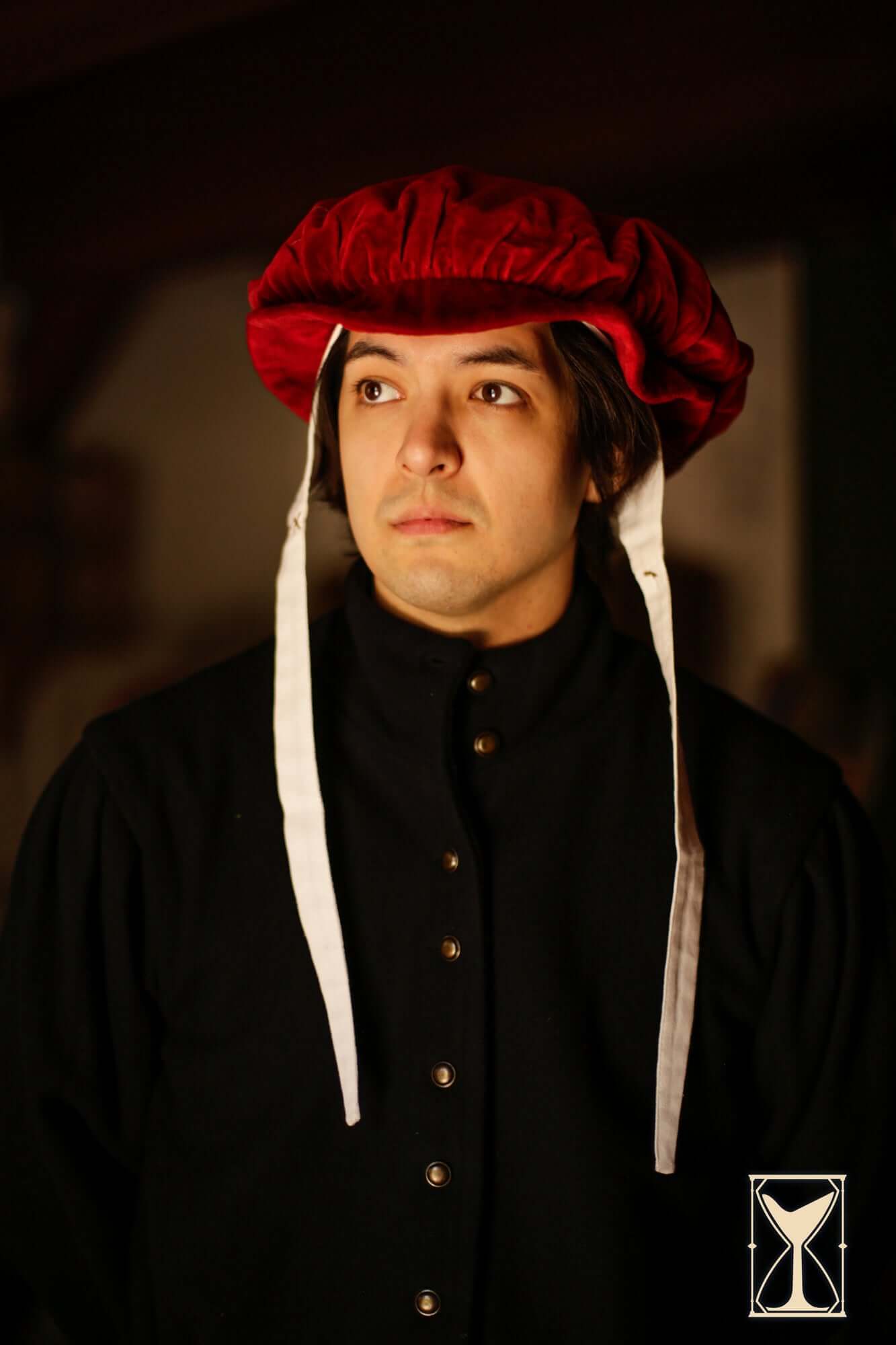
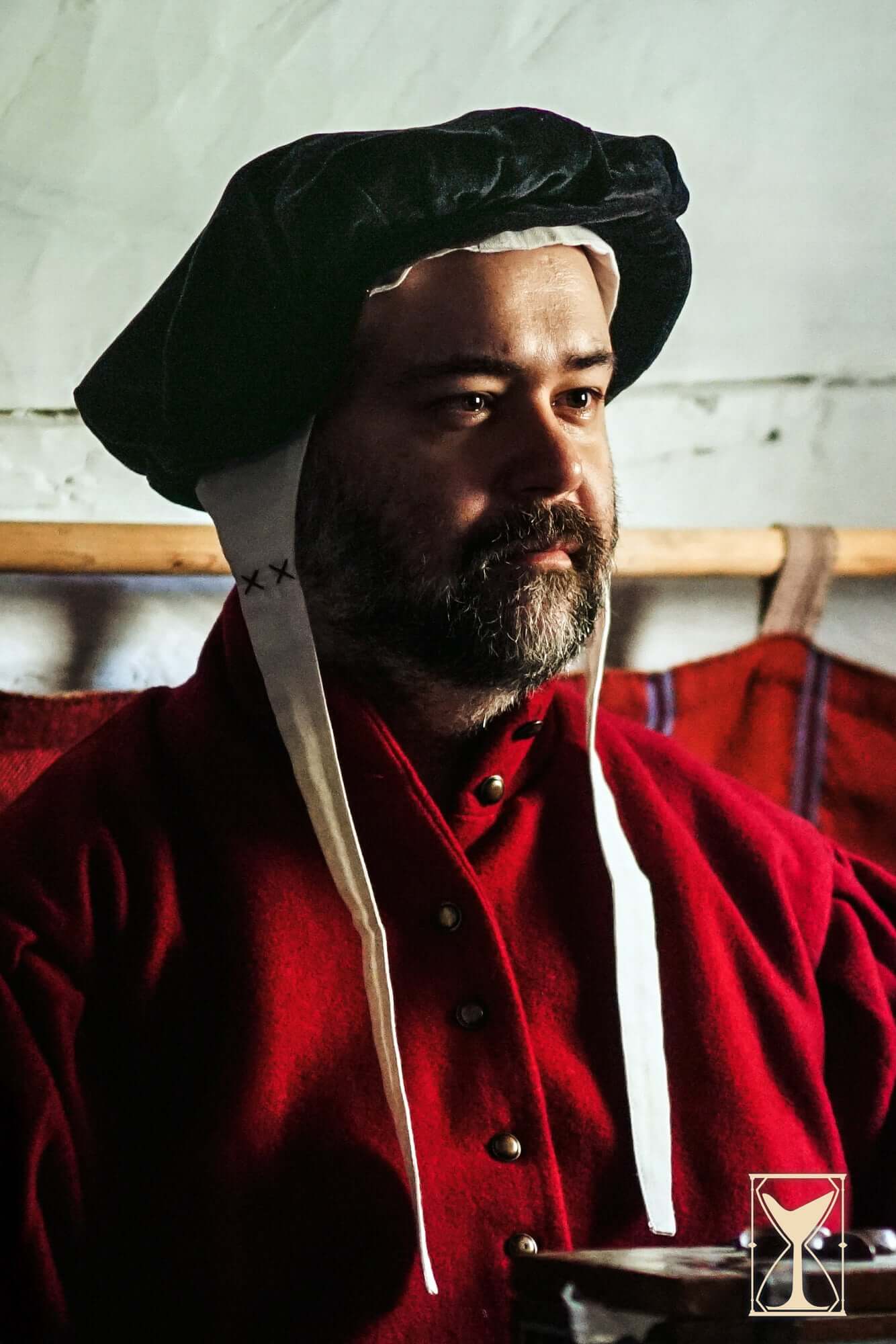
For Men: Begin with a Shirt Bartholomew. Add a Landsknecht Doublet and breeches, then finish with a Beret Francisco or Flat Hat Edward.
-
Style Tip: Stick to wool and linen in earth tones or jewel colors; avoid synthetics and satin as they read as a costume rather than authentic Renaissance garments.
Frequently Asked Questions About Renaissance Clothing
What is the difference between medieval and Renaissance clothing?
Medieval clothing was typically loose and draped, whereas Renaissance clothing introduced close-fitted garments. The Renaissance era brought doublets nipped at the waist, bodices structured with lacing, and the widespread use of detachable sleeves and functional fastenings like points.
What is Landsknecht clothing?
Landsknecht clothing refers to the flamboyant style worn by German mercenary soldiers in the 15th and 16th centuries. It is defined by slashed doublets, puffed breeches, and bold, contrasting colors that were intended to bypass the social constraints of the time.
What is a Kampfrau dress?
A Kampfrau dress is the women’s counterpart to Landsknecht fashion, worn by those who traveled with the mercenary armies. It features a fitted wool bodice and slashed sleeves, typically worn over a smocked linen chemise to create a visually striking silhouette.
What is a doublet in Renaissance fashion?
A doublet was the defining garment of any Renaissance man; a fitted, padded jacket that shaped the masculine torso. It served as the anchor point for the rest of the kit, with breeches laced directly to the doublet using ties called points.
Shop Authentic Renaissance Clothing at Yoremade
Yoremade, by Epic Armoury, is dedicated to providing historically grounded garments that bring the 15th and 16th centuries to life. Whether you are drawn to the radical slashing of the Landsknecht Collection, the elegance of Women's Renaissance Clothing, or the essential foundation of Men's Renaissance Clothing, our kit is built to last. We invite you to explore our range of wool and linen attire and find the perfect outfit for your next journey into history.
Welcome to Yoremade: History to Wear.